
Sequoia Partner: SpaceX is on the eve of an explosive growth similar to Nvidia, with Starship, AI computing power, and satellite direct-to-phone being severely underestimated
Author: Zhao Ying, Wall Street Journal
Recently, Shaun Maguire, a partner at Sequoia Capital, posted on X that SpaceX is on the brink of a revenue explosion comparable to Nvidia's over the past three years, while most investors are severely underestimating this.
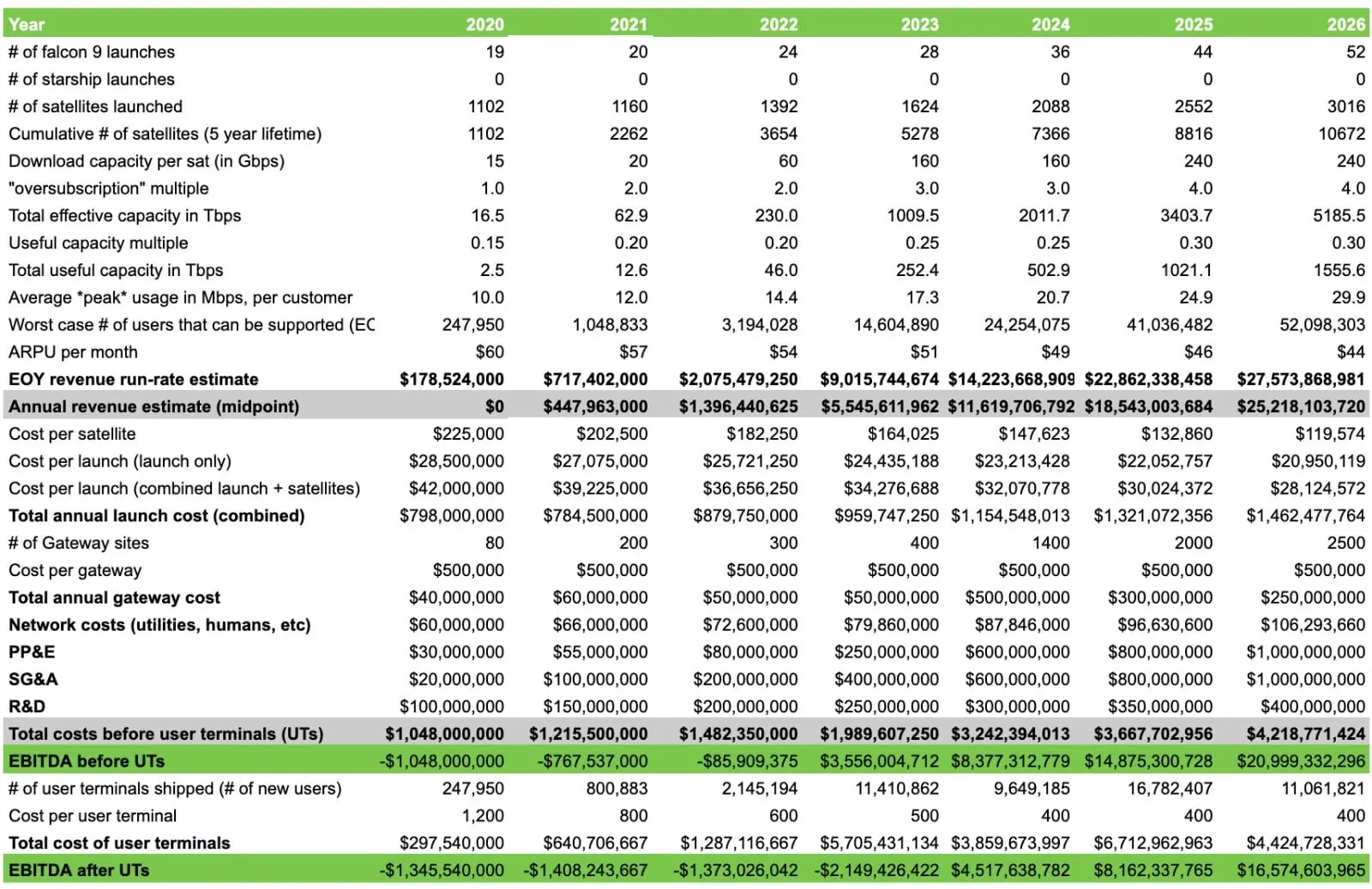
After SpaceX's earnings call, Maguire publicly released a bottom-up financial model and claimed that the numbers presented in the model are "breathtaking." He stated that the market is panicking due to a series of macro factors such as geopolitical uncertainty and inflationary pressures, and he chose to speak out against the trend at this time, releasing a prediction that he believes "over 90% of investors will think is crazy."
Maguire specifically pointed out that the density of top talent, SpaceX's low-cost supplier position in AI computing infrastructure, the historically significant moat built by Starship, and the unit economics of Starlink are the three core logics most underestimated by the current market. He predicts that the Direct to Cell business will surpass Starlink in revenue scale in almost any scenario by 2029 to 2030.
Density of Top Talent: SpaceX's Hidden Barrier
Maguire characterized SpaceX's team as "the most elite team on Earth" and clearly distinguished its intensity culture from other tech companies in Silicon Valley.
He believes that what makes SpaceX unique is the combination of extreme work intensity with an ultimate objective assessment mechanism—rockets either fly or explode, leaving no political space for maneuvering. This hard feedback mechanism at the physical level prevents mediocrity from surviving internally, resulting in a very high density of talent accumulated over 25 years.
In the wave of large-scale AI computing infrastructure construction, Maguire believes this point is decisive. Amazon, Google, and various cloud service providers have some excellent talent, but at SpaceX "everyone is excellent." Faced with the challenges of building gigawatt-level AI data centers—he believes this is one to two orders of magnitude more difficult than the previous megawatt-level CPU data centers—SpaceX's ability to handle "atomic-level" complex problems leaves other competitors far behind. Shortages of turbines, interstate power transmission, and the international transportation of large equipment... he believes these challenges all have solutions for the SpaceX team.
Starship: The Largest Technological Moat in Human History
Maguire extensively argues that Starship is the most complex system ever built by humanity, surpassing recognized technological peaks such as advanced chip manufacturing, ASML's EUV lithography machines, and international thermonuclear fusion experimental reactors.
His assessment framework is: if a group of top talents were to chase a technological frontier with unlimited resources, how long would it take? In the face of Starship, he believes the answer far exceeds any other technological field.
Maguire cites the global competitive landscape as evidence: SpaceX completed its first booster recovery in 2015, while competitors took about ten years to achieve the same milestone. He believes that as Starship continues to advance, this gap is still widening—rather than narrowing.
He emphasizes that Starship's supply chain is highly vertically integrated within SpaceX, which makes the depth of the moat "impossibly large."
Low-Cost Supplier Position: Structural Advantage in the Computing Market
Maguire believes that becoming a low-cost supplier in the commodity market is a position of great strategic value. He compares the pricing dynamics of AI computing to oil production, rather than the broadband of the internet bubble era—reasoning that the entry barriers for gigawatt-level AI computing are much higher than the latter, with a tighter supply chain and longer construction cycles.
His judgment is that even if computing costs drop to about $10 billion per gigawatt, SpaceX, as the lowest-cost and most flexible participant, will still have a competitive advantage. He predicts that in the next four years, computing costs are unlikely to fall below $20 billion per gigawatt, and at this price range, he believes SpaceX's unit capital expenditure will further decline as competition decreases.
In his article, he established a company-wide forecasting model extending to 2028 and pointed out that revenue per gigawatt and capital expenditure per gigawatt are a pair of "coupling constants"—if the former declines, the latter will also decrease proportionally, while the total gigawatts deployed by SpaceX will increase, partially offsetting revenue losses.
Starlink Unit Economics: Leveraging Billions in Revenue from a Single Launch
Maguire disclosed a set of core data to illustrate Starlink's capital efficiency. The current annual revenue of the Starlink constellation is about $20 billion, built by approximately 400 Falcon 9 launches.
Since a single Starship launch has a capacity equivalent to about 20 Falcon 9 launches, theoretically, only about 20 Starship launches are needed to support $20 billion in annual revenue, meaning each launch corresponds to about $1 billion in annual revenue, which translates to $5 billion in lifetime revenue per launch over a 5-year lifecycle.
He stated that as Starship enters commercial operation, the costs of Starlink, Direct to Cell, and orbital computing will significantly decrease, and the reachable market size will expand accordingly. In his scenario predictions, he expects the revenue scale of Direct to Cell to surpass that of Starlink's main business by 2029 to 2030.
Maguire also pointed out that the orbital computing business will be significantly reflected in the financial model starting in 2029, and he anticipates that in the next decade, SpaceX's level of vertical integration in the chip field will be comparable to its current position in the rocket field.