
Top protocols monopolize 47% of revenue, why do most leading tokens underperform BTC?
Author: Noveleader, Castle Labs Research Analyst
Compiled by: Gu Yu, ChainCatcher
Funding in the crypto space is highly concentrated.
Excluding stablecoin issuers, the top 10 protocols accounted for 47% of total protocol revenue over the past 12 months.
The returns for token holders are even more concentrated, with the top 10 protocols contributing 73% of those returns.
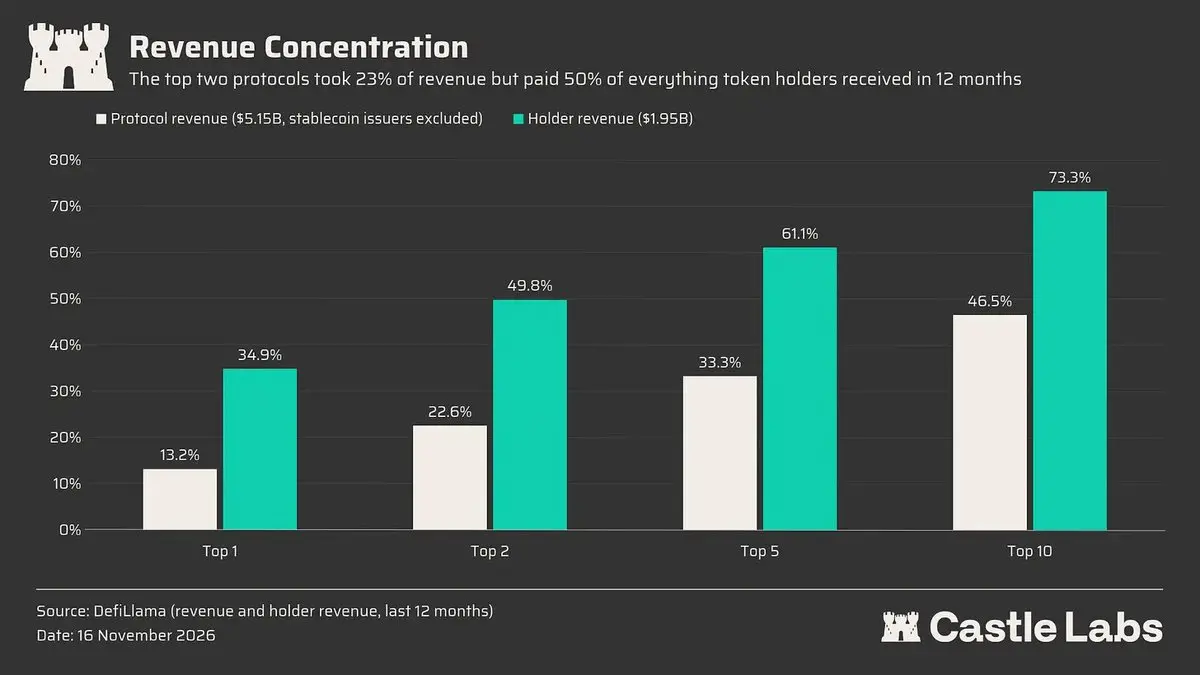
Due to high cash flow, revenue-generating protocols often become better investment targets.
This article aims to explore: Is being a leader in a category a good indicator of token performance? If not, what are the differences between top projects that perform well and those that perform mediocrely?
This is the third article in our series. In "A New Crypto Era: From Gambling to Investment," we discussed revenue in the crypto space. In the second article, "The Broken Link Between Protocol Revenue and Tokens," we analyzed how token emissions dilute value and why token emissions should be considered alongside revenue.
In this article, we will connect the income flowing to token holders with the actual performance of the tokens and introduce two key factors that cannot be explained solely by revenue: the potential market size that the protocol can expand into and the narrative surrounding the product itself.
Bimodal Monopoly of Crypto Revenue
Leaders in various segments of the crypto market capture the vast majority of cash flow. Over the past 12 months, crypto protocols across categories generated a total revenue of $13.7 billion.
In each category, the top 2 protocols captured at least 52% of the fees; in some categories like stablecoin issuers, prediction markets, basis trading, and options, the top two even took over 90% of the total fees.
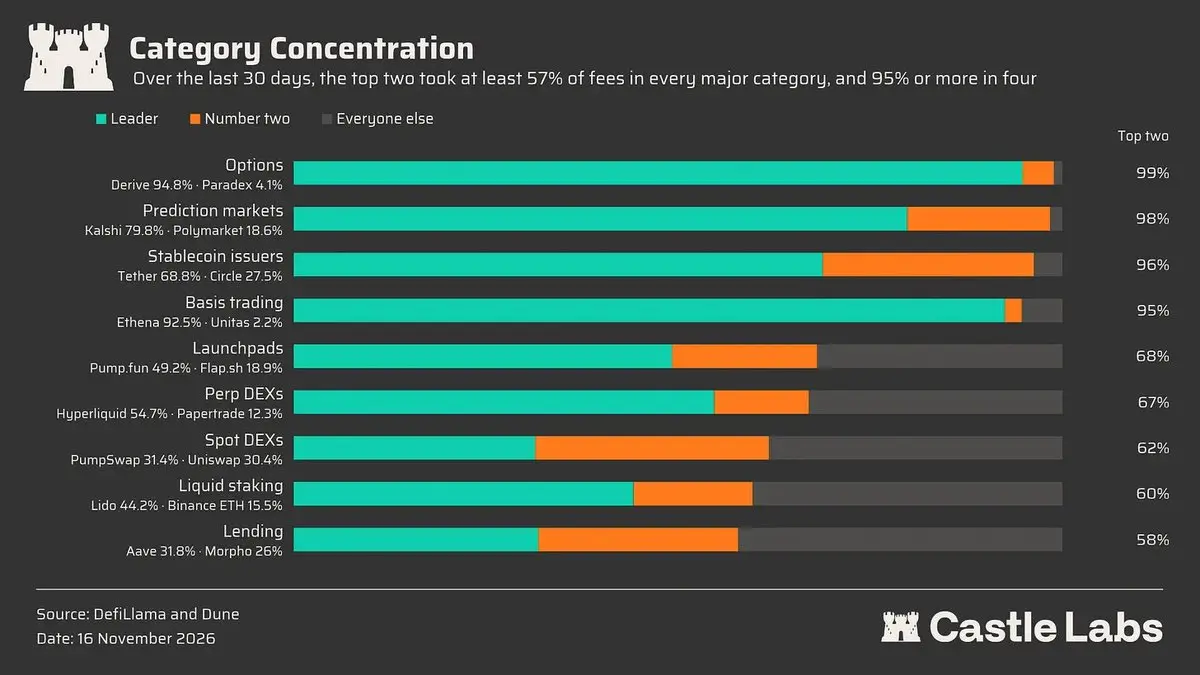
However, this concentration bias does not apply to all categories. When switching costs are low or competition is fierce, the leading positions can easily be challenged.
For example, the concentration in Launchpad and spot DEX is not as high because users face very low switching costs and market competition is intense.
For DEX traders, the most important factor is to obtain the optimal path and the lowest cost trading venue, with aggregators selecting routes based on liquidity. Competition among DEXs is very fierce, and no single platform can provide the deepest liquidity pools and best prices for all assets, leading to order flow being dispersed across various platforms.
On the other hand, for Launchpads, their business is cyclical, depending on whether the platform can fully capture traffic in emerging or developing ecosystems. Pons emerged prominently during the peak of the Robinhood meme coin craze and captured most of the revenue at that time, but its activity seems to be waning now.
Lending and perpetual contract DEXs rely more on incentives and liquidity drives. Therefore, the flow of funds depends on a combination of both: better incentives can attract value, while better liquidity helps maintain that value. Liquidity helps top protocols solidify and expand their competitive advantage, while some fund flows may be diverted by more attractive incentives.
Moreover, for categories with more pronounced bimodal monopolies (such as stablecoins and prediction markets), there is currently a lack of direct investment channels from the perspective of token investment. The only publicly traded stock is Circle, with the ticker $CRCL.
Thus, investment opportunities naturally flow back to categories with lower concentration. But even if funds flow to these leading projects, your portfolio performance may not be stellar, as most of these tokens have underperformed compared to BTC.
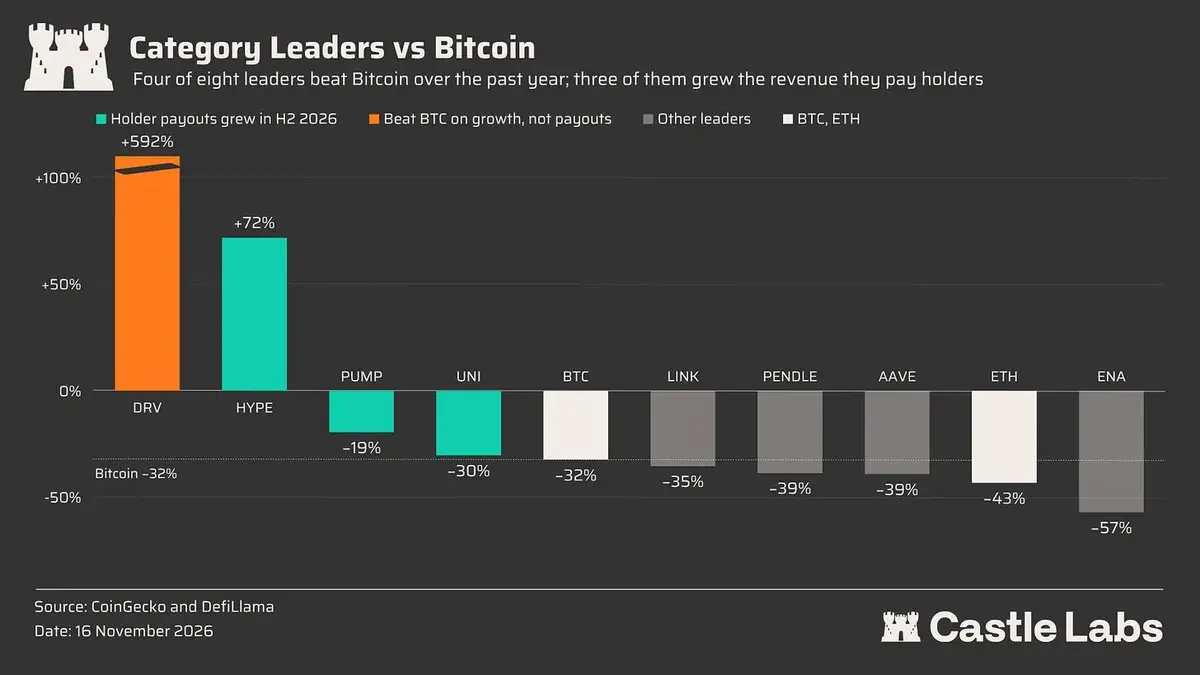
So, why do the protocols behind these tokens, despite being leaders in their segments, still see poor token performance?
Part of the answer lies in the revenue data and how much profit token holders can actually share.
Hyperliquid's monthly revenue surged from $38 million in July to $69 million in October, thanks to the protocol and its token capturing value from both its own growth and Circle's reserve earnings.
Uniswap's fee switch and the UNIfication proposal took effect at the beginning of the year, and the protocol has been using revenue to continuously buy back tokens.
Derive's increase reached 592%, surpassing all other leading projects, but Derive allocated only about 1.3 million dollars to its holders last year. Its price is not solely supported by holder earnings but depends on how much the on-chain options market can expand, which we will discuss in the next section.
Meanwhile, Aave paused buybacks after the KelpDAO incident, while Pendle's monthly revenue plummeted from 4 million dollars to 500,000 dollars over the course of a year (October 2025 compared to October 2026).
To explore whether the market has already digested these changes, we divided market capitalization by the holder revenue over the past 12 months to reflect the premium the market pays for every dollar flowing to holders. Comparing over a one-year span can also reveal market trends and whether tokens have become more expensive or cheaper.
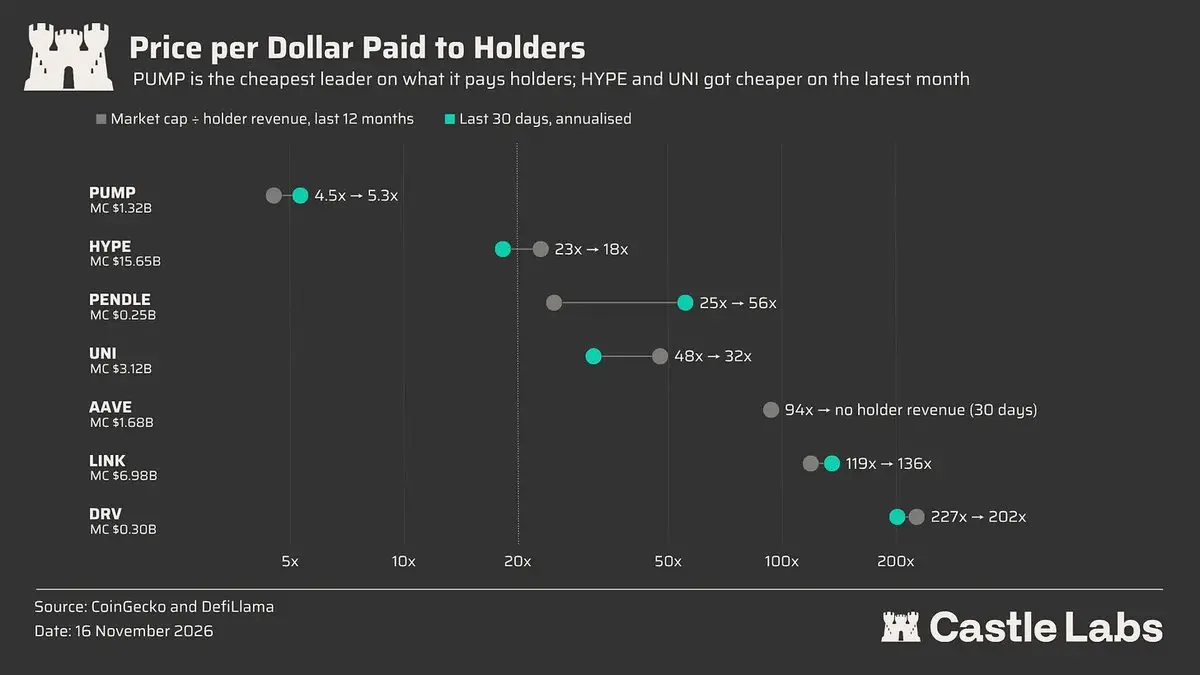
Over the past 12 months, Uniswap and Hyperliquid have become cheaper, while all other tokens have become more expensive, which also explains why these two tokens have outperformed other assets.
Derive is the most expensive token in terms of valuation, clearly indicating that its price is driven more by growth expectations than by current holder income.
Pump is the cheapest among all assets and has a continuous cash flow and value accumulation flowing to the token. However, market sentiment surrounding the product has not improved, as its revenue relies on speculative meme coin trading activities, placing it in a negative-sum game category within the entire industry.
Additionally, the protocol has yet to distribute airdrops to its users, and this uncertainty has deterred more investors.
The growth of DRV and PUMP lacks sustainability, indicating that relying solely on protocol revenue and holder income is not a sufficient judgment criterion.
Other important dimensions worth noting include the evolution of narratives and forward-looking investments, which determine the success or failure of token fund flows. We will briefly discuss this in the next section and introduce some interesting tokens that may not have outstanding revenue but possess extremely strong narratives.
True Escape Velocity
The target market size for DeFi and tokenization is measured in trillions of dollars, so for the leaders in each segment, the current revenue scale is just a drop in the bucket compared to their total addressable market (TAM).
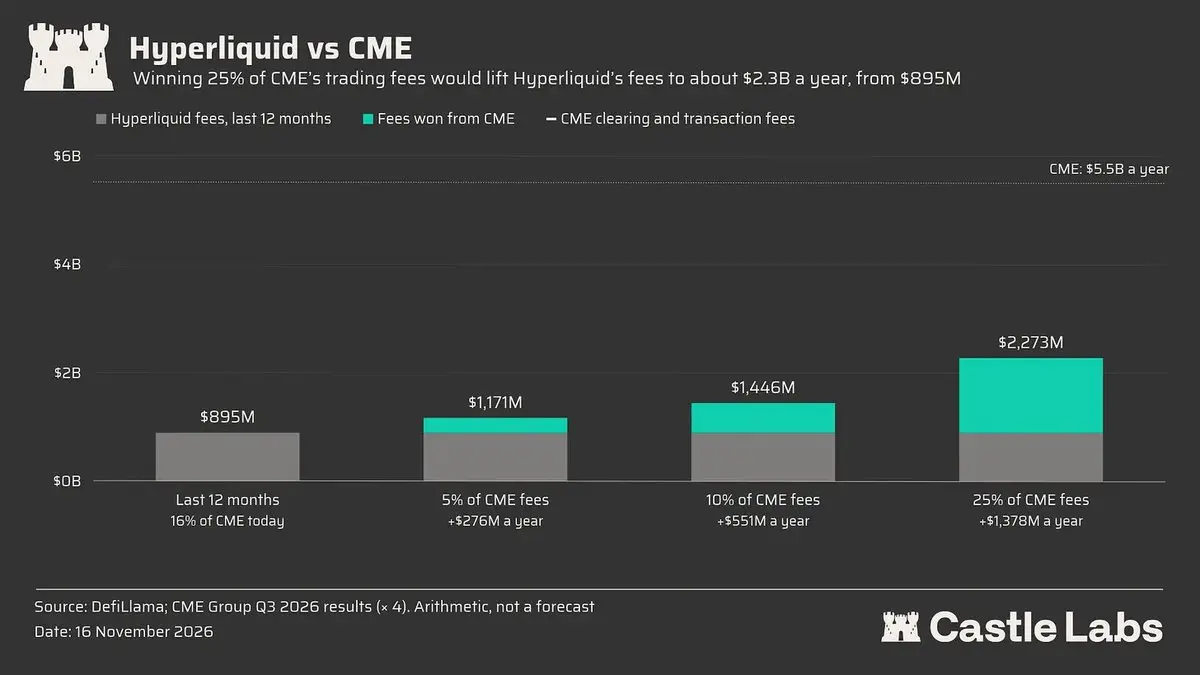
Let's first look at Hyperliquid. The protocol's annual fee revenue has reached $895 million, accounting for about 16% of the Chicago Mercantile Exchange (CME) clearing and trading fee revenue (annualized data for Q3 2026 is approximately $5.5 billion). Hyperliquid achieved this without any participation from U.S. users due to regulatory restrictions, but this situation is changing.
Recently, the parent company of the New York Stock Exchange (NYSE), Intercontinental Exchange (ICE), has partnered with TradeXYZ to bring Hyperliquid-based perpetual markets onshore, aiming to launch perpetual contracts covering cryptocurrencies, stocks, commodities, and foreign exchange in the U.S. Kraken's parent company, Payward, has also become the first HIP-3 deployer regulated by the U.S. Commodity Futures Trading Commission (CFTC) through its Bitnomial exchange and NinjaTrader Clearing.
Although both are still awaiting regulatory approval, this clearly demonstrates the enormous market potential that Hyperliquid can leverage once it opens up to the U.S. market.
Derive is to on-chain options what Hyperliquid is to on-chain perpetual contracts.
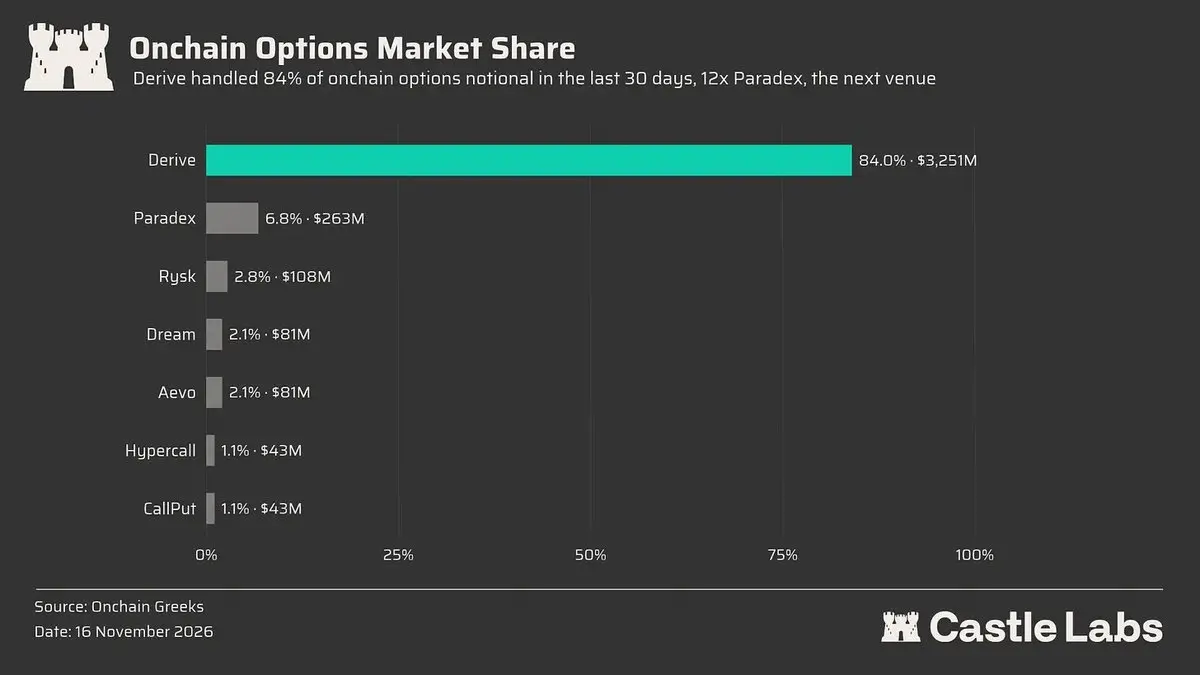
In the past 30 days, Derive has handled approximately 73% of on-chain options trading volume and accounted for 93% of open contract volume. Since the beginning of this year, the platform has cleared approximately $14.2 billion in nominal trading volume in 2026, nearly three times its total for the entire year of 2025.
To further expand the protocol's scale, they developed Derive V3, introducing features such as multi-currency margin, vaults, and institutional-level support. In particular, the vaults and various integrations have brought new distribution channels, a model similar to Hyperliquid's HIP-3 and Builder Code, which has proven to yield fruitful results for its ecosystem.
These brand new distribution channels not only make the products more friendly to retail investors, but institutional-level support also helps attract larger capital flows.
Ultimately, the real territory to be conquered is the traditional options market, and Derive has already taken its first step with the upcoming RWA options.
Its largest off-chain options competitor, Deribit, reached a nominal options trading volume of $60.4 billion in the past 30 days, which is 13.6 times the total of all on-chain trading platforms.
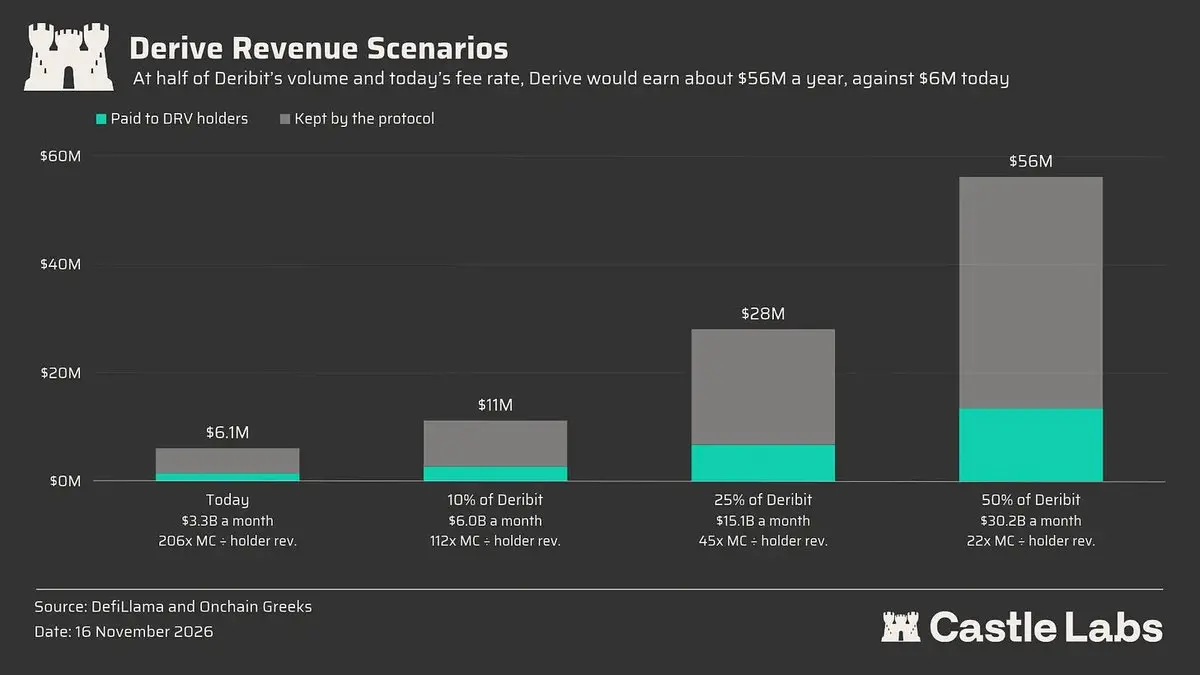
With the continuous expansion and steady growth of the on-chain options market, if Derive's nominal trading volume can reach 10% of Deribit’s, its annual revenue is expected to exceed $10 million.
Uniswap leads the spot DEX, accounting for 25% of trading volume in the past 30 days and 31% of net fees over the past 12 months. Its revenue significantly increased in the second half of 2026, mainly benefiting from the tokenization trend and the cumulative effect of Robinhood trading activities.
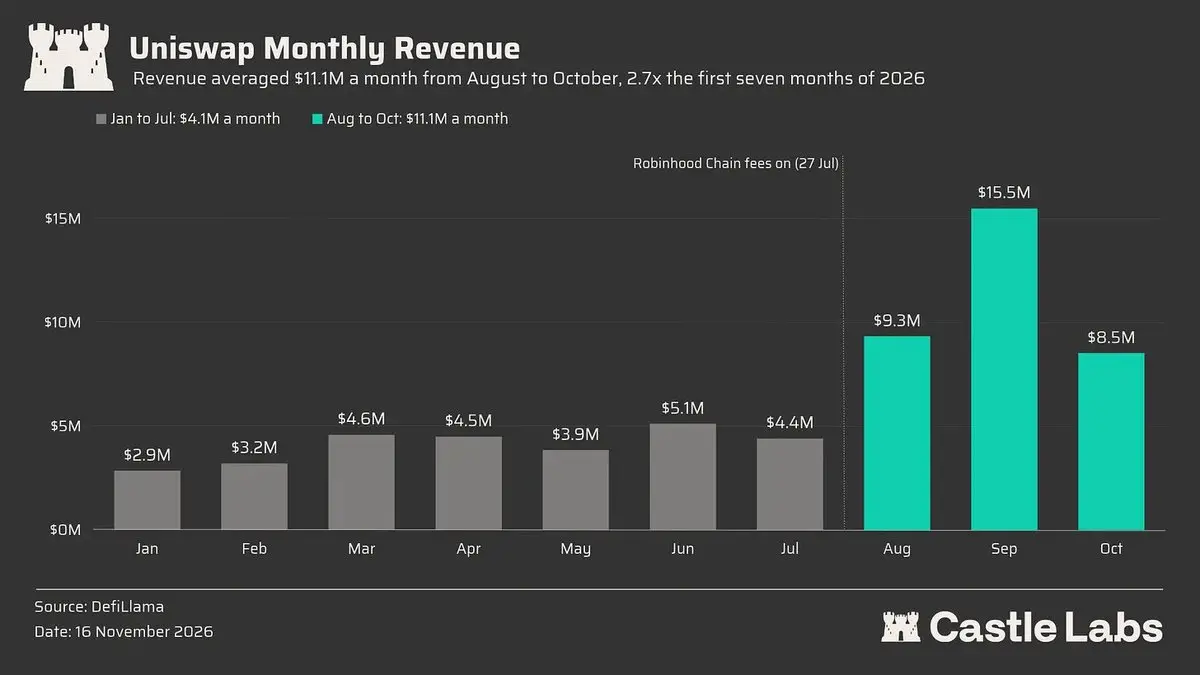
Although Robinhood's activity may be classified as a one-time pulse (though we expect a recovery to follow), the greater potential lies in the rapid development of the tokenization wave: the scale of RWA assets has grown from $25 billion at the beginning of the year to approximately $40 billion now. Speaking of the future development potential of tokenization, McKinsey predicts that its market size will reach $2 trillion by 2030.
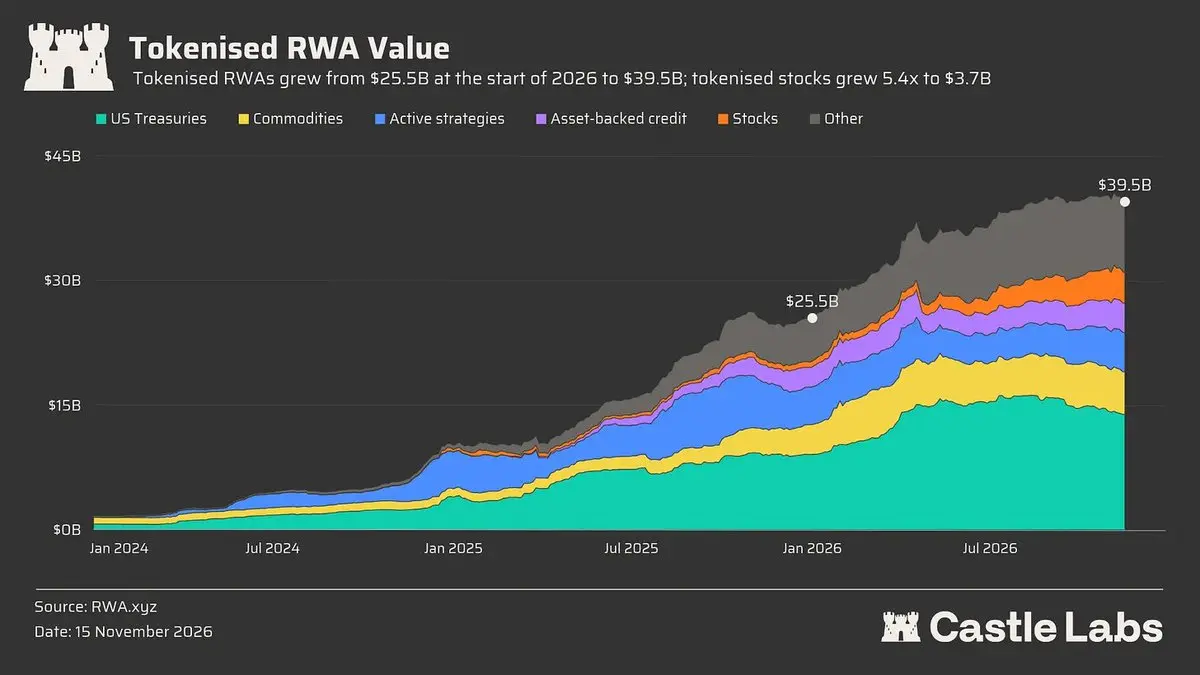
All these tokenized assets will be traded on DEX, which can provide 24/7 liquidity, posing a direct growth linkage for any on-chain DEX.
The core advantage of Uniswap's architecture lies in its V4 Hooks, which allow anyone to create permissioned pools, providing significant advantages for compliant assets with transfer restrictions. Moreover, V4 can support trading in restricted areas; OKXICE is a recent representative case.
Another protocol benefiting from the tokenization wave is Pendle.
As of the end of the third quarter of 2026, the dollar market with RWA as the underlying asset accounted for 82% of Pendle's TVL, with its TVL growing by 43% in the third quarter alone. These markets include treasury-backed dollars from Agora and Global Dollar, reinsurance from Re Protocol, and GPU mortgages issued through USDAi.
Each new income-generating RWA asset needs to leverage the Pendle market for better liquidity distribution and DeFi composability; it is increasingly becoming an indispensable part of the go-to-market strategy for tokenized asset markets (GTM), and as the scale of these assets expands, Pendle will undoubtedly benefit directly.
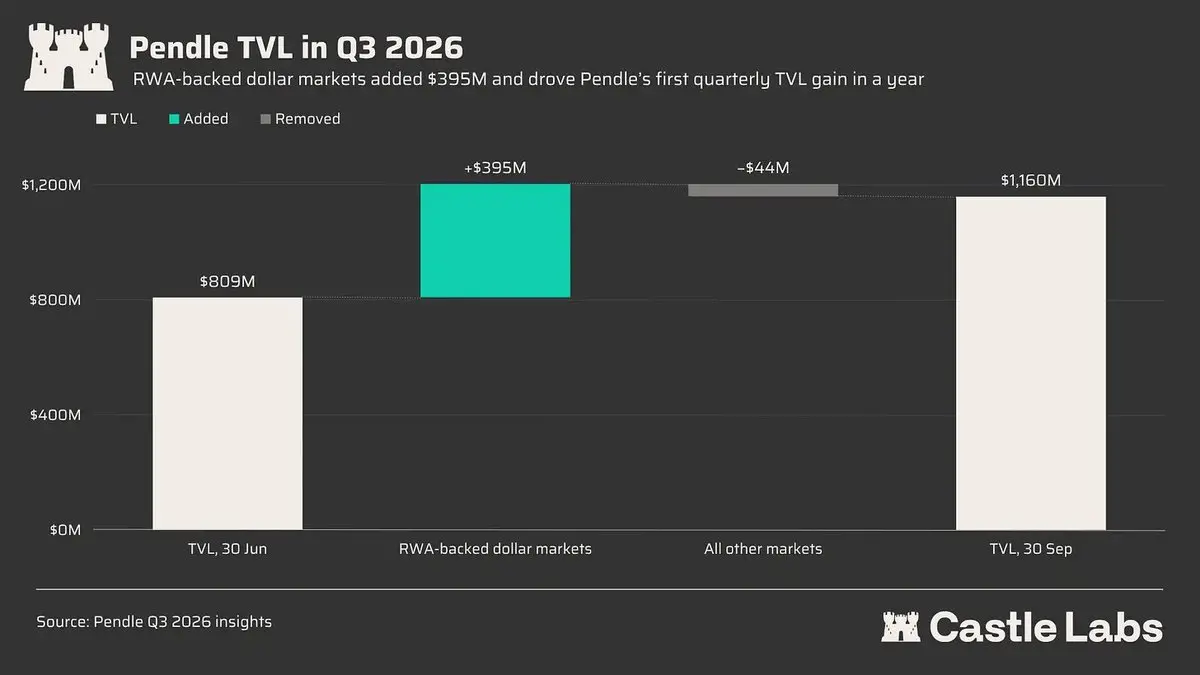
So, what is the ceiling for Pendle?
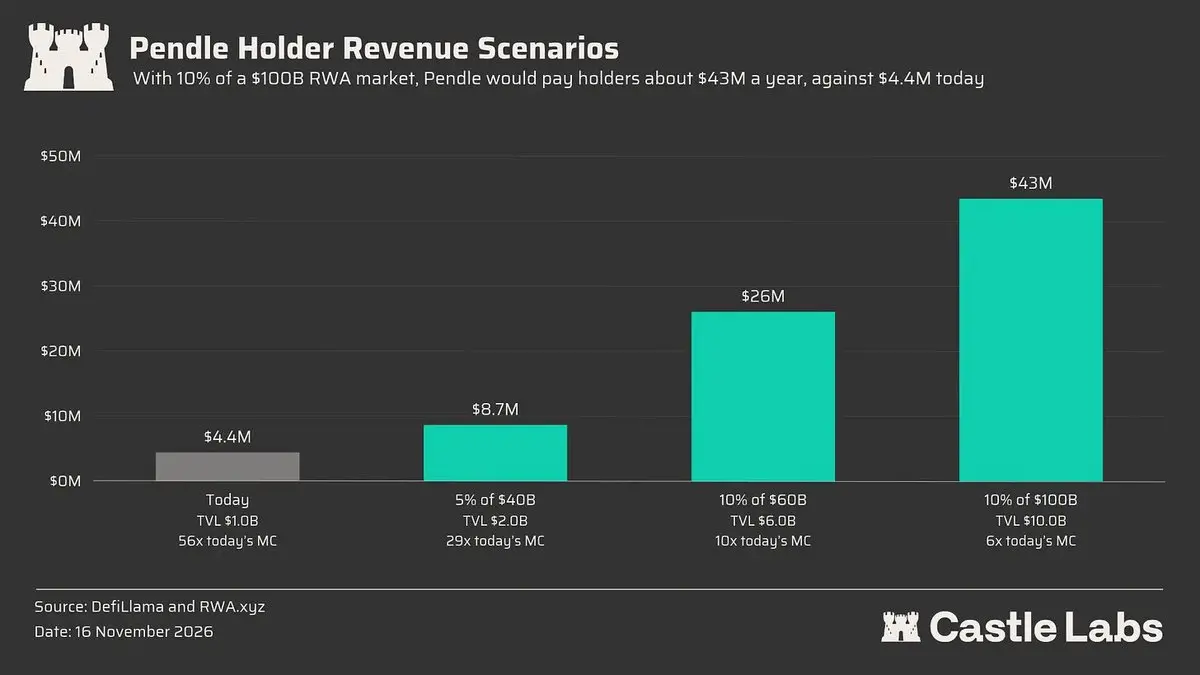
Pendle's current TVL is approximately $1 billion, covering both crypto assets and RWA assets. However, as the RWA market grows, Pendle's RWA TVL will also expand. Once its market share reaches 10% of the ever-expanding RWA market, Pendle could distribute over $43 million in earnings to its holders annually.
Although Aave's token price trend has been mediocre, it is precisely at the intersection of tokenization, consumer adoption, and core DeFi.
The growth of tokenized assets is closely related to Aave and Pendle, as Pendle's PT assets are deposited into lending platforms as collateral for leveraged cycles. The scale of tokenized stocks on the Base chain is continuously growing, with net deposits exceeding $18 million driven by incentives and arbitrage trading from partnerships with SuperForm and Dialectic Group Vaults.
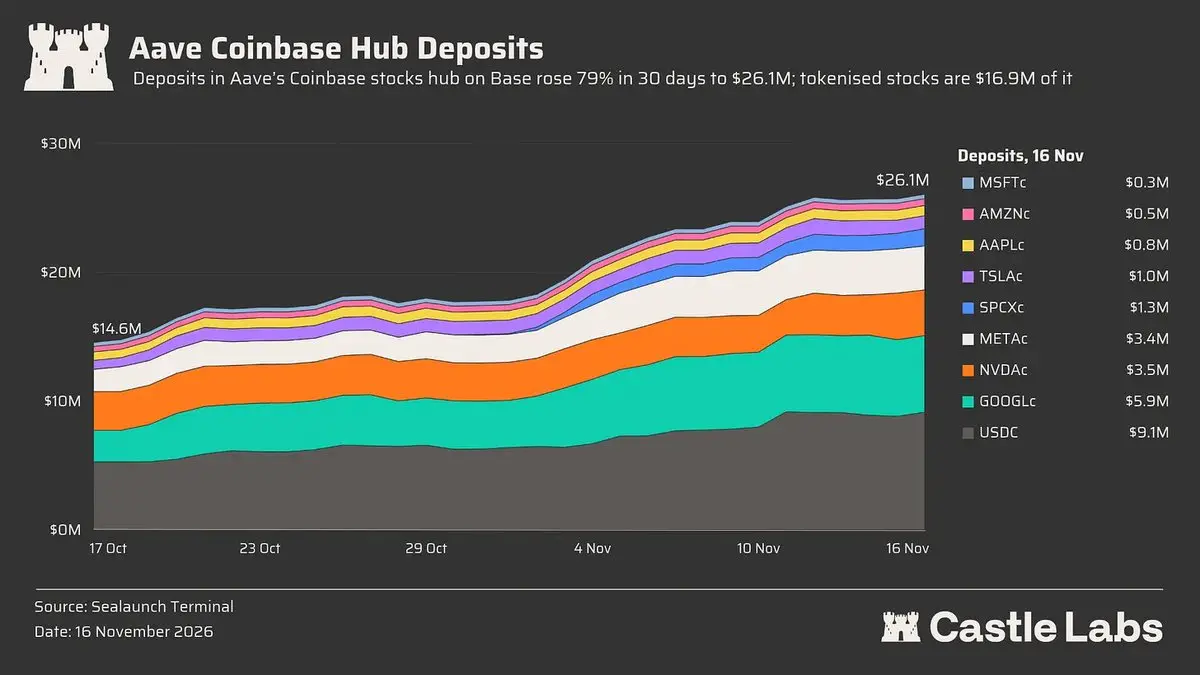
The Aave application allows users to earn DeFi-native yields higher than U.S. Treasuries and enjoy a fund balance protection of up to $1 million, which is four times the $250,000 FDIC protection standard in the U.S. banking industry. The next-generation digital bank EtherFi has also deployed its core hub on Aave V4, with deposits of approximately $350 million, supporting users to lend and borrow directly within the app, injecting new incremental funding flows into Aave and shaping it into an underlying infrastructure provider for C-end users.
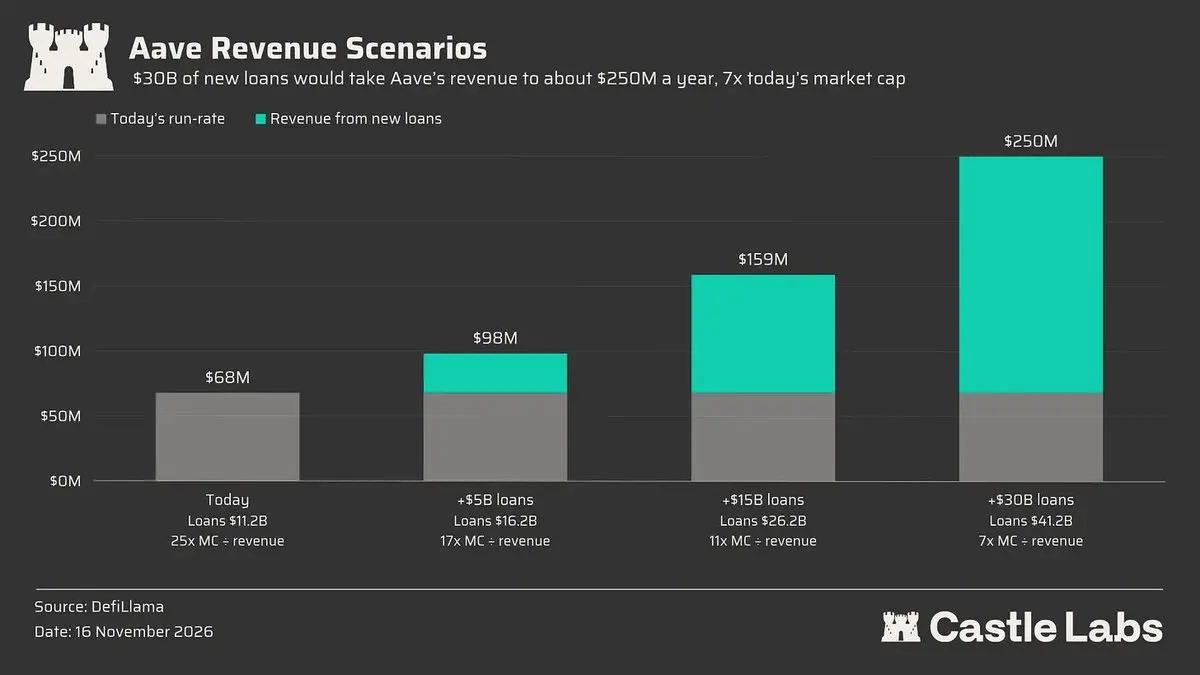
Diverse distribution channels and growth engines introduce more lending demand into the entire system, thereby driving revenue growth. The platform currently has approximately $12 billion in active loans, with revenue of $61 million this year. As the scale of lending further expands, we expect its revenue to show linear growth.
Although Aave possesses all the necessary growth levers, it has stopped distributing value to token holders since April of this year. Once this feature is re-enabled, we will witness this growth truly convert into tangible returns.
The aforementioned projects are all core DeFi protocols with significant appeal, but we also want to focus on some benchmark products, such as Pearl and Venice AI, which are rising as "AI currencies," and Zcash, which is known as a "privacy currency."
Starting with Venice, as this project has already generated actual revenue and is not merely relying on future expectations.
Venice provides its users with privacy-focused, censorship-resistant model access, serving as a decentralized alternative to Claude and ChatGPT.
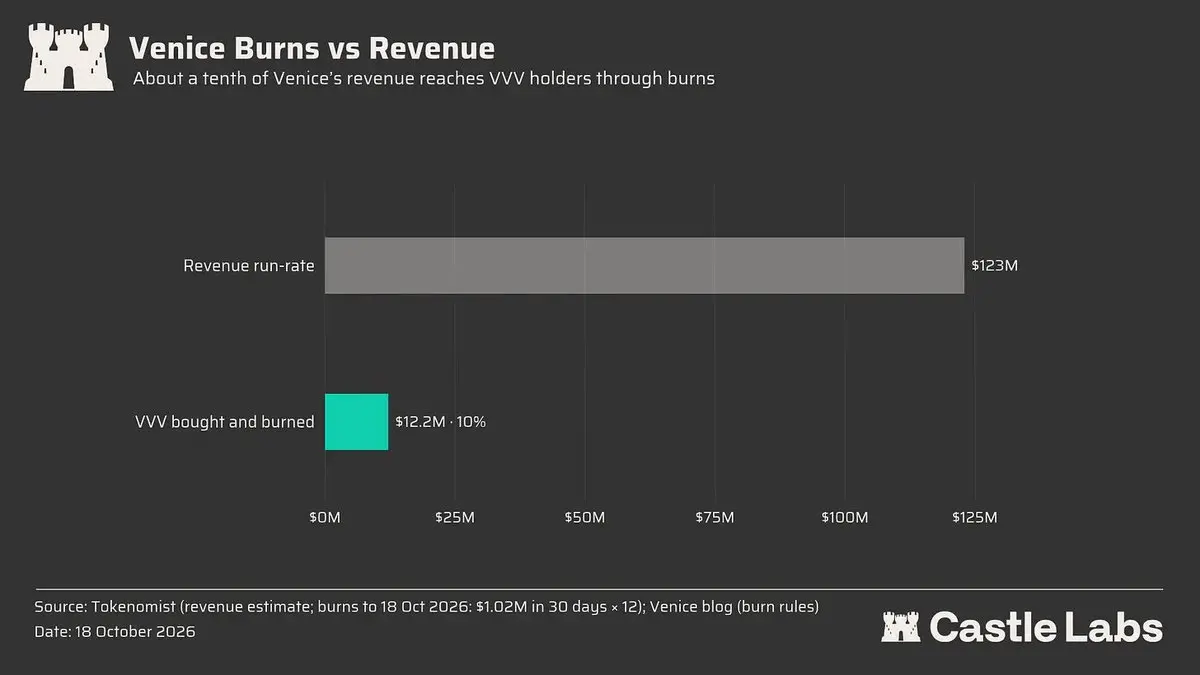
Its annual revenue reaches $123 million, corresponding to a price-to-sales ratio (P/S) of about 8 times (based on circulating market cap) or about 12 times (based on fully diluted valuation FDV). However, $VVV has not captured all the value, as Venice equity also participates in profit sharing, leading to a disconnect between the interests of token holders and equity holders, raising questions about who will capture the most value after the project's success.
To reduce concerns surrounding the token and ensure aligned interests, Venice has implemented a discretionary and automatic buyback mechanism for $VVV (returning part of the sales revenue to the token). In the past 30 days, the total amount burned has reached $1.02 million, equivalent to an annualized amount of approximately $12.19 million, making the buyback account for 10% of revenue.
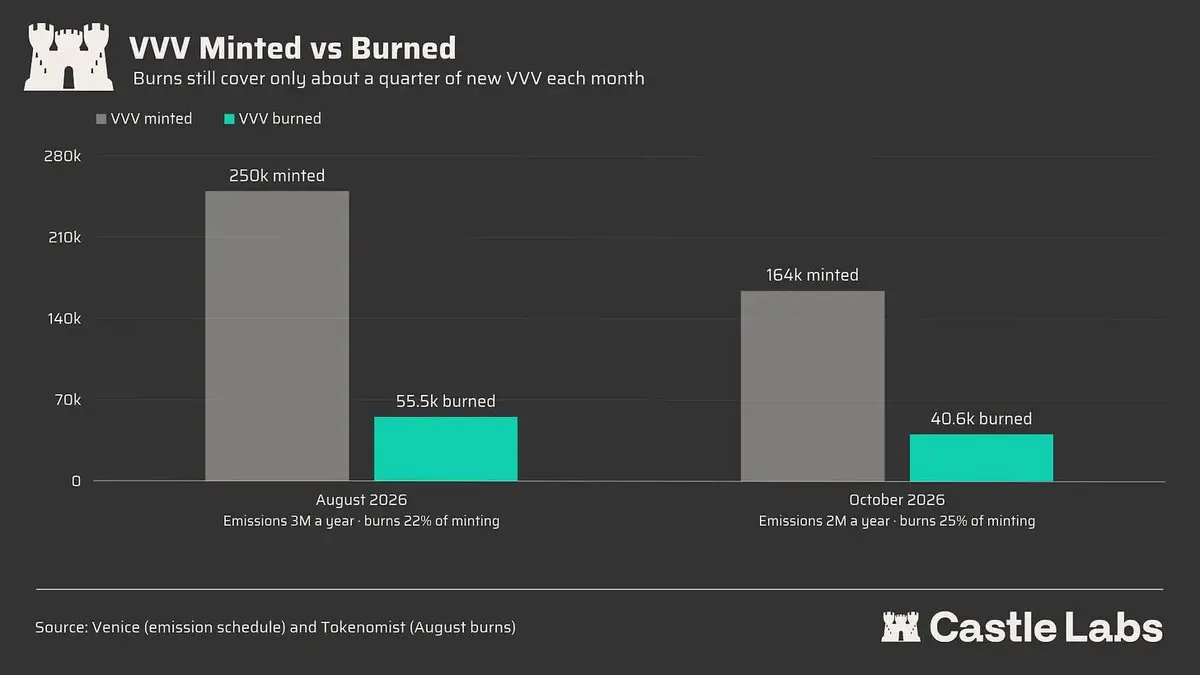
The team has also reduced the annual token issuance from 2.5 million to 2 million, thereby alleviating the new selling pressure on the token. At the current pace, the buyback and burn can only remove 500,000 VVV tokens from the supply, which is only 25% of the new issuance supply, keeping the token in an inflationary state overall. As the network expands, we expect its revenue to grow further while token issuance decreases, pushing the token towards a deflationary path.
The second token is $PRL, which has attracted widespread attention due to its ingenious mechanism design. On the Pearl network, miners use their GPUs to perform matrix multiplication, which is the core computational process behind all chatbots, a mechanism known as "Proof of Useful Work (PoUW)."
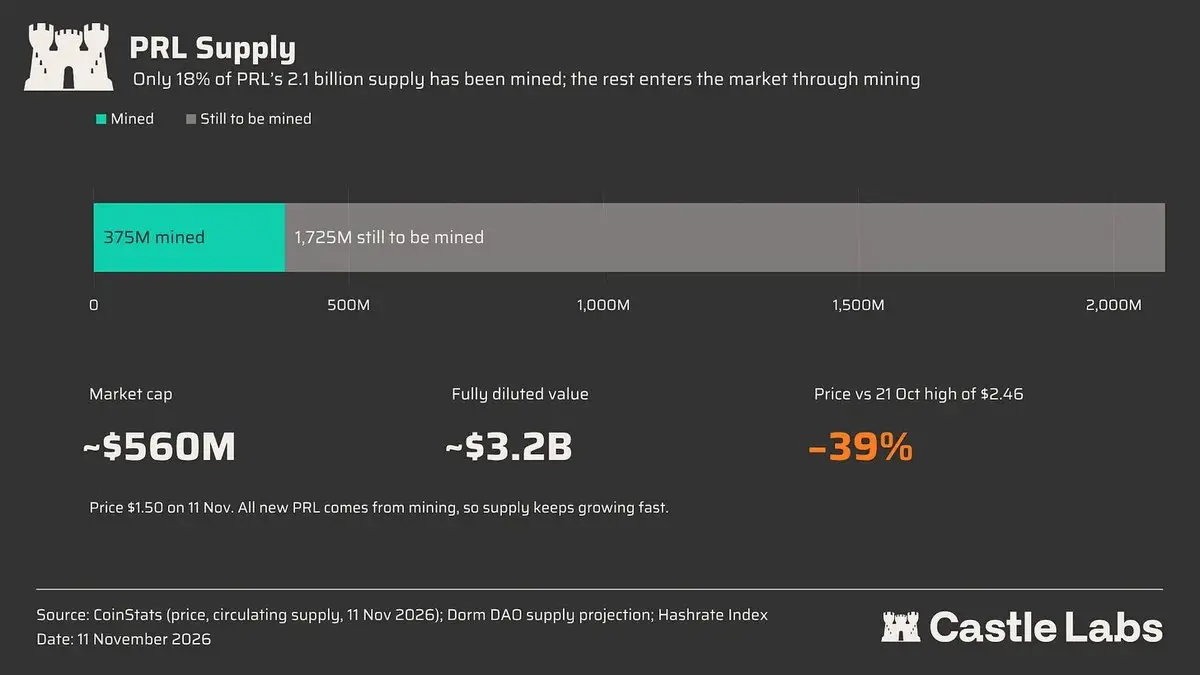
The mainnet of this network went live at the end of April, and after peaking in October, $PEARL currently has a trading market cap of approximately $500 million. We previously published an in-depth analysis of Pearl, its operational mechanism, and the target market it aims to penetrate.
It is also important to clarify that in the current network, most of the mining power has not been converted into paid revenue for inference demand; currently, only one partner, Together AI, is utilizing this computing power to subsidize its own service discounts.
While this is concerning, the application prospects of this technology are far broader than many expect. If multiple clients begin to access inference services and pay for them in the future, the ability for users to settle fees using $PRL will further boost miner income through the token burn mechanism.
Additionally, when discussing $PRL, one cannot overlook its fair launch mechanism, where anyone can mint tokens by participating in network mining or can directly purchase them on exchanges; currently, only 18% of the token supply has been mined.
Zcash is another highly representative forward-looking investment case, as it is gradually transforming into a store of value (SOV) asset. Zcash, as a network, generates minimal revenue, yet it is one of the best-performing high-market-cap tokens this year.
Wall Street has gained compliant investment access through Grayscale's Zcash ETF (ZCSH), which began trading on August 25 and has attracted over $1 billion in deposits, ranking among the top 1% of ETFs issued in the past decade.
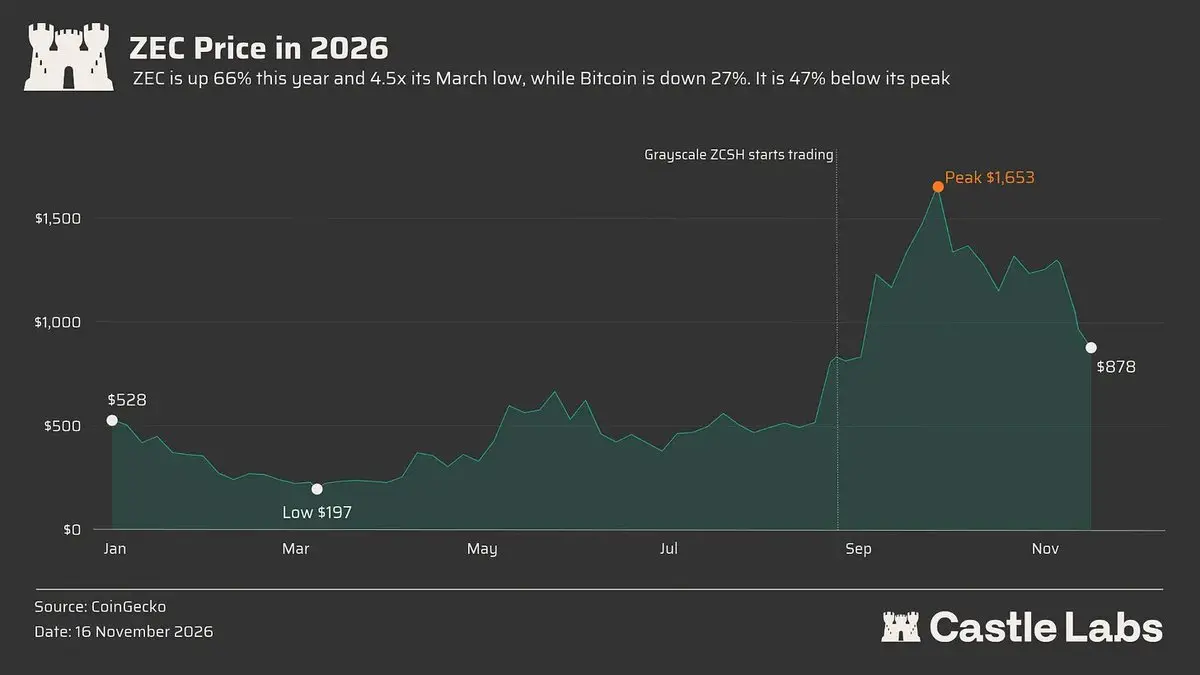
Zcash is essentially a privacy version of Bitcoin: with a supply cap of 21 million, halving every four years, and optional zero-knowledge shielding features that provide privacy attributes. Privacy is not just a feature that sounds good on the surface; it is being increasingly utilized, with the shielding of ZEC rising from 8% to 29.2% over three years.
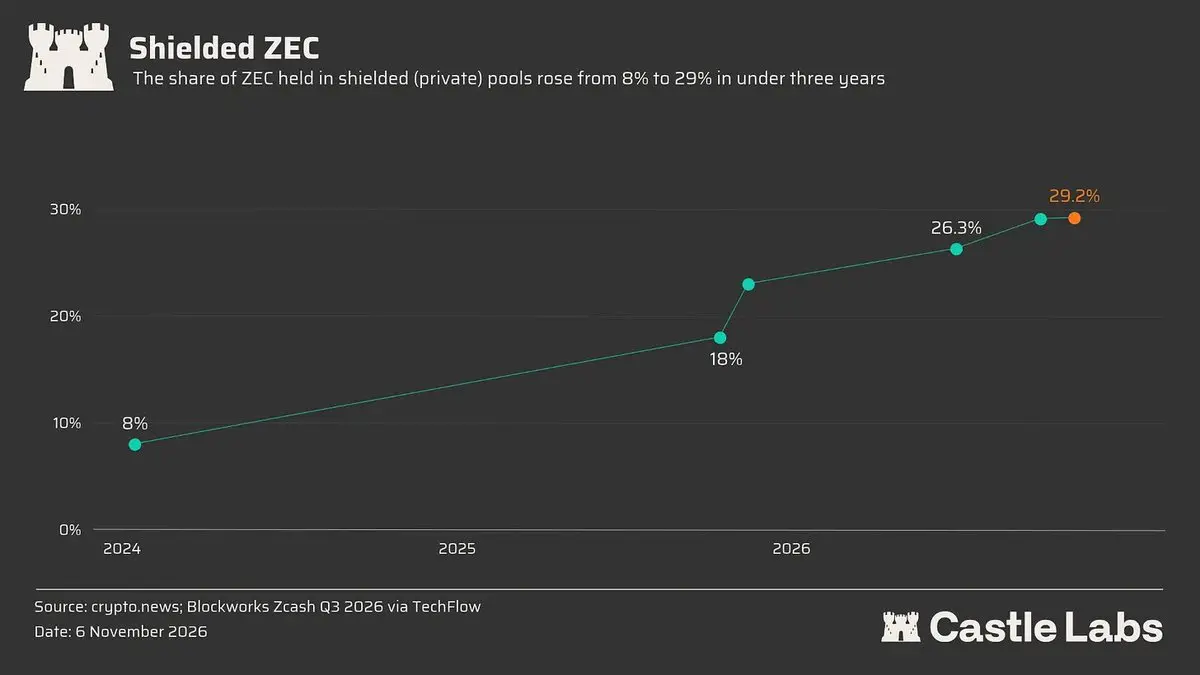
The privacy feature is what makes Zcash interesting; it recently surged after the Democrats won the midterm elections because if they come to power in the U.S., we can expect increased scrutiny and a heightened demand for financial privacy, which is precisely what Zcash can provide.
In this section, we discussed two types of tokens: one type has continuous revenue, can return value to token holders, and is expected to penetrate much larger markets through tokenization; the other type is more forward-looking and has a stronger narrative.
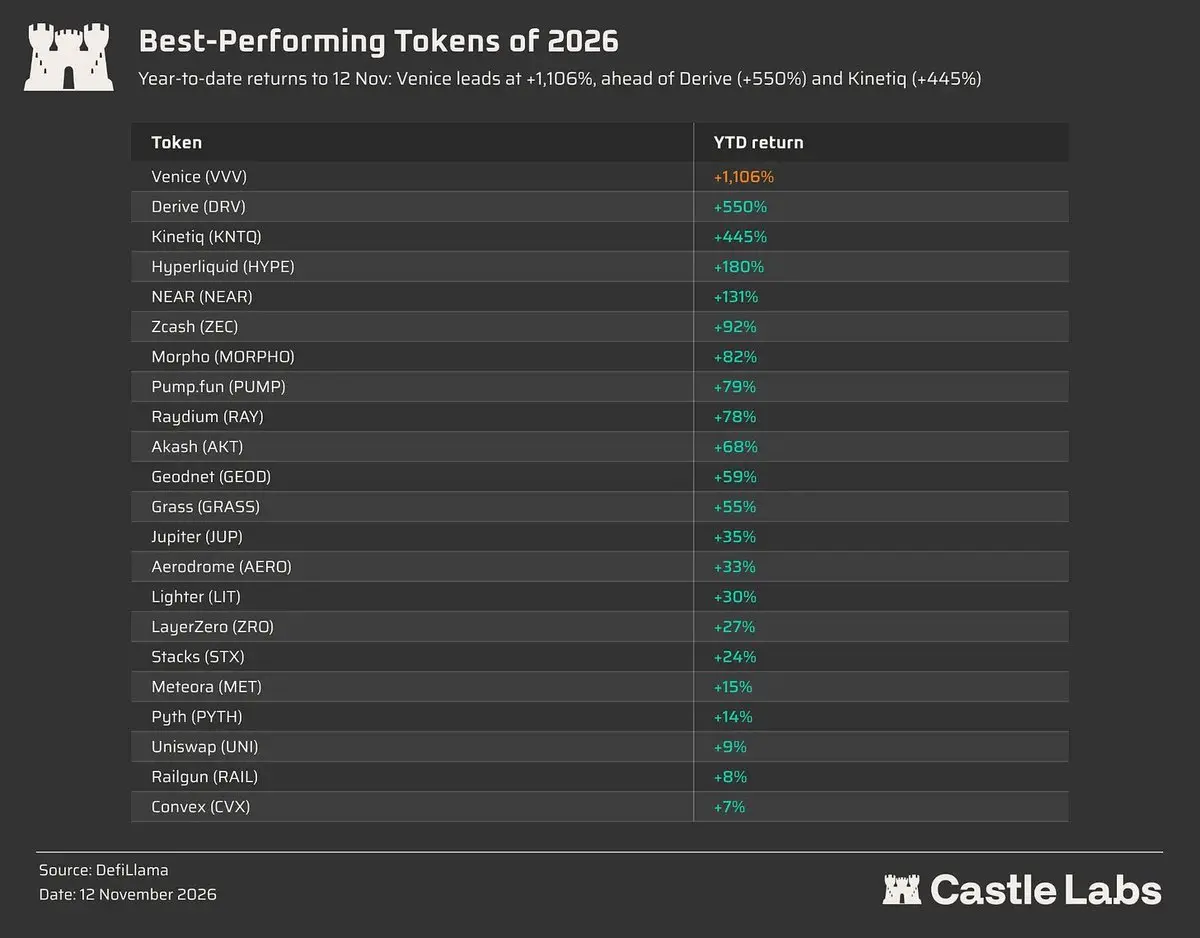
A good investment can balance both, focusing on fundamentals while also considering future directions. If you look at those tokens that have delivered strong YTD returns, the answer becomes clearer.
Conclusion
Reflecting on the question we posed at the beginning of the article: Is being the leading token in its category an important predictor of performance? The answer is not as clear-cut as "yes," as most category leaders do not perform well, so we need to assess tokens from different perspectives:
The current fundamentals of the product and its degree of association with the token. If the token can generate continuous cash flow, it is a good token, but it also needs to be understood in conjunction with the net flow around its issuance.
The market the product is trying to penetrate and how large that market can become. Tokenization is a fairly large market, with multiple on-chain products trying to penetrate; if a product is directly related to the narrative it has established and mastered.
The narrative surrounding the product. Strong narrative products will gain demand based on their potential future growth. For Zcash and Pearl, they are respectively Private Money and AI Money, as the former is essentially a privacy version of Bitcoin, while the latter aims to meet AI computing power needs through its token and blockchain design.
The first criterion is crucial for assessing the token's fundamentals; the second helps define market size and growth, while the third highlights what the market is most concerned about.