








2026 Hong Kong Listing Wave: The "Capital Normandy" of Chinese Technology Companies
Jan 27, 2026 09:57:27


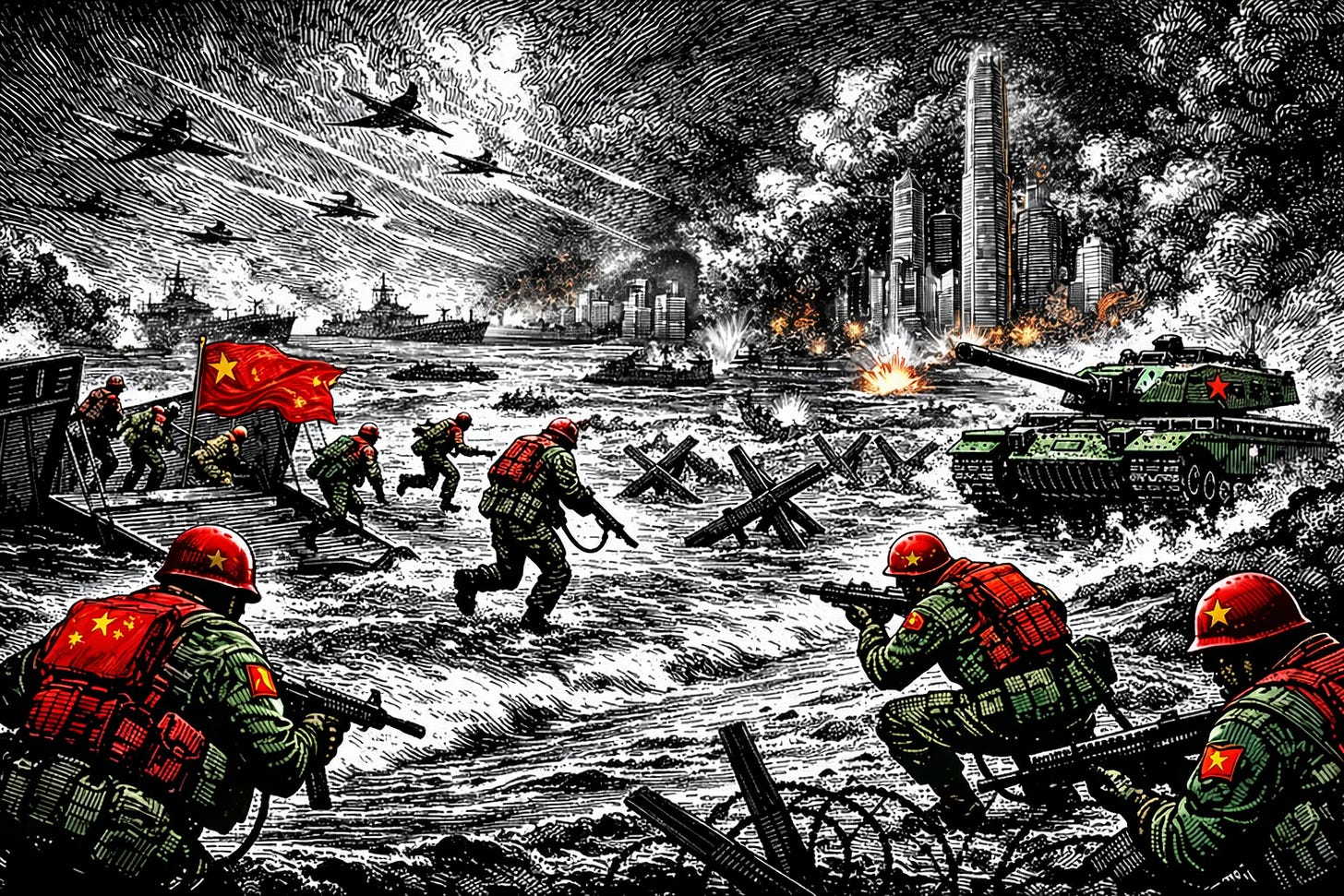
End of 2025. Beginning of 2026.
A group of China's most sensitive and less profitable chip and AI companies collectively chose to complete their capitalization in Hong Kong within the same time window.
This is not a market boom. This is a preemptive beachhead.
If we consider this wave of IPOs as "annual replenishment of China's hard tech assets," the list of investors serves as its medical record.
Because what is written on the list is not about popularity, but survival conditions:
Who still dares to provide funding? Who is willing to endorse? Who can sustain the supply chain?
And, who will quietly disappear when the wind changes.
The core of this capital action is to institutionalize the "de-Americanization" survival strategy into the company's DNA in the form of equity structure.
168X* is a viewpoint platform focused on connecting East and West, analyzing the layout of capital and technology in the changing global order. Welcome to subscribe to* 168X Substack, or follow me on X (Twitter)* for continued discussion and reflection.--- Mr. Z*
I. Hong Kong Stocks are Becoming a "Buffer Zone": Not the Best, but the Only Viable Option
Hong Kong used to be a "connector of Chinese and foreign capital." Now, it resembles a strategic buffer zone.
After the escalation of Sino-U.S. tech competition, the door for high-sensitivity tech companies to list in the U.S. has been shut. However, they still need international pricing. They still require external liquidity.
Thus, Hong Kong has become the most reasonable compromise. More brutally stated, it is the only usable door:
- Political Security: Completing the listing within the Chinese legal framework makes data, compliance, and jurisdiction more controllable.
- International Liquidity: Still able to access international capital, especially from Middle Eastern sovereign funds and long-term funds from Southeast Asia.
- Institutional Innovation: With reforms like Hong Kong Stock Exchange's 18C, even companies that are not yet profitable but have high strategic value can raise funds.
China's hard tech companies want to stockpile resources before the next round of stricter sanctions hits.
This is a grain-storing movement racing against sanctions.
II. Four "De-Americanization" Survival Models in Capital Puzzle
This wave of Hong Kong listings at the turn of the year is not due to "hot technology." It is a collective display of four "de-Americanization" survival models.
MiniMax, Zhipu, Birun, and Zhaoyi's shareholder lists clearly outline the shift in China's hard tech regarding capital, liquidity, supply chain, and local strategy:
- De-Americanization of Capital Sources: U.S. dollar long-term capital is systematically retreating.
- Middle Easternization of External Liquidity: Middle Eastern sovereign funds and Asia-Pacific hedge funds are stepping in, becoming valuation patches.
- Internal Circulation of Supply Chains: Giants lock in upstream and downstream with equity, turning equity into defensive contracts.
- Local State-owned Capital Attraction: Entering with the posture of attracting investment, using cornerstone investments to exchange for headquarters, computing power, talent, and ecosystems.
III. Case Analysis: MiniMax, Zhipu, Birun, Zhaoyi
1. MiniMax: From "Dollar Faith" to "Diverse Capital Puzzle"
MiniMax's shareholder roster is a clear causal chain, showcasing the transition of capital from "tech gambling" to "survival alliance."
Act One: Dollar VC's Tech Gamble
- Roles: Hillhouse Capital, IDG, Sequoia China, Gaorong Capital.
- Starting Point: Before large models became popular, the function of capital was not to "make money," but to turn high-risk stories into structures that could be caught in the next round. They are the evangelists of faith.
Act Two: Giants' Entrance Anxiety and Supply Chain Contracts
- Roles: Alibaba, Tencent, Mihayou, Xiaohongshu.
- Significance: Investment turns into supply chain contracts. Giants provide scenarios, traffic, and computing power, while companies bind returns with equity and ecosystems, writing "traffic, content, distribution" into the equity structure.
Act Three: Diverse Capital Alliance After De-Americanization
- Roles: Abu Dhabi Investment Authority (ADIA), Mirae Asset, Eastspring Investments, Gao Yi Asset, Boyu Capital.
- Significance: After the systematic retreat of U.S. dollar long-term funds, Middle Eastern sovereign funds provide external dollar liquidity, Asia-Pacific hedge funds become market anchors for pricing and acceptance, and RMB capital plays the role of ballast. This is a typical IPO pricing alliance, piecing together a new valuation foundation with diverse capital.
2. Zhipu AI: Jointly Pushed to the Table by "Giants, State Capital, and Local Governments"
Zhipu's narrative is not like that of an ordinary startup.
It resembles a national-level path: academic credibility → positioning by giants → investment from local government in an attraction style → capitalization pricing completed in Hong Kong.
Act One: Academic Credibility Precedes Revenue
- Roles: Qiming Venture Partners, Junlian Capital, Zhongke Chuangxing.
- Starting Point: This stage begins with the long-term accumulation of the Knowledge Engineering Laboratory at Tsinghua University's Computer Science Department. The early capital bets not on short-term returns, but on the strategic judgment that "China needs its own large model foundation."
Act Two: Giants Gather Half the Market, Zhipu Becomes the "Switzerland of the Hundred Model War"
- Roles: Alibaba Group, Tencent Investment, Meituan, Xiaomi.
- Conflict: The most fiercely competitive giants appear on the same shareholder list. This is actually a collective anxiety: it’s not necessary to monopolize, but one cannot allow the opponent to monopolize. Zhipu's "neutrality" has become a scarce asset.
Act Three: Local Governments Take Over, Capital Exchanges for Industry
- Roles: Beijing AI Industry Investment Fund, Shanghai Pudong Venture Capital, Hangzhou Industrial Investment Group.
- Transition: After the decline in U.S. capital activity, RMB state capital becomes a key source of liquidity. Local governments seek the establishment of computing centers, talent, and upstream and downstream ecosystems.
Act Four: Hong Kong Completes the Last Step, Turning Primary Alliances into Secondary Pricing
- Roles: Gao Yi Asset, CICC, Taikang Life, Prosperity7 Ventures.
- Significance: With academic credibility, endorsements from giants, and state capital backing in place, the Hong Kong market completes the final piece of the market-oriented acceptance puzzle.
3. Birun Technology: A Textbook of "War-time Financing" Under the Entity List
Birun is almost a textbook example of wartime capital structure:
Dollar VCs made it run fast, and its valuation was established → After being placed on the U.S. trade blacklist (entity list), RMB takes over → Industrial capital locks down the last mile with channels.
Act One: Speed and Endorsement from Dollar VCs
- Roles: Qiming Venture Partners, IDG, Hillhouse Capital.
- Function: The early solution is not the market, but "first being believed," turning tech gambling into a unicorn narrative that can be recognized by the market.
Act Two: Wartime Financing After the Entity List
- Turning Point: The company is placed on the entity list, the boundaries of dollar capital shrink, and supply chain risks soar.
- Transition: Shanghai Guosheng, Guangzhou Industrial Investment, Gree Capital, Hengqin Capital. These are policy-supported and patient capital, taking over the massive investments in chip production and R&D.
Act Three: IPO Cornerstone Locks the Market into Equity Structure
- Dilemma: Domestic GPUs lack concepts but lack deployment and procurement channels.
- Signal: When channel-type giants (such as Digital China, Charoen Pokphand Group) appear on the cornerstone list, the signal is very straightforward: integrating customers into the capital structure. Equity becomes a defensive contract, locking down the downstream market.
4. Zhaoyi Innovation: A Microcosm of "Cross-Generational Transformation" Between China and the U.S.
Zhaoyi is the most representative of a "twenty-year capital history" among the four companies.
It was born in the golden age of globalization. Its early stage was not about resisting sanctions, but about trust chains.
Act One: Baptism in the Golden Age of Globalization (2005-2012)
- Roles: Angel capital from Tsinghua alumni → Silicon Valley VCs (Walden International, IPV Capital).
- Function: Dollar funds brought governance, rhythm, and supply chain credibility, representing the standard growth path before Sino-U.S. antagonism.
Act Two: Returning to the Local, Completing Identity Upgrade (After 2016)
- Turning Point: Before the IPO, RMB funds and industrial capital were introduced, including Wuyuefeng Capital, SMIC Capital, etc., completing capitalization in A-shares.
- Upgrade: With the backing of national-level funds, such as the National Integrated Circuit Industry Investment Fund and Guoxin Qidi, the company transformed from an excellent enterprise into a national storage strategic asset.
Act Three: A+H Closed Loop and Global Long-term Capital Entry (2026)
- Strategy: A-shares undertake local pricing and policy dividends, while H-shares provide global liquidity and international connections.
- Roles: Huaxia, China Life, Ping An Pension, and overseas sovereign funds GIC (Government of Singapore Investment Corp). This marks the company's completion of the cross-generational transformation from "globalized product" to "national strategic asset."
IV. Hong Kong IPOs, A Beachhead with No Retreat
The signal is clear: the Sino-U.S. tech war will not ease but will become institutionalized.
Chinese tech companies no longer fantasize about global consensus. Instead, they rebuild the valuation system using "investable capital."
Hong Kong is no longer just a financial center. It is a strategic buffer zone for Chinese tech assets.
Therefore, this list of investors is no longer just a list; it is a real-time quote of geopolitical risk:
- U.S. dollar long-term capital is systematically retreating, but Middle Eastern sovereign funds and Asia-Pacific hedge funds are stepping in, becoming valuation patches.
- Supply chains are undergoing internal circulation through equity structures, with giants and state capital locking in upstream and downstream, turning equity into defensive contracts.
- Local state-owned capital is no longer just a financial investor but is entering with the posture of attracting investment, using capital to exchange for headquarters, computing power, talent, and ecosystems.
The true wealth code is also very straightforward:
It’s not about standing at the windfall. It’s about finding those who are still willing to ignite hard tech before the wind turns cold.
This is a capital breakthrough and strategic deployment under the shadow of sanctions. There is no retreat.
168X* is a viewpoint platform focused on connecting East and West, analyzing the layout of capital and technology in the changing global order. Welcome to subscribe to* 168X Substack, or follow me on X (Twitter)* for continued discussion and reflection.--- Mr. Z*
Latest News
ChainCatcher
Jan 27, 2026 17:07:31
ChainCatcher
Jan 27, 2026 17:02:25
ChainCatcher
Jan 27, 2026 16:59:48
ChainCatcher
Jan 27, 2026 16:59:29