








CoinGlass: 2025 Cryptocurrency Derivatives Market Report
Dec 25, 2025 12:59:57


Written by: CoinGlass
Introduction
2025 marks a clear structural dividing point in the evolution of the cryptocurrency market. In this year, crypto assets transitioned from a phase dominated by marginal experimentation to further embedding themselves into the mainstream financial system, with structural adjustments occurring in the market participant composition, trading tool system, and regulatory environment.
The derivatives market achieved significant expansion in 2025, with a notably more complex market structure. The early single-driven model of high-leverage retail speculation was replaced by more diverse institutional trading demands, marking a new phase characterized by "institutional capital dominance, parallel evolution of compliant infrastructure and decentralized technology." On one hand, traditional financial capital entered the market through channels such as BTC spot ETFs, options, compliant futures, and mergers and acquisitions, with hedging and basis trading demands gradually shifting towards on-exchange products, driving the structural rise of CME: after surpassing Binance to become the world's largest BTC futures holding platform in 2024, CME further solidified its dominant position in BTC derivatives in 2025, and for the first time approached Binance's retail scale in terms of holdings and trading participation in the ETH derivatives market. On the other hand, on-chain derivatives, relying on intent-centric architecture and high-performance application chains, began to form functional alternatives to centralized derivatives in specific niche scenarios, particularly in censorship-resistant trading and composable strategy execution, exerting substantial competitive pressure on CEX in terms of market share.
The increased complexity and deeper leverage chains simultaneously elevated systemic tail risks. The extreme events that erupted during 2025 posed an unprecedented stress test on existing margin mechanisms, clearing rules, and cross-platform risk transmission paths, with impacts extending beyond single assets or platforms, necessitating a reassessment of the robustness of the entire derivatives ecosystem.
It is important to emphasize that the aforementioned changes are merely a slice of the market reconstruction in 2025. Beyond the macro narrative and extreme events, the rise of Perp DEX, the massive expansion of stablecoins, the institutional exploration of RWA, the development of DAT architecture, the iteration of on-chain prediction markets, and the gradual implementation of regulatory frameworks across major jurisdictions collectively formed a multidimensional backdrop for the year. These internal structural evolutions and external shock events intertwined to create the overall picture and analytical starting point for the cryptocurrency derivatives market in 2025.
Market Overview
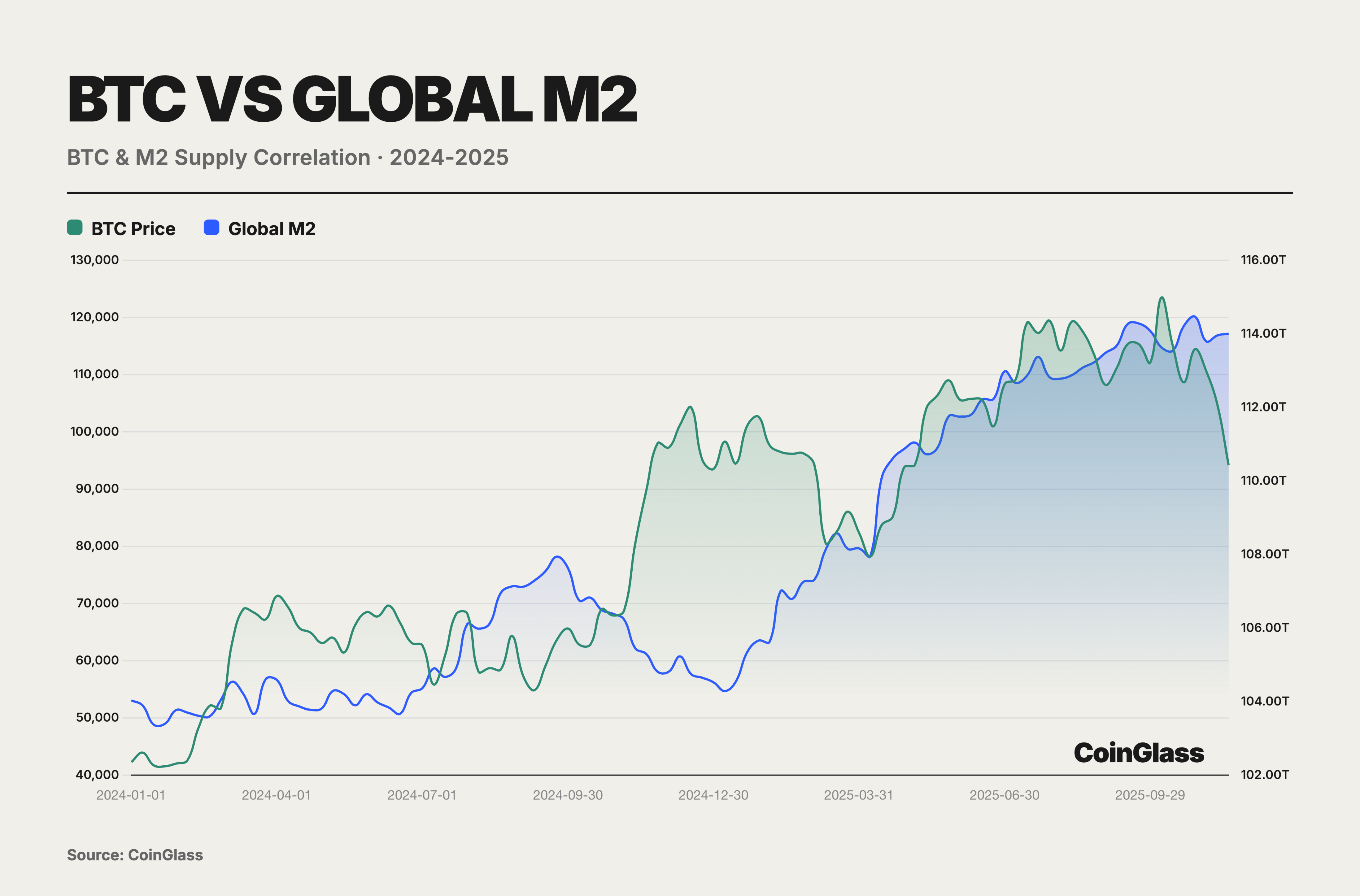
During the 2024-25 cycle of easing + bull market, BTC became more akin to a High-Beta risk asset rather than an independent inflation hedge. Its annual correlation of 0.78 with global M2 masked the structural decoupling in the second half of the year, while the drop in November validated its essence as a High-Beta risk asset. Buying BTC was not about hedging inflation but about going long on liquidity; once liquidity tightened, BTC would be the first to be sold off. Against the backdrop of the Federal Reserve initiating a rate-cutting cycle and global central banks significantly increasing liquidity, BTC soared from $40,000 to $126,000. This excess return essentially stemmed from its Beta coefficient of 2.5-3.0, which reflects a leveraged response to liquidity expansion rather than independent value discovery.
Geopolitical and policy uncertainties became significant factors influencing the market in 2025, with the complexity of the macroeconomic environment providing an extremely rich trading narrative for the derivatives market. The renewed trade friction between the U.S. and China, the Federal Reserve's difficult balance between rate cuts and inflation, the retreat of arbitrage trading triggered by the normalization of the Bank of Japan's monetary policy, and the new government's aggressive crypto-friendly policies in the U.S. intertwined to create a complex macro force, injecting continuous volatility and deep gaming space into the derivatives market. Overall, cryptocurrencies continued to behave more like risk assets, exhibiting extreme sensitivity to global liquidity conditions and shifts in central bank policies as a High-Beta risk asset class.
In 2025, major jurisdictions exhibited a pattern of "directional convergence, path differentiation" in the regulation of crypto derivatives. Under the leadership of the new government, the U.S. shifted towards a regulatory framework centered on legislation and licensing, incorporating digital assets into the national financial strategy, and through a series of bills including the GENIUS Act, weakened the previous uncertainty stemming from "enforcement replacing regulation." The European Union continued to implement a robust path focused on consumer protection and leverage restrictions under existing frameworks like MiCA and MiFID, imposing stricter entry thresholds for high-leverage retail derivatives. Significant internal differences were evident in the Asian region: Mainland China maintained a high-pressure stance on crypto trading, while Hong Kong and Singapore positioned themselves as compliant testing grounds, competing for institutional pricing and settlement business through licensing systems and product whitelists; among them, the Singapore Exchange launched BTC and ETH perpetual futures, marking the beginning of some crypto-native products being integrated into traditional financial infrastructure. The UAE accelerated its efforts to attract crypto companies and trading platforms by relying on a unified digital asset regulatory framework, shaping itself into a regional compliance hub. Overall, the regulation of DeFi derivatives gradually converged towards the principle of "same business, same risk, same regulation," indicating a gradual alignment of compliance requirements between on-chain and off-chain markets.
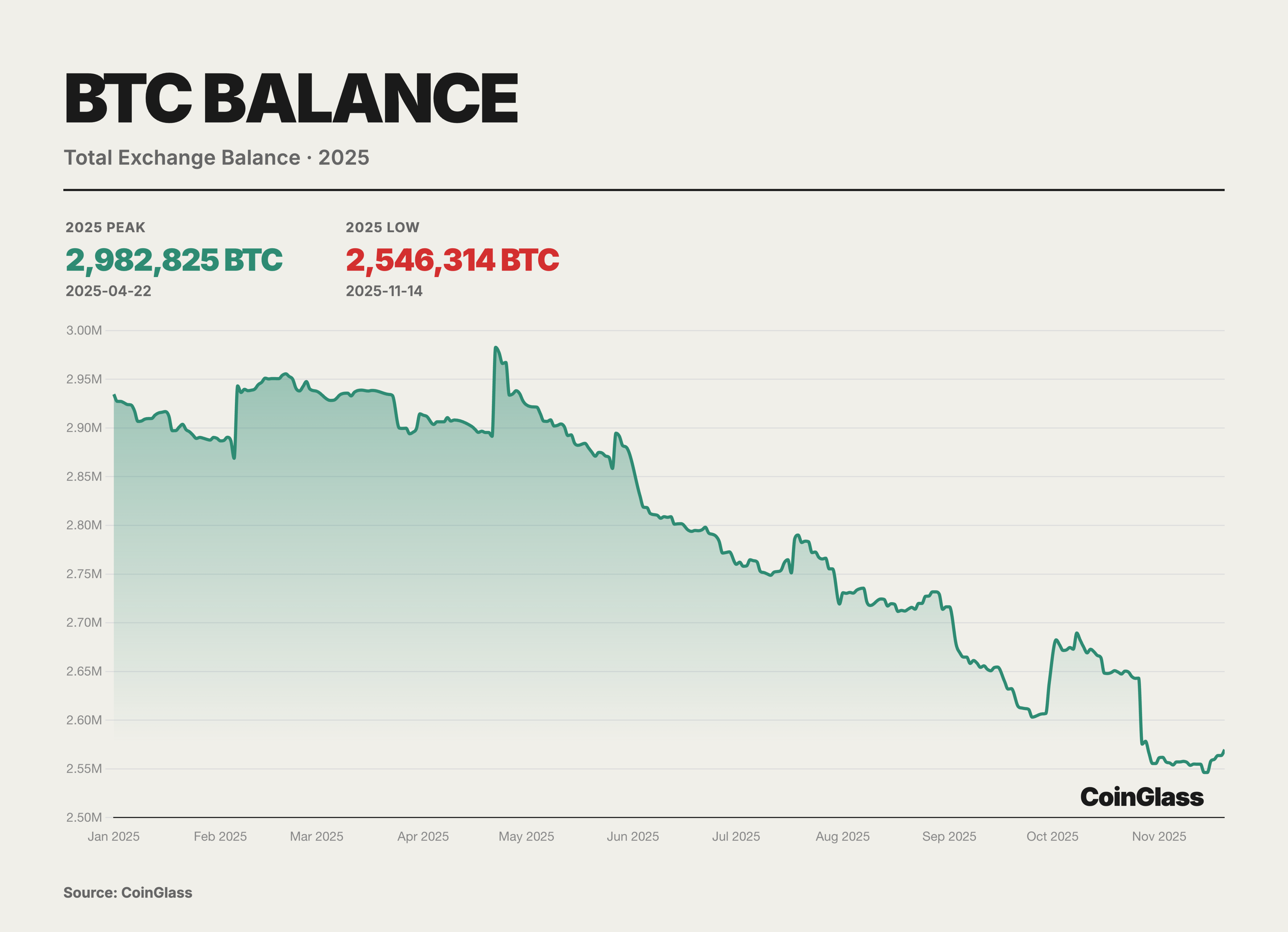
In 2025, the supply structure of BTC at the exchange level showed clear signs of rebalancing, with the overall exchange balance declining in a stepped manner, entering a continuous destocking phase since the peak in April. CoinGlass data shows that after reaching an annual peak of approximately 2.98 million BTC around April 22, the exchange BTC reserves exhibited a stepped decline over the following months, dropping to about 2.54 million BTC in mid-November, with a net outflow of approximately 430,000 BTC, a decrease of about 15%.
This round of destocking reflects more the migration of chips from exchanges to self-custody addresses, and the structural shift in trading demand towards "low turnover, long holding," rather than a simple reduction in short-term selling pressure. As tradable chips continue to be withdrawn from exchanges, this helps to raise marginal transaction prices and amplify pro-cyclical gains during price uptrends; however, it also means that once macro expectations or price trends reverse, the portion of reserves that previously left exchanges may concentrate back, potentially creating amplified selling pressure and volatility on thinner order books.
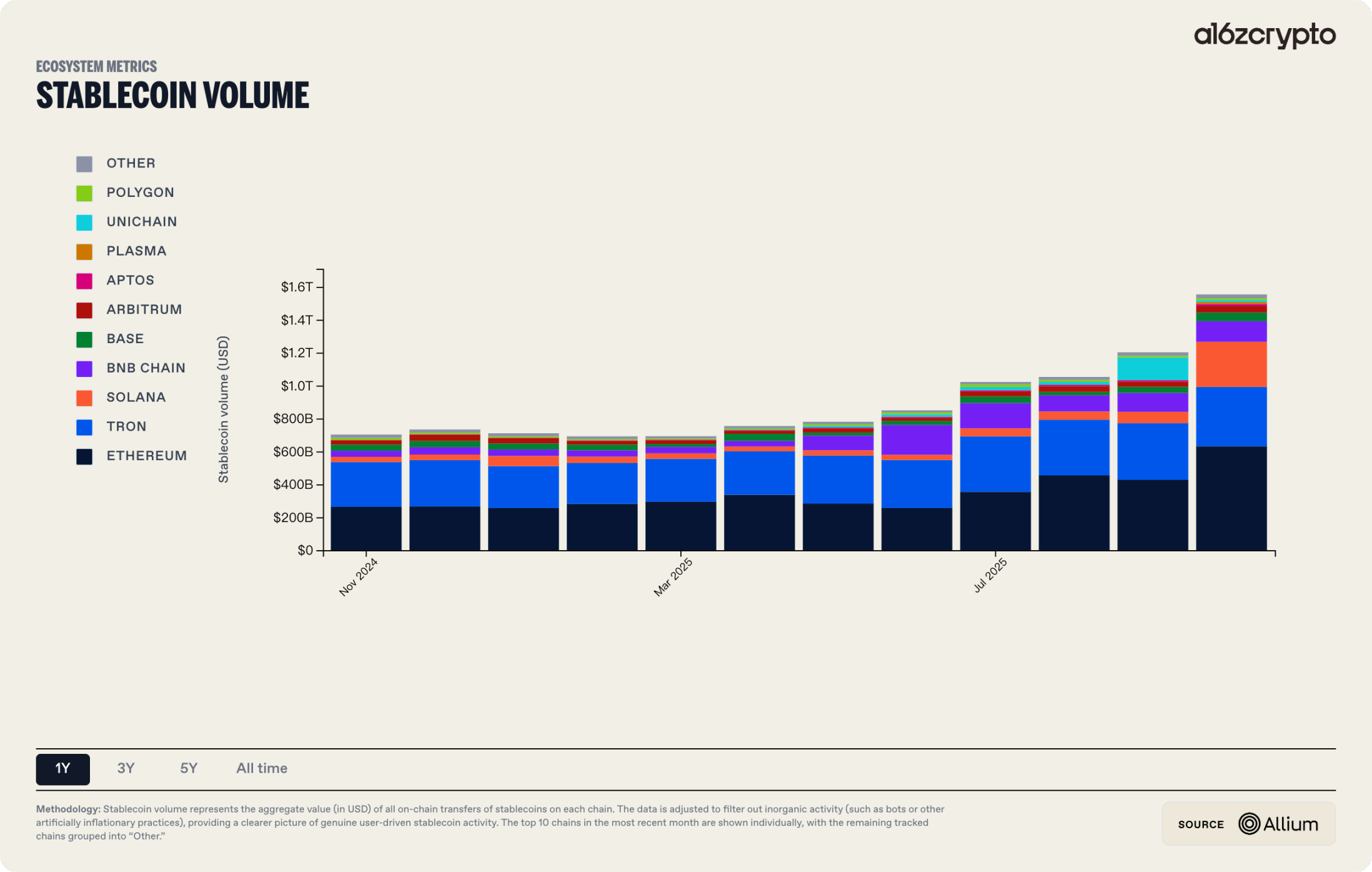
In 2025, the scale and application scenarios of stablecoins and DAT expanded simultaneously, beginning to directly interface with traditional finance at the boundary level. The total market capitalization of stablecoins once surpassed $230 billion, with an annual on-chain settlement scale of approximately $1.5 trillion, gradually solidifying as the underlying settlement layer for cross-border payments and on-chain finance, supported by legislation such as the GENIUS Act. The DAT model provided a standardized path for traditional institutional investors to gain exposure to crypto assets through compliant equity or fund vehicles, with its holdings of BTC and ETH assets peaking at over $140 billion, a year-on-year increase of more than three times. RWA acted as a key intermediary: anchoring cash flows from real-world assets on one end and connecting stablecoins and DAT's on-chain settlement and valuation systems on the other. The BCG-Ripple 2025 report predicts that the tokenized asset market will expand from the current approximately $600 billion to nearly $18.9 trillion by 2033, with a compound growth rate of about 53%, providing a scale assumption basis for this evolution.
2025 also marked a turning point for decentralized derivatives, transitioning from proof of concept to actual market share competition. Mainstream on-chain derivatives protocols made substantial progress in technical architecture, product forms, and interaction experiences, beginning to form a considerable alternative to CEX's trading and listing advantages. High-performance application chain architectures like Hyperliquid validated that decentralized infrastructure could directly compete with centralized matching platforms in terms of throughput, latency, and capital efficiency in specific scenarios. Intent-centric architecture became the core paradigm for upgrading the DeFi end experience in 2025: users only need to specify the target state, and Solvers or AI agents competitively search for the optimal execution path off-chain, then submit it for on-chain settlement, significantly lowering the operational threshold for complex transactions.
In 2025, the on-chain integration of RWA became an important symbol of the crypto industry's move towards the mainstream. Its growth momentum primarily came from two aspects: first, a marginally relaxed regulatory environment, with the U.S. striving to reshape its position as a crypto financial center, with U.S. Treasuries and stocks becoming core assets for tokenization; second, strong real demand—many global investors lack direct and convenient channels for trading U.S. stocks, and tokenization somewhat lowers the entry barriers posed by nationality and geography. Token Terminal data shows that the market capitalization of stock tokens grew by 2695% in 2025.
At the same time, the brand effect of leading issuers and trading platforms gradually emerged: Ondo, xStocks, and others became representative players in the RWA narrative by focusing on on-chain accessible traditional financial assets; mainstream exchanges like Bitget and Bybit continued to invest resources in the listing, trading, and liquidity support of related assets. Coupled with the advantages of eliminating cumbersome account opening processes and enabling 24/7 trading, stock tokens became a significantly rising focus in the market in 2025. Bitget's report indicated that during Q3 of 2025, its stock contract trading volume increased by 4468% month-on-month, with cumulative trading volume surpassing $10 billion.
In an environment where macro narratives and regulatory frameworks gradually clarified and uncertainties converged, more complex trading structures and gaming spaces were opened up. Based on this macro and institutional backdrop, the second part will shift to empirical profiling of centralized trading infrastructure: by quantitatively tracking the distribution of spot and derivatives trading volumes, market share changes of mainstream CEXs, and the capital flows of BTC spot ETFs, it will depict the funding allocation paths of various participants in 2025, the structural share rearrangement between trading platforms, and the impact of institutional capital entering the market on overall market liquidity and price discovery mechanisms.
Centralized Derivatives Exchanges
CEX Derivatives Trading Volume
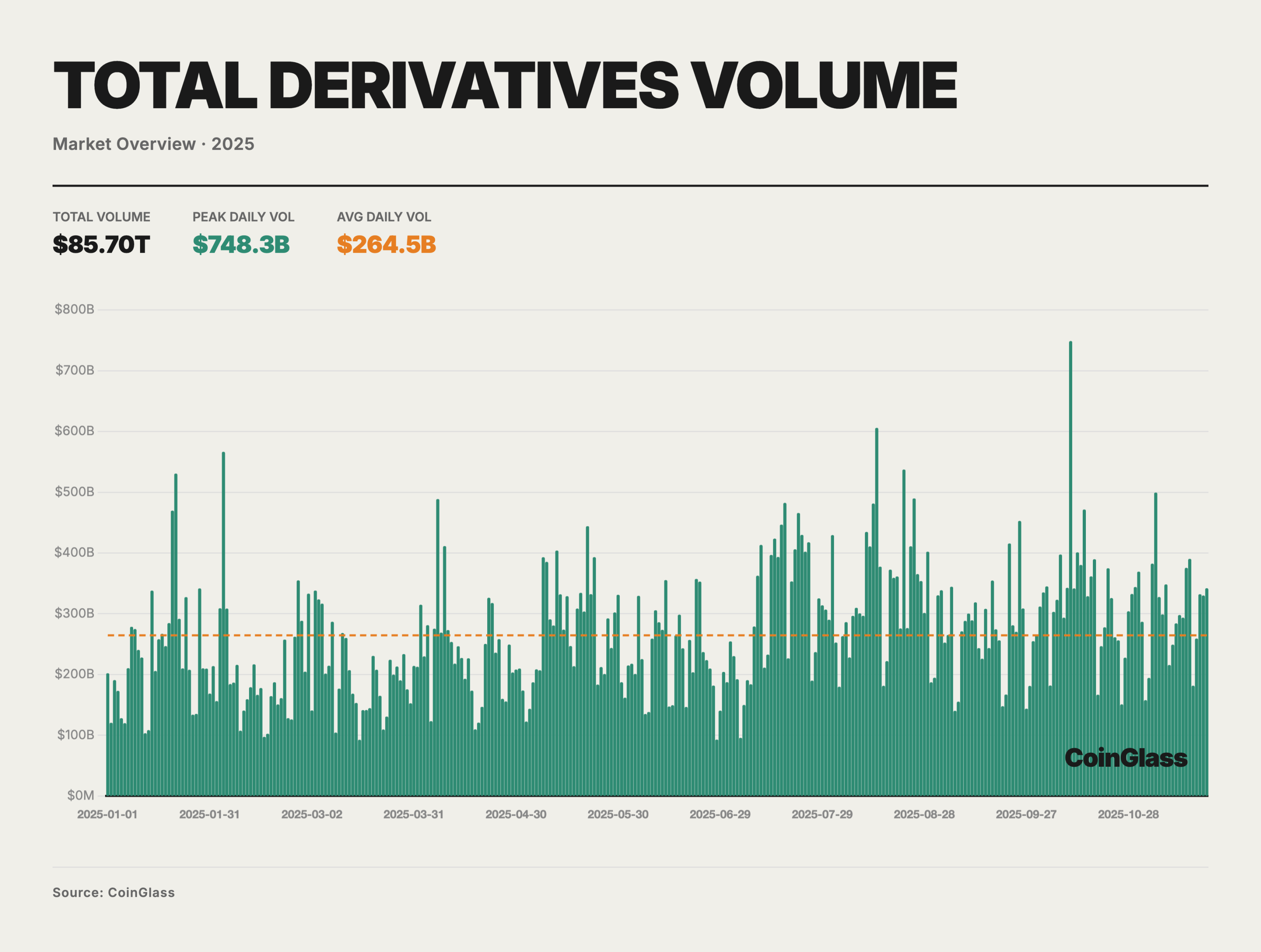
In 2025, the total trading volume of the crypto derivatives market was approximately $85.70 trillion, with an average daily trading volume of about $264.5 billion. Against the backdrop of a still relatively tight macro liquidity environment and a phase of risk appetite recovery, the overall trading activity throughout the year exhibited a structure of "first low, then high, with oscillating increases." Currently, derivatives have become the primary venue for price formation and risk management for most mainstream assets. The orange dashed line in the chart indicates repeated days of increased trading volume above the average, with a single-day peak of approximately $748 billion on October 10, significantly higher than the normal levels for the year, reflecting that during the accelerated market phase, derivatives have become the core battleground for price discovery and leveraged speculation. On a monthly basis, the average daily trading volume in Q1 was mostly around $200 billion, gradually rising from Q2, with daily averages in July-August and October exceeding $300 billion.
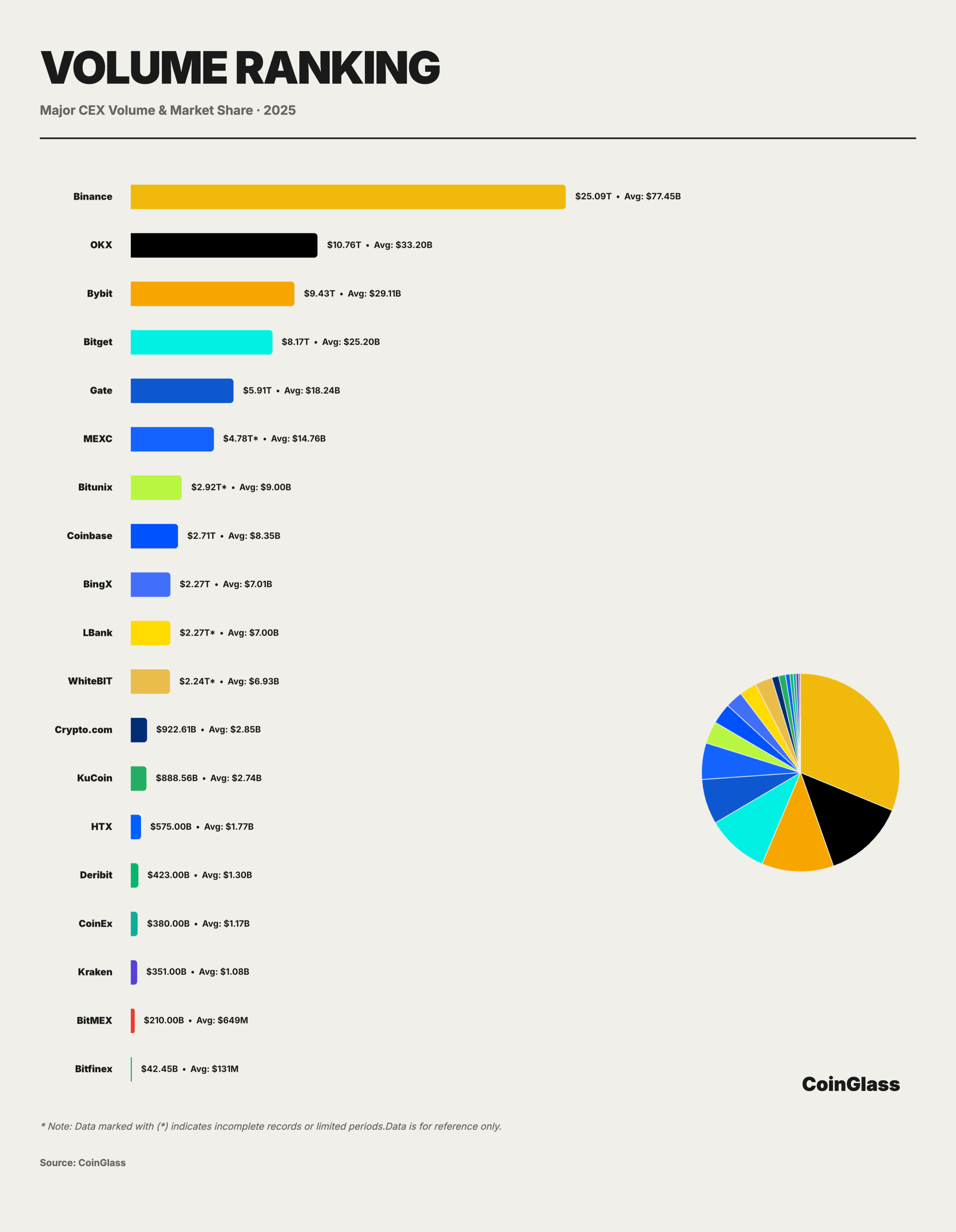
Behind the total trading volume of $85.70 trillion and the average daily trading volume of $264.5 billion, the market share distribution exhibited a highly concentrated characteristic. Binance firmly held the market leadership with a cumulative trading volume of $25.09 trillion and an average daily trading volume of $77.45 billion, accounting for approximately 29.3% of the market share, meaning that for every $100 of trading volume in the global derivatives market, about $30 occurred on Binance.
The competitive landscape of the second tier showed significant differentiation. OKX, Bybit, and Bitget closely followed, with cumulative trading volumes ranging from approximately $8.2 trillion to $10.8 trillion and daily averages between $25 billion and $33 billion, collectively accounting for about 62.3% of the total market share along with Binance. OKX ranked second with a total volume of $10.76 trillion and an average daily volume of $33.20 billion, holding about 12.5% of the market share. Bybit followed closely with a cumulative trading volume of $9.43 trillion and an average daily volume of $29.11 billion, with a market share of about 11%. Bitget ranked fourth with a total volume of $8.17 trillion and an average daily volume of $25.20 billion, holding about 9.5% of the market share.
Gate.io ranked fifth with a total volume of $5.91 trillion and an average daily volume of $18.24 billion, with its market share dropping to about 6.9%. Although Gate, as an established exchange, still maintains a certain scale, the gap with the top three is widening. More notably, the gap phenomenon after Gate: BingX's $2.27 trillion is less than 40% of Gate's, while Crypto.com and KuCoin have fallen to the billion-dollar level ($922.61 billion and $888.56 billion), only accounting for 3-4% of Binance's volume. Long-tail platforms like Crypto.com and KuCoin have a single market share of about 1%, primarily serving regional or niche customer functions, with significantly weaker bargaining power and liquidity stickiness compared to the top players. In terms of year-on-year and month-on-month growth rates of trading volume, Bitunix is in the leading range for both indicators, with the steepest growth slope, making it one of the fastest-growing platforms in terms of trading volume.
This cliff-like distribution reveals the Matthew effect of platform economics, where leading platforms form a self-reinforcing cycle due to liquidity advantages. For small and medium platforms, it is essential to establish differentiated positioning in niche markets; otherwise, they will face continuous pressure to lose market share.
CEX Derivatives Open Interest
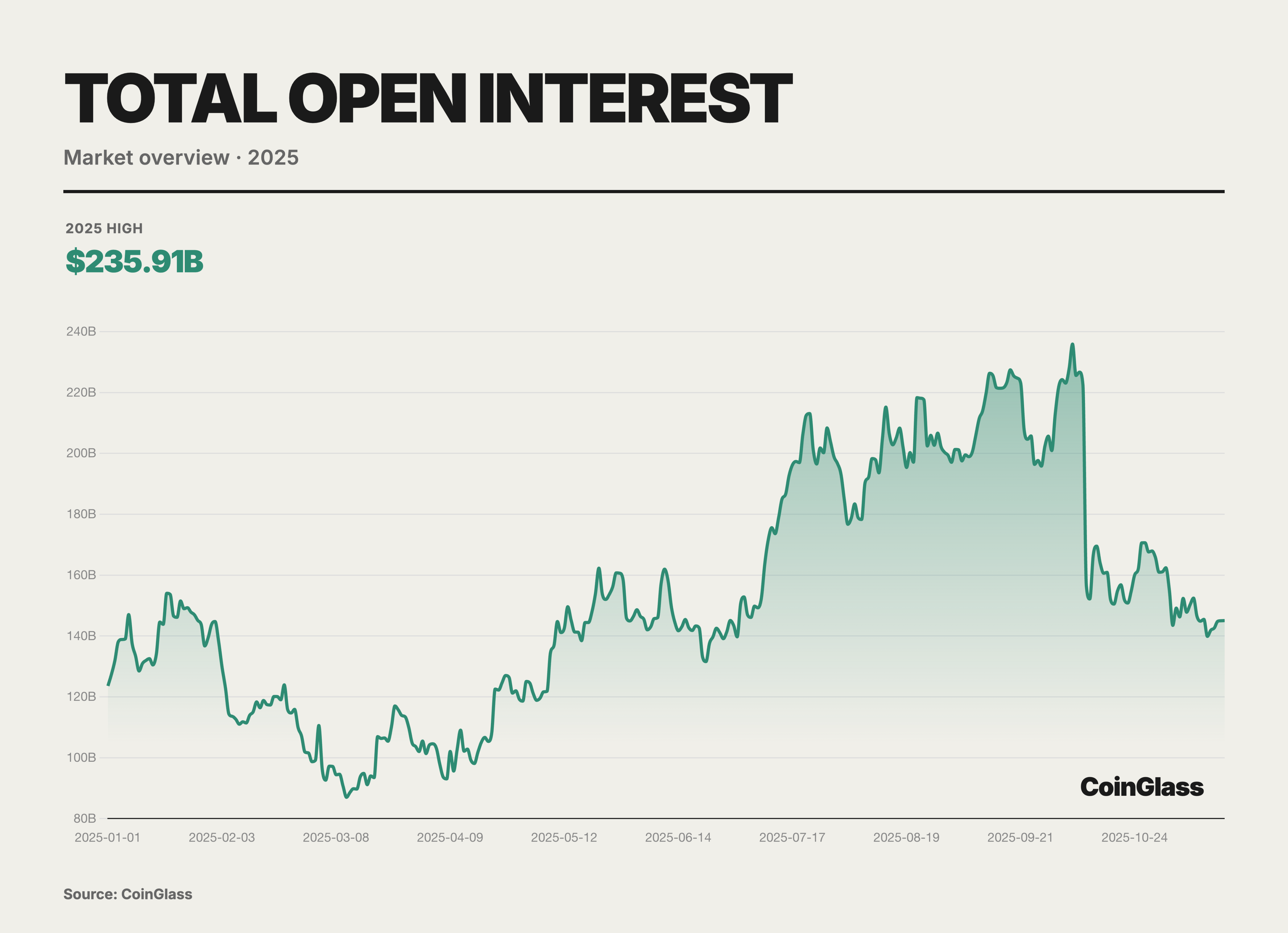
In 2025, global crypto derivatives open interest (OI) experienced a dramatic oscillation path characterized by an initial decline followed by a sharp rise and then a rapid drop. After experiencing deep deleveraging in Q1, OI once dipped to an annual low of $87 billion due to panic, but then demonstrated strong resilience in Q2, completing a confidence rebuild from hesitant probing to moderate accumulation. This recovery trend evolved into an almost frenzied accumulation of leveraged bubbles in Q3, with capital accelerating into the market, pushing OI to a historical peak of $235.9 billion on October 7. The highly crowded trading structure significantly increased the probability and intensity of market corrections, with a lightning-fast deleveraging in early Q4 wiping out over $70 billion in open interest in just one day, accounting for one-third of the total open interest. Nevertheless, the OI's drop to $145.1 billion still represented a 17% increase from the beginning of the year, and the overall capital accumulation in the second half of the year was significantly higher than in the first half.
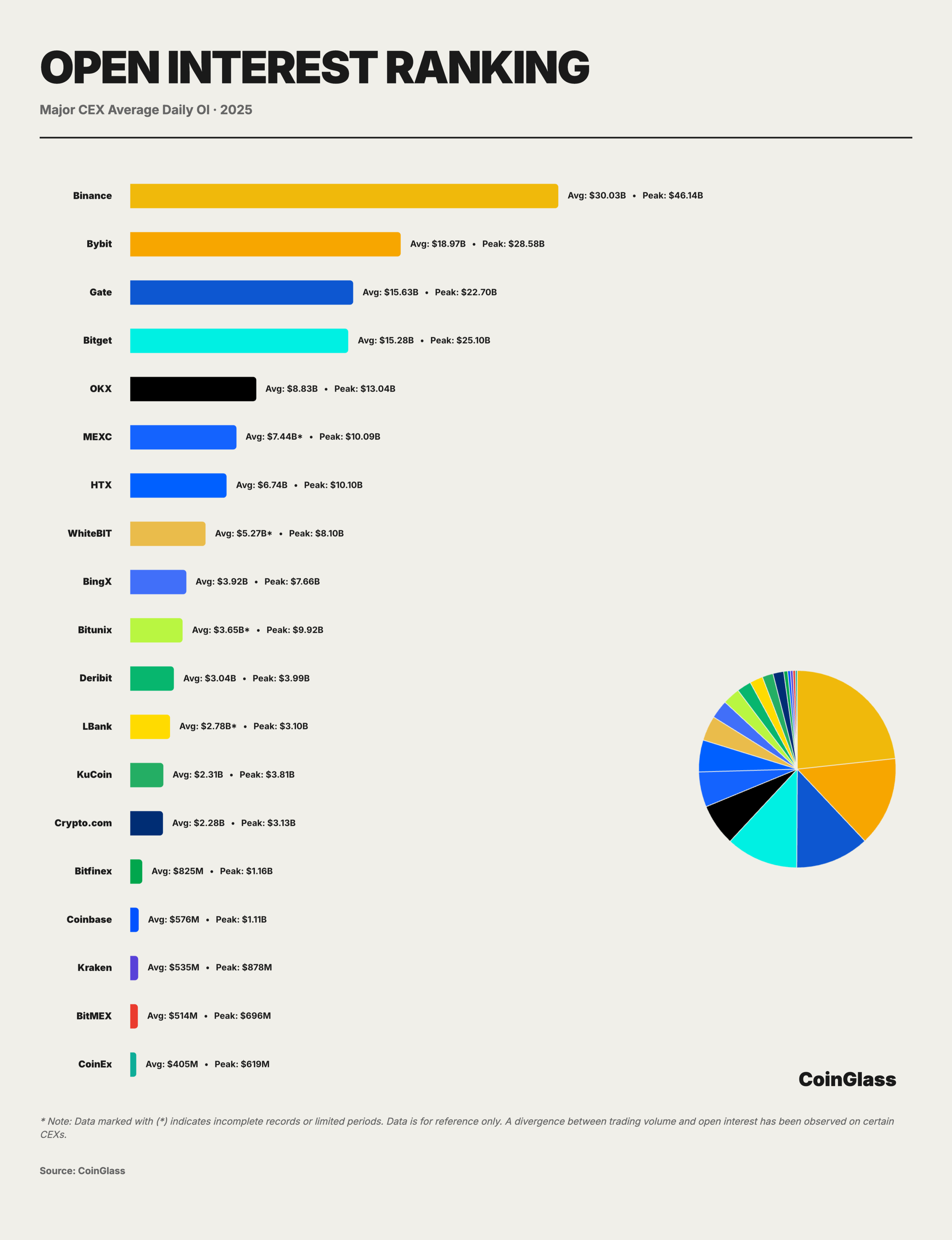
Based on the daily average open interest data from major CEXs in 2025, the global derivatives market has solidified into a clearly tiered oligopoly structure. The top ten centralized exchanges collectively held approximately $108.3 billion in OI, with Binance accounting for about $30 billion in daily average OI, representing approximately 28%, while Bybit, Gate, and Bitget had approximately $19 billion, $15.6 billion, and $15.3 billion respectively, collectively controlling about 73% of the total tradable leveraged positions in the market; when including OKX, the top five platforms' OI share exceeded 80%, indicating extremely high concentration among the top players. Binance established a tiered leading advantage with approximately $30 billion in daily open interest, nearly equal to the combined total of the second and third places, playing a decisive role as the cornerstone of market liquidity. Following closely is the second tier composed of Bybit, Gate, and Bitget, with each maintaining high daily open interest between $15 billion and $19 billion, collectively controlling half of the market; among them, the daily average gap between Gate and Bitget is only about $300 million, indicating a high degree of competition in market share between the two.
OKX's open interest data is relatively low, partly because OKX offers a product structure with higher capital utilization, with funds quickly rotating between different trading pairs and products, distributed across non-trading modules such as spot, wealth management, and staking, thus the open interest metric cannot fully reflect the actual scale of deposited funds. Additionally, there may be some divergence between trading volume and open interest on certain platforms, leading investors to focus more on trading structures and capital distribution rather than solely relying on open interest metrics.
CEX Liquidity Depth
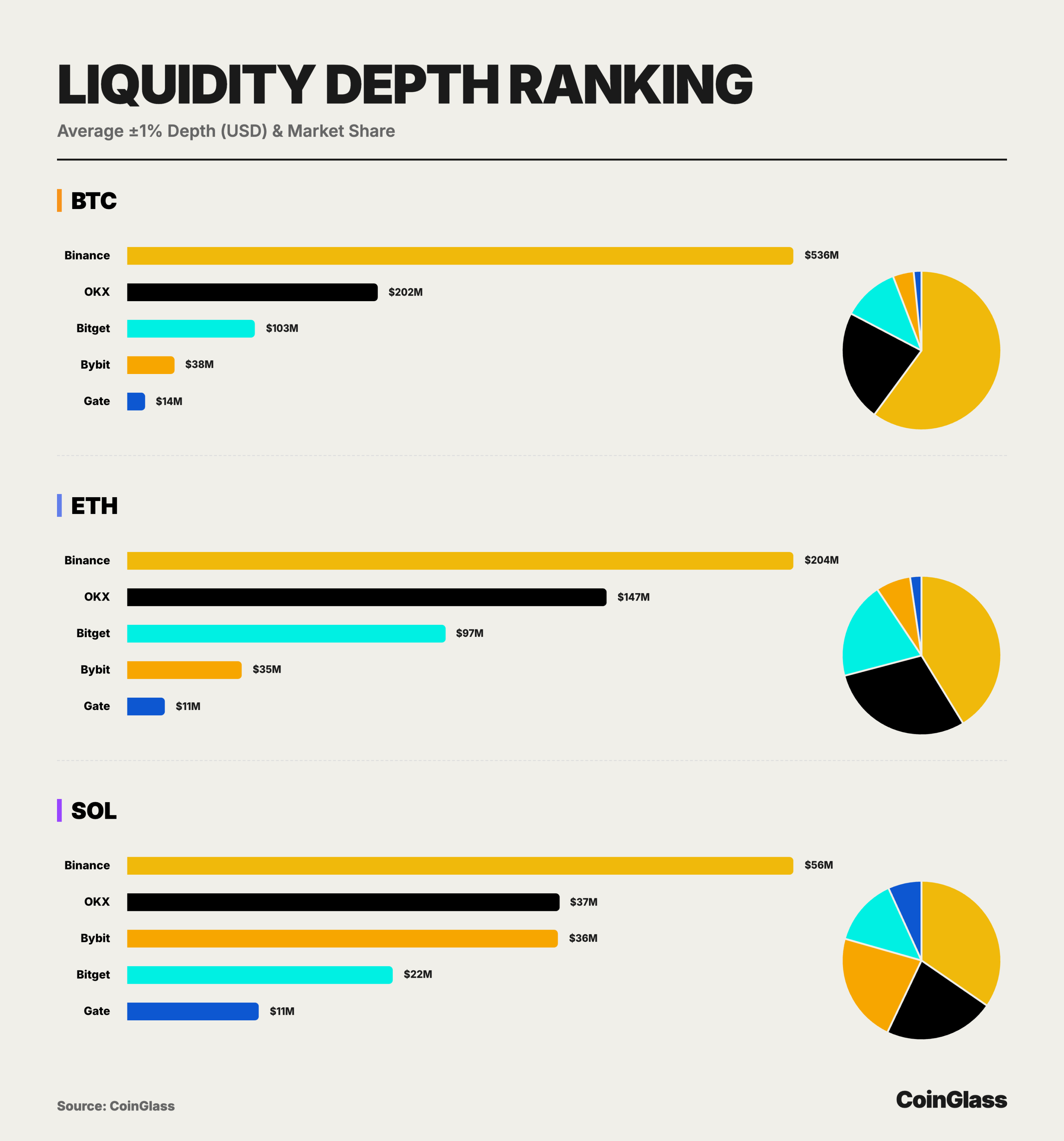
Based on the bilateral liquidity depth data of major assets (BTC/ETH/SOL) in 2025, the market exhibited a structure distinctly different from OI. Binance undoubtedly dominated the market with a tiered advantage, as its $536 million BTC depth was not only 2.6 times that of the second place but also nearly equal to the total of the other four platforms, establishing its absolute position as the global cryptocurrency derivatives liquidity hub. OKX, with a BTC depth of $202 million and an ETH depth of $147 million, demonstrated its hard power in accommodating large trades, proving it remains the second choice for institutional and whale trading after Binance.
For BTC, Bitget ranked third with approximately $103 million in bilateral depth, about 2.7 times that of Bybit and 7 times that of Gate, contributing nearly 11.5% to the overall market BTC depth. For ETH, Bitget's ±1% depth was approximately $97.48 million, nearing 70% of OKX's, significantly higher than Bybit and Gate, contributing nearly 20% to the overall market ETH depth, thus forming a liquidity distribution where Binance leads absolutely, OKX firmly holds second, and Bitget stabilizes as the core of the second tier. Even in the relatively weaker liquidity of SOL, Bitget still provided over $22.42 million in ±1% depth, about 60% of that of OKX and Bybit, accounting for approximately 14% of the overall market SOL depth, indicating its considerable order absorption capability even in high-volatility, relatively long-tail mainstream assets.
CEX User Asset Accumulation
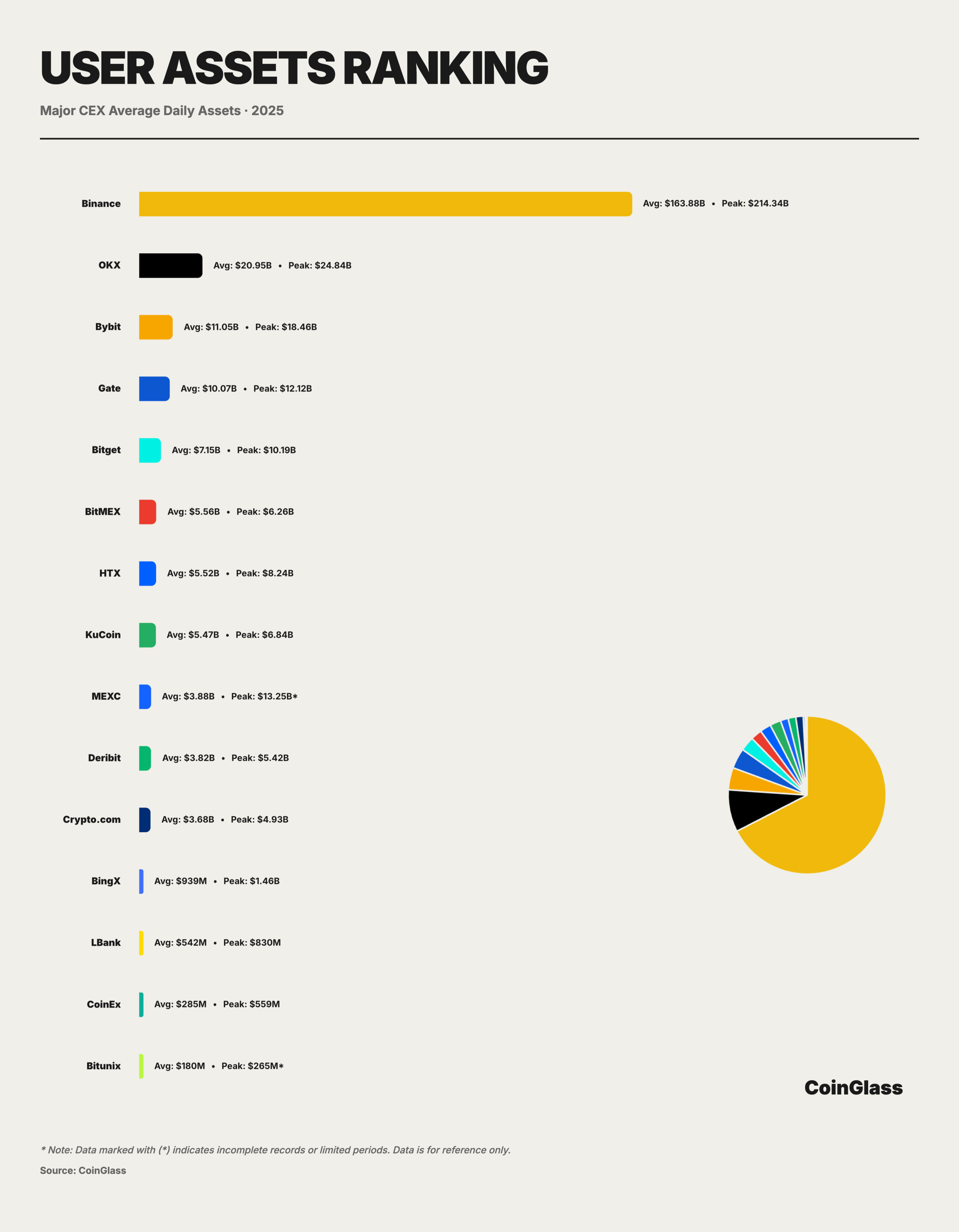
Based on the user asset accumulation data in 2025, the crypto market exhibited a highly concentrated unipolar structure at the custody level. Based on the Herfindahl-Hirschman Index calculation, the concentration of CEX custody assets in 2025 was 5352, indicating that the cryptocurrency exchange market is in a state of extreme oligopoly, with Binance alone dominating over 72% of the market share. Binance's average daily custody assets were approximately $163.9 billion, with an annual peak of about $214.3 billion, exceeding the total assets of the next seven major platforms by 2.5 times. This concentration means that in terms of actual fund storage and custody, Binance effectively assumes a role similar to that of "systemic infrastructure," with its operational and compliance status having a magnifying effect on the robustness of the entire crypto market.
OKX ranked second with approximately $21 billion in average daily assets and a peak of $24.8 billion, about twice the size of the third-place Bybit, demonstrating its advantage in user fund retention and medium to long-term asset accumulation. However, this bipolar + multiple mid-tier platform structure means that custody risk is highly concentrated on the top two platforms; should any one platform experience a tail event in compliance, technology, or operations, the spillover effect would far exceed the market share of the single platform itself. After the second tier, the market enters a more fiercely competitive range of tens of billions. Bybit, Gate, and Bitget had approximately $11.05 billion, $10.07 billion, and $7.15 billion in average daily assets, collectively forming the secondary asset-bearing layer. The top five platforms absorbed over 90% of user assets, indicating a high concentration of user funds.
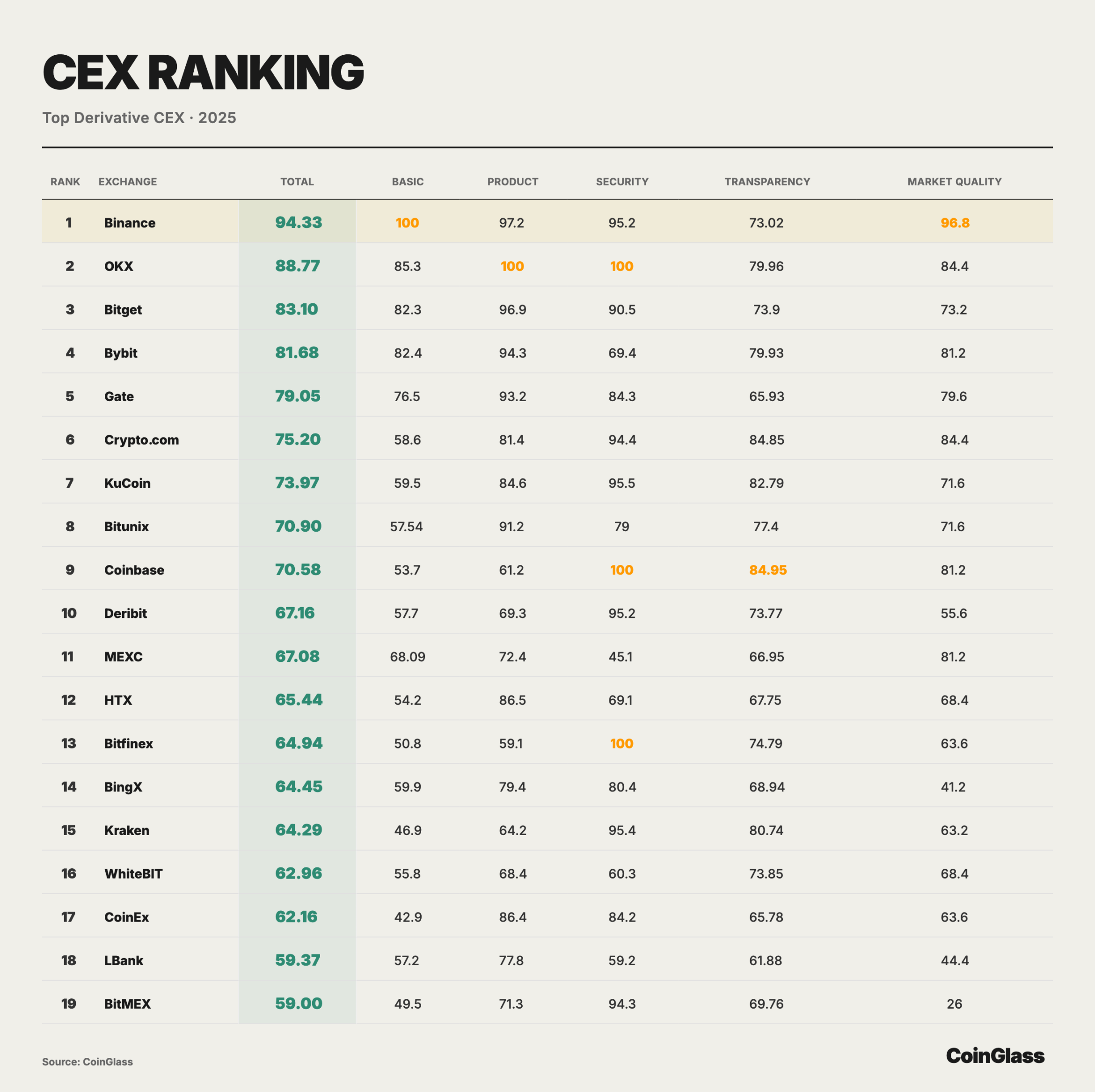
CEX Rankings
To further translate the narrative of head concentration in derivatives trading on the CEX side into comparable quality dimensions, CoinGlass conducted a comprehensive scoring and ranking of major derivatives CEXs. The chart below focuses on basic trading data as core weight and provides sub-scores and weighted totals from dimensions such as product, security, transparency, and market quality, thus visually presenting the structural differences between different platforms in liquidity bearing, risk control constraints, and information disclosure.
Liquidation Data
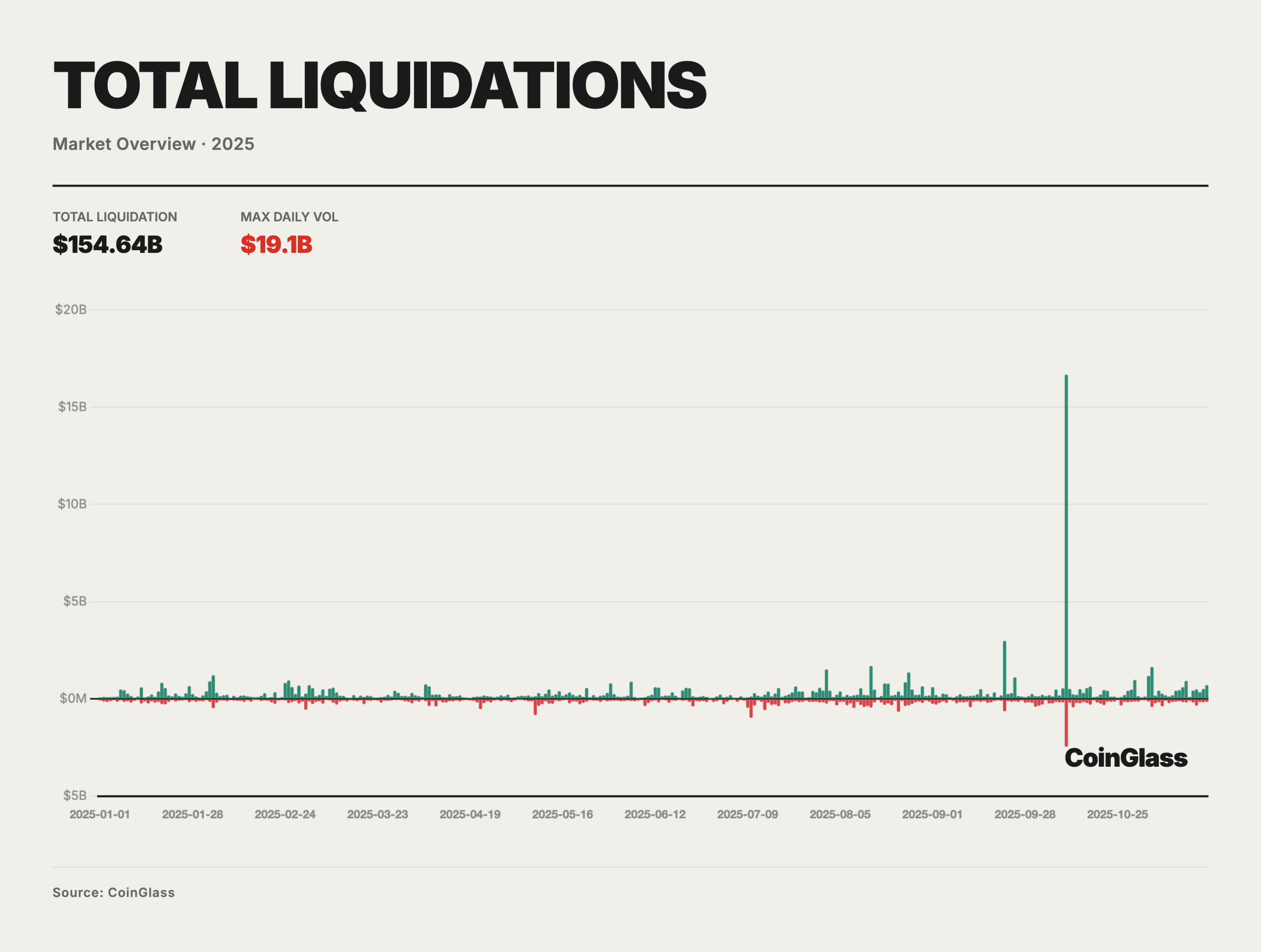
In 2025, the total nominal amount of forced liquidations for both longs and shorts was approximately $150 billion, corresponding to an average daily leverage reshuffling of about $400-500 million. On most trading days, the scale of long and short liquidations remained in the tens of millions to hundreds of millions range, primarily reflecting daily margin adjustments and short-term position clearings in a high-leverage environment, with limited medium to long-term impacts on price and structure. The truly systemic pressure concentrated in a few extreme event windows, with the mid-October 10-11 deleveraging event being the most typical.
On October 10, 2025, the scale of liquidations across the market reached an extreme peak during the sample period, with a total liquidation of over $19 billion, far exceeding the single-day highs of previous liquidation events. Combining the disclosure rhythm of some platforms and feedback from market makers, the actual nominal liquidation scale may have approached $30-40 billion, several times that of the previous cycle's second-highest event. Structurally, the liquidations on that day were heavily skewed towards the long side, with long liquidations accounting for about 85-90%, indicating that prior to the event, the BTC and related derivatives markets were in an extremely crowded long leverage state.
From a causal chain perspective, the trigger point for the 10-10-11 event stemmed from exogenous macro shocks. On October 10, U.S. President Trump announced that starting November 1, a 100% tariff would be imposed on Chinese imports and plans to implement export controls on key software, significantly raising market expectations for a new round of high-intensity trade wars, leading global risk assets to shift into a clear risk-off mode. Prior to this, BTC had reached an all-time high of approximately $126,000 in 2025, driven by easing expectations and expanded risk appetite, with the utilization rate of long leverage in the derivatives market at a high level, and the basis between spot and futures being elevated, indicating that the entire system was in a fragile state of high valuation + high leverage. The exogenous macro negative news landed against this backdrop, becoming the direct trigger for igniting the concentrated liquidation chain.
What truly determined the magnitude of the event's impact was the pre-existing leverage and product structure as well as the design of the clearing mechanism. Compared to three or four years ago, the market in 2025 had more perpetual products with high open interest, more small and medium market cap assets, and more large platforms, significantly increasing the overall nominal leverage scale; at the same time, many institutions adopted complex strategies involving long-short hedging, cross-asset, and cross-term positions, which superficially appeared as "risk hedging," but in reality, heavily relied on the orderly operation of the clearing engine and ADL mechanism under extreme conditions, with tail risks inadequately managed. Once the clearing and risk management mechanisms deviated from their ideal trajectories under pressure, the hedging legs that should have offset each other would be mechanically dismantled, forcing what was originally constructed as neutral or low net exposure positions to be exposed as high net directional positions.
After the price fell below the critical margin threshold on October 10, the conventional liquidation logic was first activated, with a large number of margin-deficient longs being thrown into the order book for market price liquidation, triggering the first round of concentrated deleveraging. As the liquidity of the order book was rapidly consumed, some platforms' insurance funds struggled to fully absorb the losses, and the long-untouched automatic deleveraging (ADL) mechanism was forced to intervene. By design, ADL is used in extreme situations and when insurance funds are insufficient to forcibly reduce shorts to avoid prices being driven to extreme levels by liquidation pressure, thus preventing the platform from becoming insolvent. However, in this event, the execution of ADL exhibited significant deviations in price transparency and execution paths: some positions were forcibly reduced at prices significantly diverging from market prices, causing the short positions of leading market makers, including Wintermute, to be passively liquidated at points far from reasonable price levels, making it nearly impossible to hedge losses through normal trading; meanwhile, the triggering of ADL was primarily concentrated on illiquid altcoins and long-tail contracts rather than mainstream assets like BTC/ETH, causing many institutions employing structural strategies like short BTC / long Alt to quickly lose their short hedging legs, rapidly exposing them to significant downward risks in altcoin positions. The deviation in the execution of the clearing and ADL mechanisms, compounded by issues at the infrastructure level, amplified the pressure. In extreme market conditions, several centralized platforms and on-chain channels experienced congestion in withdrawals and asset transfers, with cross-platform capital pathways partially severed at critical moments, making typical cross-exchange hedging paths difficult to execute smoothly, leading market makers, even if willing to take on counterparty risk, to struggle to hedge risks in a timely manner on other platforms or markets. In this situation, professional liquidity providers were forced to reduce quotes or even temporarily withdraw due to risk control, further entrusting price discovery to the automated logic of the clearing engine and ADL. Meanwhile, under high-load conditions, some CEXs experienced matching and interface lags or even brief outages, while the crypto market lacked clear circuit breaker and centralized auction mechanisms like traditional stock and futures markets, forcing prices to continue sliding on order books dominated by passive liquidations, further amplifying tail volatility.
In terms of outcomes, this event had a highly uneven impact on different assets and platforms, but we believe the long-term implications of this event are highly underestimated. The maximum drop for mainstream assets like BTC and ETH was roughly in the range of 10-15%, while many altcoins and long-tail assets experienced extreme retracements of 80% or even close to zero, reflecting the most severe price distortions occurring on the least liquid assets in the liquidation chain and ADL execution. Compared to the Terra/3AC period in 2022, this round of events did not trigger large-scale institutional chain defaults; although market-making institutions like Wintermute suffered some losses due to the ADL mechanism, overall capital remained sufficient, with risks more concentrated on specific strategies and assets rather than spreading throughout the entire system through complex market structures.
On-Exchange Derivatives and DAT
On-Exchange Derivatives
The fiscal year of 2025 not only marks a watershed moment in the history of digital asset development but also a key year for CME to establish its position as the global center for cryptocurrency pricing and risk transfer. If 2024 was the inaugural year for spot ETFs, then 2025 is the year of deepening the on-exchange derivatives market. In this year, we witnessed institutional capital shift from purely passive allocation to actively managing through complex derivatives strategies, completely reconstructing the liquidity moat between the compliant on-exchange derivatives market and the unregulated offshore market.
The most disruptive product innovation in 2025 was the launch and popularization of Spot-Quoted Futures (codes QBTC and QETH). Unlike traditional futures, these contracts aim to provide a closer anchoring to spot prices through a special settlement mechanism, significantly reducing basis risk and rollover costs.
With the launch of real-time data for the CME BTC Volatility Index (BVX), the market is likely to welcome tradable volatility futures in 2026. Institutional investors will have direct tools to hedge unknown risks for the first time, without needing to simulate through complex options combinations.

In 2025, we witnessed the normalization and scaling of basis trading. With the exponential growth of assets under management for spot ETFs, using CME futures for cash-and-carry arbitrage not only became a mainstream strategy for hedge funds but also a key link connecting traditional financial interest rates with crypto-native yields.
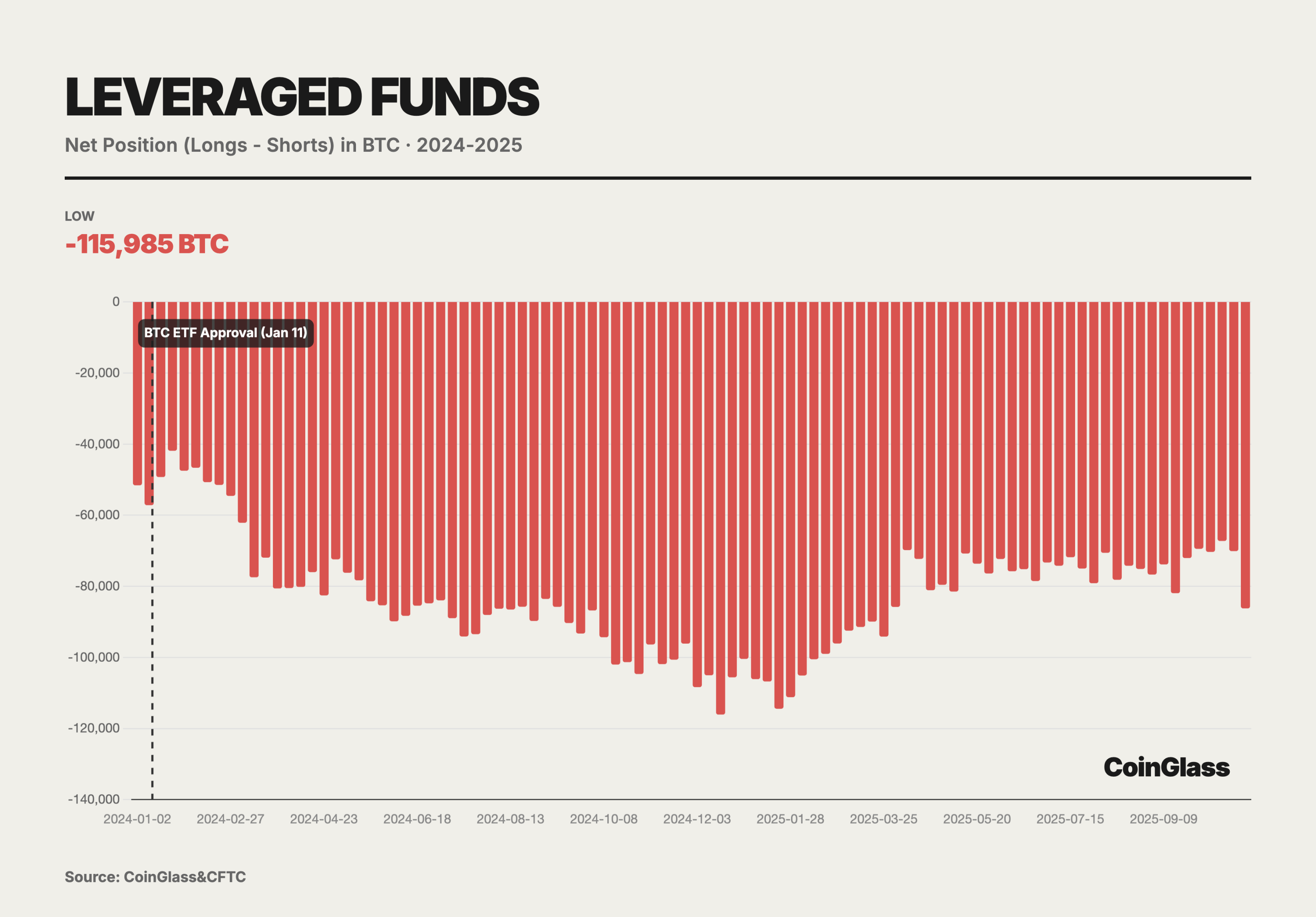
Currently, leveraged funds hold a net short position of as much as 14,000 contracts. In-depth analysis shows that this is actually a direct product of basis trading. Leveraged funds buy BTC in the spot market or through ETFs while simultaneously selling an equivalent amount of futures contracts at CME. This combination is delta neutral, aiming to profit from the basis yield when futures prices exceed spot prices. As the inflow of funds into spot ETFs increases, the short positions of leveraged funds have also increased simultaneously. This proves that the short positions are not directional shorts but are meant to hedge the long inventory brought by spot ETFs. At their peak, leveraged funds held net short positions of 115,985 BTC, indicating that leveraged funds are the main providers and carriers of liquidity for spot ETFs.
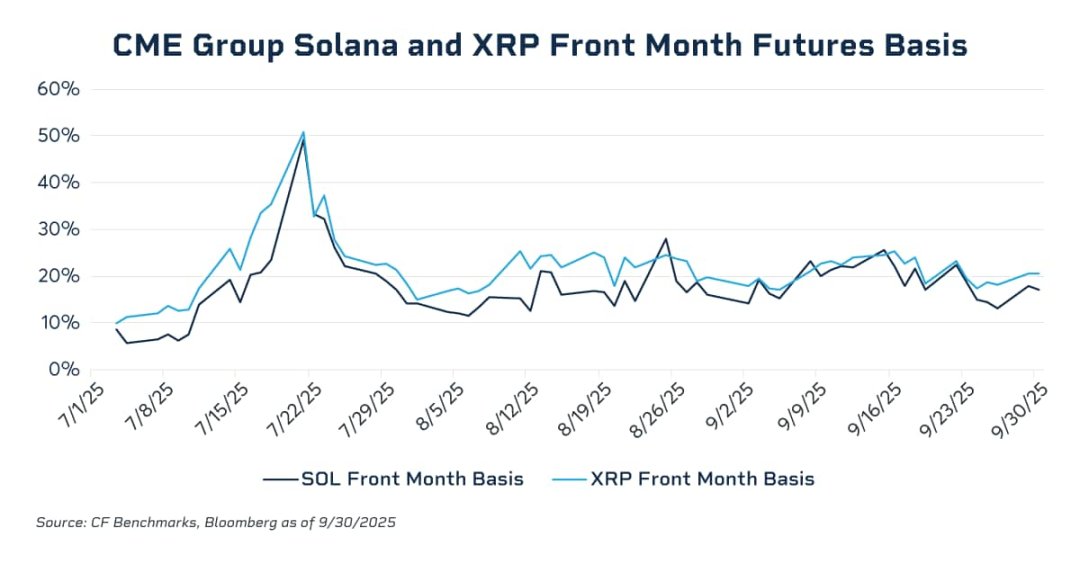
Data shows that the annualized basis for front-month contracts soared to the range of 20-25% during the bull market in November 2024, while during the deleveraging period in Q1, it compressed to nearly 0. In July 2025, the annualized basis for near-month futures contracts of SOL and XRP surged to nearly 50%, far exceeding the typical basis levels observed in BTC futures, clearly exposing the lack of effective cross-market arbitrage forces in the related markets. In the absence of highly liquid, regulated spot investment tools, institutional funds find it challenging to scale deploy cash and arbitrage structures for futures shorts / spot longs, naturally failing to exert continuous pressure on excessively high basis premiums. With the launch of SOL and XRP spot ETFs under a universal listing regulatory framework, this structural gap is partially filled, providing necessary spot carriers and liquidity foundations for compliant institutional capital to enter the market and compress futures basis through arbitrage. With the CFTC approving spot trading, it is highly likely that margin offsets between spot and futures will be realized in 2026. This will release tens of billions of dollars of idle capital, greatly enhancing the market's leverage efficiency. At that time, the friction costs of basis trading will drop to historical lows, and basis levels may further converge to those of traditional commodities.
In November 2025, the average daily trading volume of the CME cryptocurrency segment reached a historic 424,000 contracts, with a nominal value of $13.2 billion, a year-on-year increase of 78%. This figure surpassed any single-month performance in 2024 and approached the levels seen at the peak of the 2021 bull market, but its composition was healthier, driven more by institutional hedging and arbitrage rather than pure retail speculation.
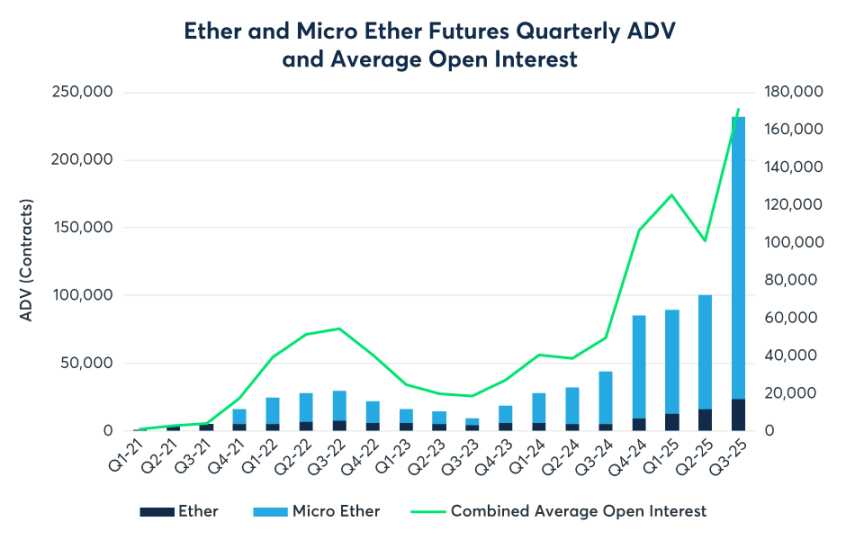
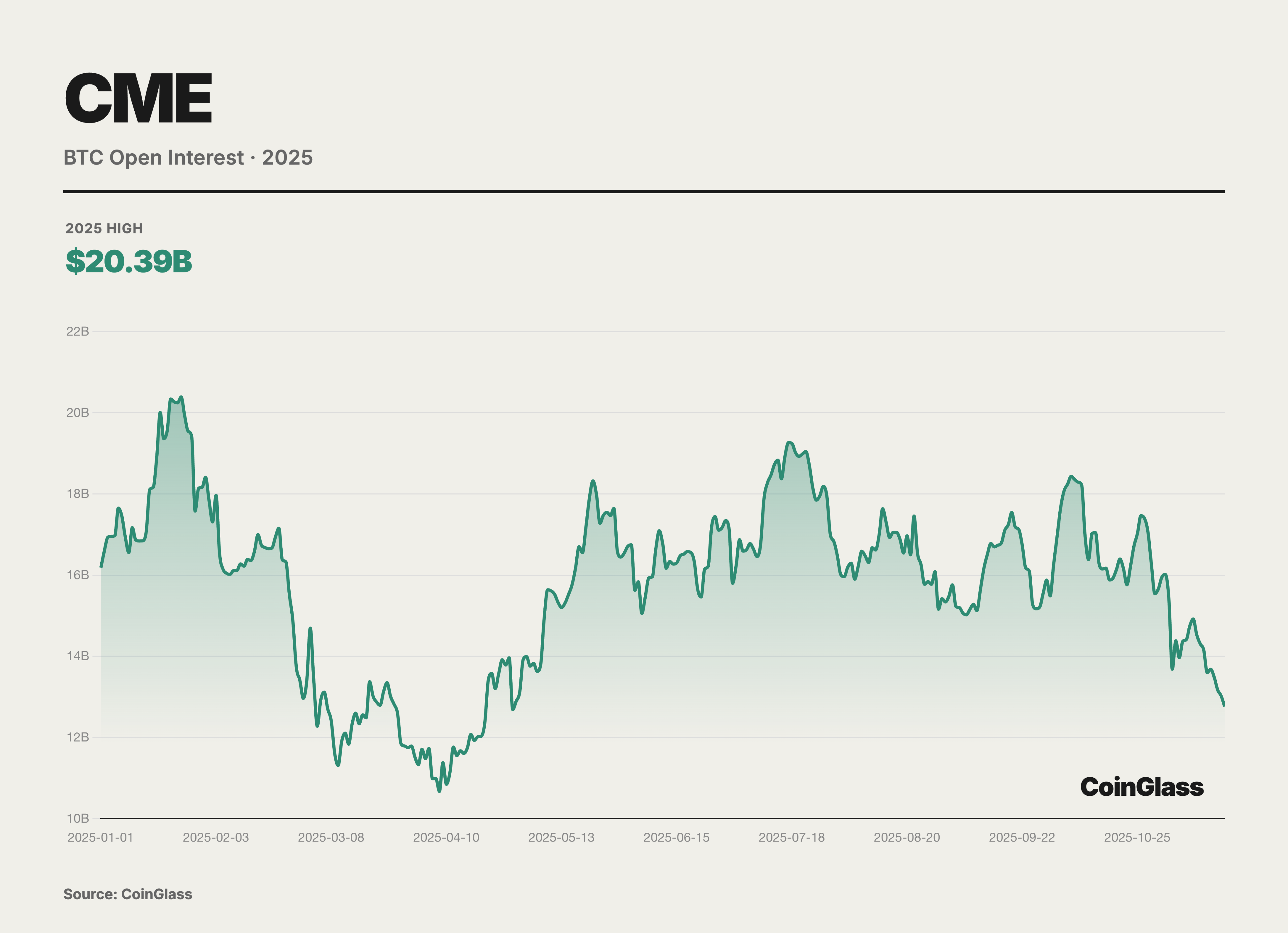
Although BTC maintained an absolute advantage in nominal open interest, 2025 was a year of explosive liquidity for ETH derivatives. Data shows that the average daily trading volume of ETH futures surged by 355% year-on-year in Q3, far exceeding the growth rate of BTC. The passage of the GENIUS Act in July 2025 eliminated the last compliance barrier for traditional financial institutions to enter the market, directly driving the CME cryptocurrency complex to set a record of $31.3 billion in average daily open interest in Q3. Micro contracts continued to play a foundational role in liquidity. The ADV of micro ETH futures (MET) reached an astonishing 208,000 contracts in Q3. According to broker data, many medium-sized hedge funds and family offices prefer to use micro contracts for position adjustments to more precisely match the scale of their spot investment portfolios, avoiding the granularity issues posed by standard contracts (5 BTC / 50 ETH).
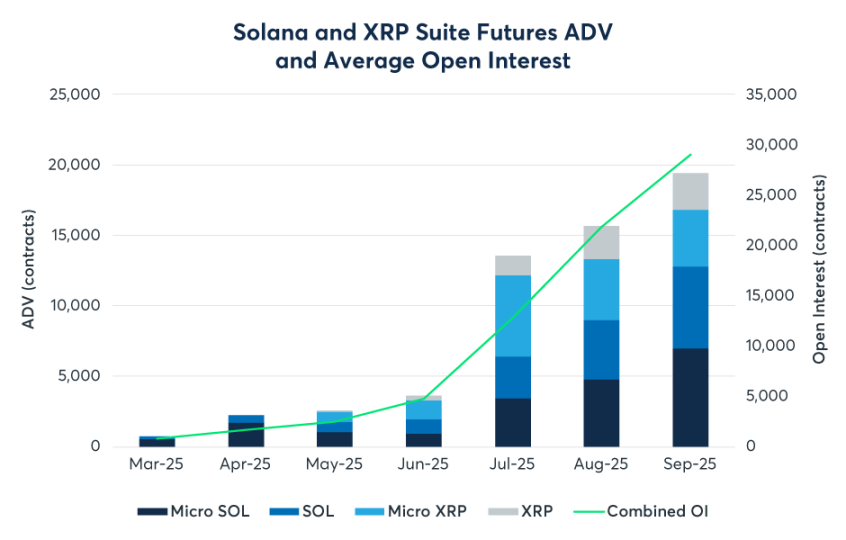
For a long time, CME was merely a duopoly market for BTC and ETH. However, this pattern was broken in 2025. With the launch of SOL and XRP futures and options, CME officially entered the multi-asset era. As a strong competitor for the third-largest asset, SOL futures have performed impressively since their launch in March. By Q3, the cumulative trading volume reached 730,000 contracts, with a nominal value of $34 billion. More importantly, the OI of SOL futures rapidly surpassed $2.1 billion in September, setting a record for the fastest doubling of new contract open interest. Meanwhile, XRP futures have traded 476,000 contracts since their launch in May. The XRP options launched on October 13 became the first such product regulated by the CFTC in the market. This marks that institutional investors no longer equate cryptocurrencies with BTC. For assets like SOL and XRP, which have different risk-return characteristics, institutions began seeking compliant hedging channels, indicating that multi-strategy crypto hedge funds will become more active on CME in the future.
DAT
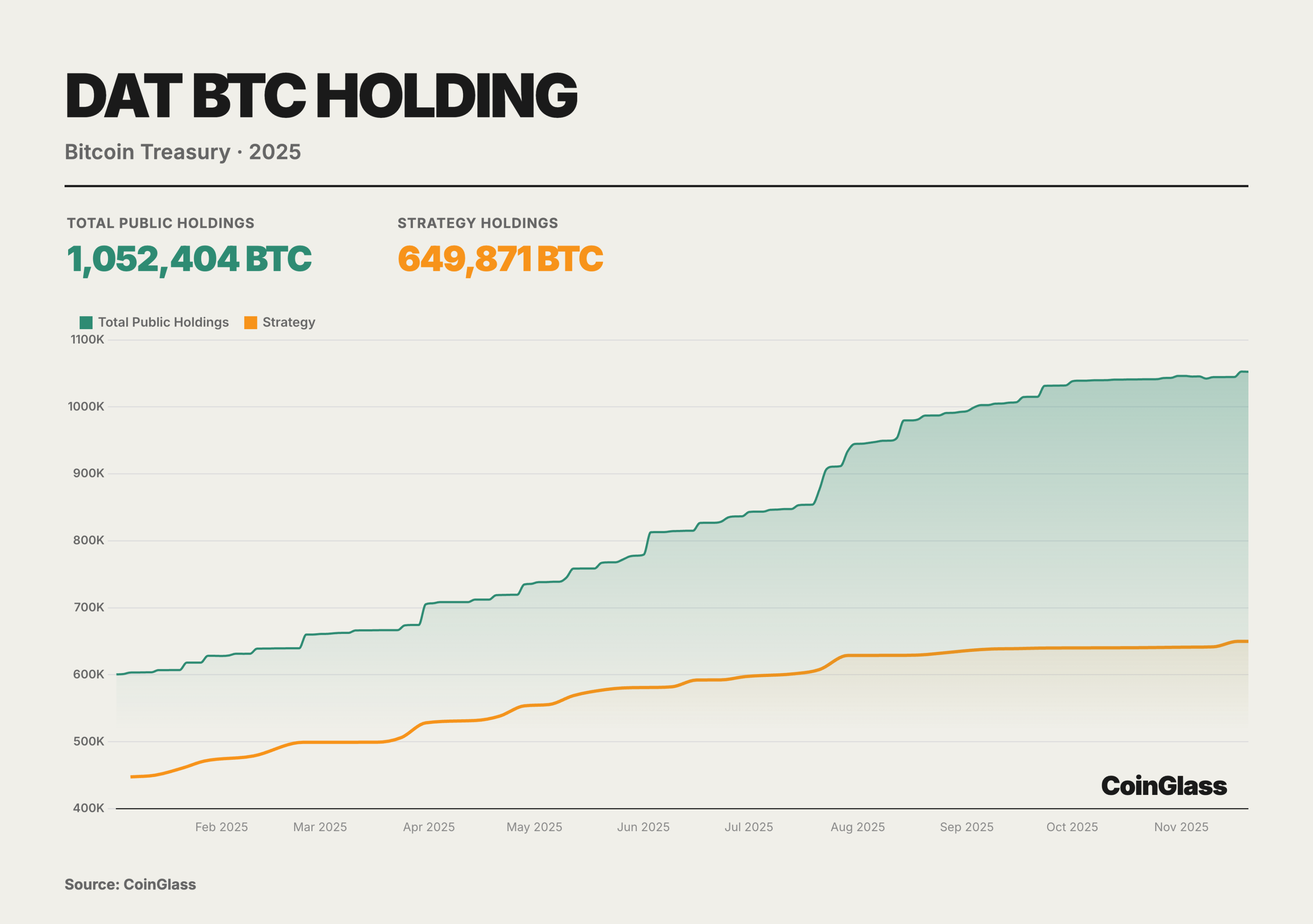
At the beginning of the 2025 fiscal year, the update ASU 2023-08 released by the Financial Accounting Standards Board (FASB) officially took effect, which is the cornerstone for the explosive growth of the DAT sector's financial performance this year. The new standard mandates that companies measure certain crypto assets at fair value and directly account for changes in fair value in the current net profit. Digital Asset Treasury (DAT) refers to publicly listed companies that systematically migrate a substantial portion of their treasury reserves, far exceeding daily operational needs, from cash and short-term debt to digital assets like BTC, ETH, and SOL. They treat crypto assets as core allocations on the balance sheet rather than marginal speculative positions. Compared to spot ETFs, DATs are not passive tracking tools but company entities with complete operational rights and capital management capabilities. Company management can continuously increase the number of digital assets per share through value-added financing methods such as convertible bonds and ATM issuances, forming what is known as the DAT flywheel effect. When the stock price trades at a premium relative to net asset value (NAV), companies can issue more shares to purchase additional digital assets, thereby diluting equity while increasing the per-share crypto asset quantity, which in turn supports or even amplifies the premium.
In 2025, the BTC holdings of publicly listed companies in the DAT sector followed an almost monotonically increasing trajectory, rising from about 600,000 BTC at the beginning of the year to approximately 1.05 million BTC in November, accounting for about 5% of the theoretical total supply of BTC; among them, Strategy increased its holdings from about 447,000 BTC to about 650,000 BTC, remaining an irreplaceable core of treasury in absolute terms, but its market share slipped from about 70% to just over 60%, with the incremental growth coming more from small and medium DATs.
In the second and third quarters, various DAT models collectively entered the market, pushing total BTC holdings over the one million mark. By the fourth quarter, although net fund inflows plummeted from their peak and DAT stock price premiums were significantly squeezed, the curve only showed a slowdown in slope rather than a directional reversal, with no systemic deleveraging or forced liquidations occurring. The trend indicates that the so-called bubble burst is more a repricing at the equity level rather than a collapse of BTC positions on the asset side. DAT has evolved from a thematic trade into a structural buying layer within the regulatory framework, forming a BTC supply-side buffer locked in by corporate governance, accounting standards, and information disclosure systems. Meanwhile, the industry structure has shifted from "one whale dominates" to "giant whales + long-tail groups," with the risk focus substantively shifting from the price of the coin itself to the financing structures, corporate governance, and regulatory shocks of individual DATs. The key for the DAT sector is no longer to predict the short-term rise and fall of BTC but to understand the financing structures, derivatives exposures, and macro hedging logic behind these companies. In the upcoming 2026, as the MSCI index review approaches and the potential turning point in global monetary policy looms, the volatility tests faced by DAT companies are just beginning.
Options Market
The core narrative of the options market this year was defined by two milestone events, which together reshaped the logic of global digital asset pricing power. The first was the acquisition of offshore options giant Deribit by the largest compliant exchange in the U.S., Coinbase, for $2.9 billion. This acquisition not only marked the integration of traditional compliant exchanges with native crypto liquidity but also redefined the infrastructure landscape for global derivatives trading. The second was the rise of BlackRock's IBIT ETF options, which, by the end of Q3 2025, surpassed the long-dominant Deribit in terms of open interest, marking the formal entry of traditional financial capital into a competitive stance against crypto-native platforms in volatility pricing power. Prior to this, Deribit enjoyed an almost monopolistic advantage, controlling about 85% of the global crypto options market share by the end of 2024.


During this year, the involvement of traditional financial institutions became a watershed moment for changes in the options market. With the evolution of the U.S. regulatory environment, several Wall Street institutions launched BTC ETFs and their options products. Notably, BlackRock's IBIT began offering options trading in November 2024 and quickly rose to become a new giant in the BTC options market in 2025. Overall, the market landscape in 2025 exhibited a dual-track characteristic: on one hand, crypto-native platforms represented by Deribit, and on the other hand, traditional financial channels represented by IBIT ETF options.
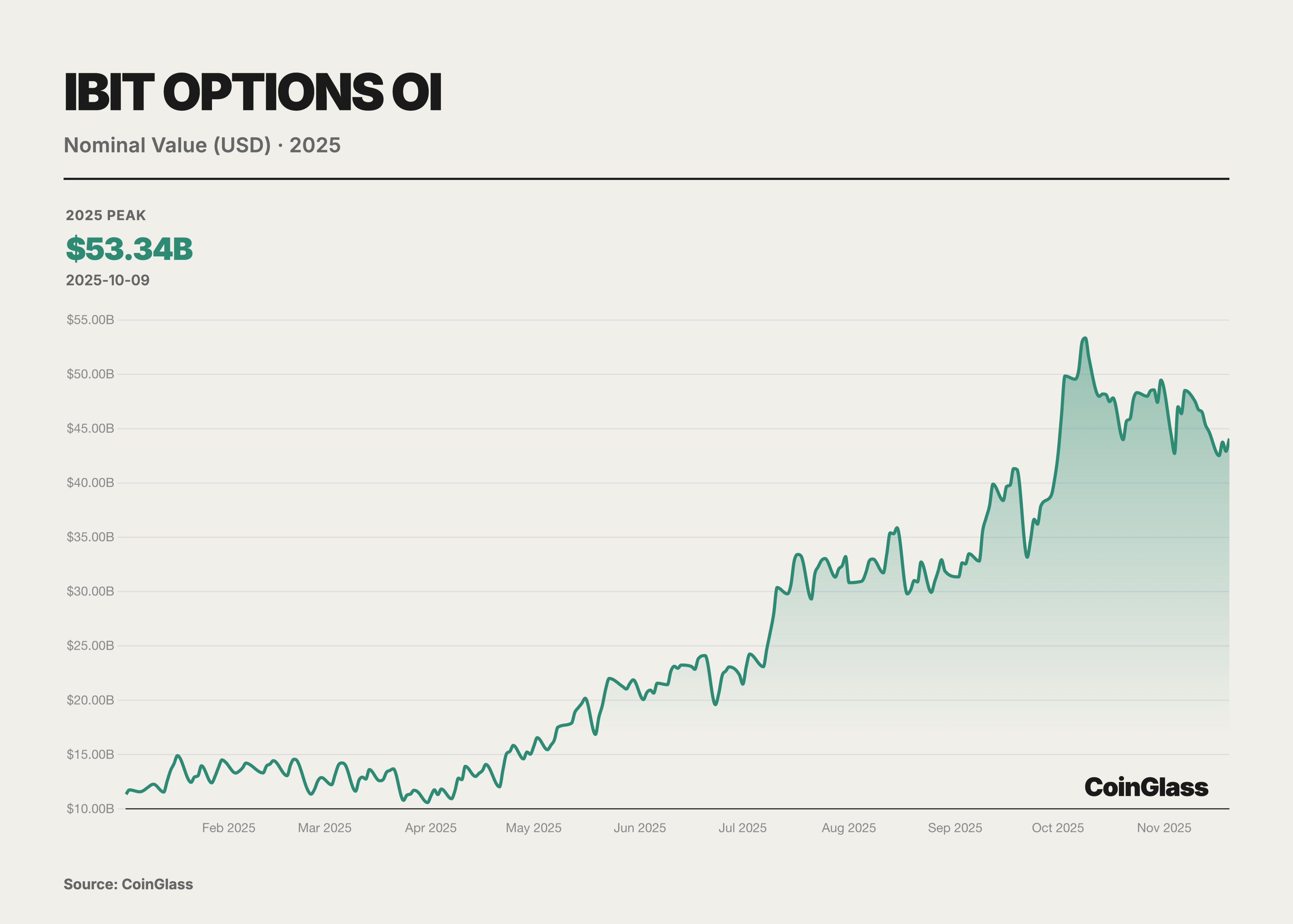
The strong rise of BlackRock's IBIT ETF options posed a direct challenge to Deribit. As a spot BTC ETF listed on the Nasdaq in the U.S., IBIT's options, launched at the end of 2024, saw its open interest scale rapidly climb. By November 2025, IBIT had become the largest BTC options trading vehicle globally, replacing Deribit's long-held dominance. The success of IBIT options highlights the significant influence of traditional financial power—many institutional investors who were previously restricted from participating in offshore platforms entered the BTC options market through IBIT, bringing massive capital and demand. The credibility and compliance framework of large asset management companies like BlackRock behind IBIT also attracted more conservative institutions to use options for BTC risk exposure management. As of November 2025, IBIT, as the largest spot BTC ETF, had a management scale of up to $84 billion, providing ample spot support and liquidity foundation for the options market, fully demonstrating the strong demand for spot ETF options.
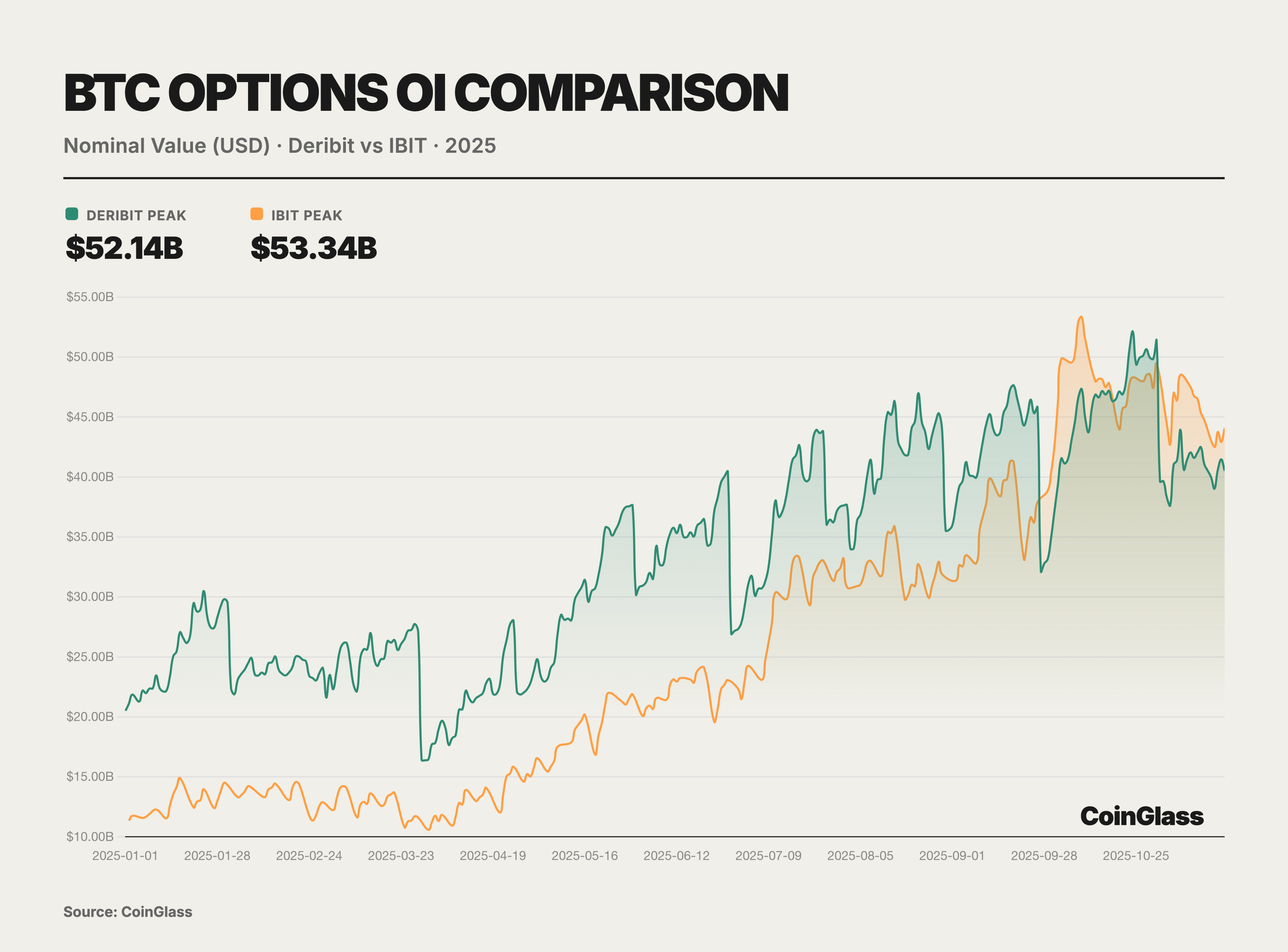
Aside from Deribit and IBIT, less than 10% of the BTC options market is divided among the CME and a few other crypto trading platforms. The Chicago Mercantile Exchange (CME), as a traditional regulated venue, offers options trading based on BTC and ETH futures. After several years of development, although CME's market share has increased, as of Q3 2025, its share of global BTC options OI was only about 6%. This reflects that options based on futures have limited market appeal compared to more flexible crypto-native platforms and ETF options. Centralized exchanges like Binance and OKX have also attempted to launch BTC and ETH options products in recent years, but user participation has been relatively tepid. The trading volume of these exchanges' derivatives is primarily concentrated in perpetual contracts and futures, with options business volume accounting for only a small portion of their derivatives landscape. Platforms like Bybit also offer options trading settled in USDC, but overall market share remains limited. Other exchanges represented by OKX and Binance contribute only about 7% of BTC options OI in total. Overall, the crypto options market in 2025 exhibited a highly concentrated situation: crypto-native platforms (represented by Deribit) continued to dominate non-ETF varieties like ETH, while traditional financial platforms (represented by IBIT) gained ground in BTC options, leading to an increasingly marginalized role for other players under the dual oligopoly structure they built. Notably, in the ETH options space, due to the absence of similar IBIT spot ETF options products, Deribit remains almost the sole center of liquidity for ETH options, with its market share exceeding 90%. This indicates that Deribit's dominance in the ETH options market remained solid in 2025, while IBIT's impact was primarily felt in the BTC domain. Looking ahead, with the approval of ETH spot ETF options in April 2025, it is not ruled out that ETH ETF options will also be launched subsequently and gradually participate in the competition. However, as of November 2025, the ETH options market remains the domain of crypto-native exchanges, with no traditional institutional-level competitors like IBIT emerging.
DeFi
PerpDEX
2025 was an extraordinarily brilliant year for PerpDEX. The entire market's trading activity exploded, continuously breaking historical records. Monthly trading volume first exceeded $1.2 trillion in October, with the cumulative annual on-chain derivatives trading volume reaching several trillion dollars. The surge in trading volume and its increased share were driven by multiple factors, including performance breakthroughs, rising user demand, and changes in the regulatory environment. Whether retail investors, institutional trading departments, or venture capital funds, all turned their attention to this burgeoning sector in 2025.
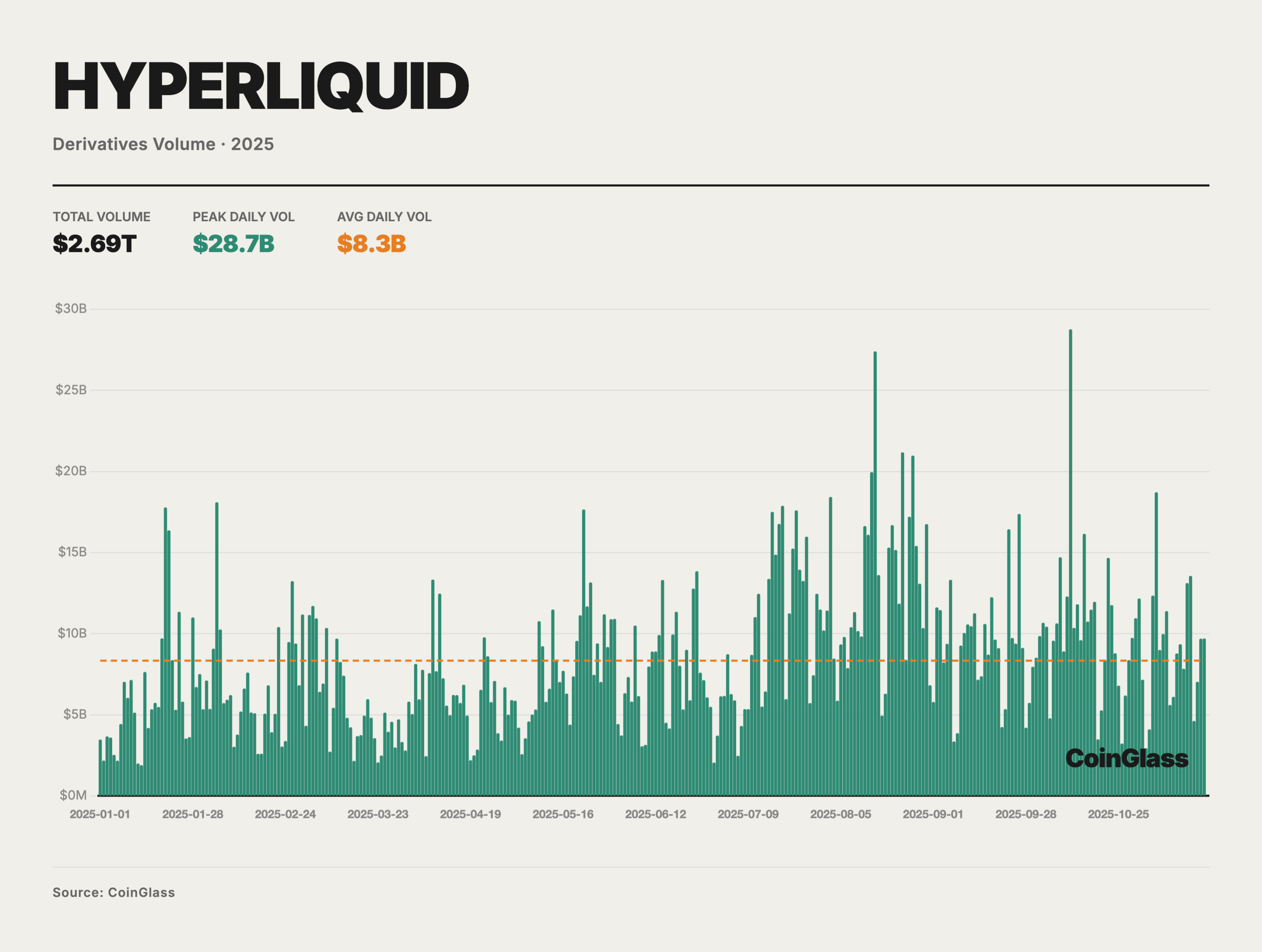
Hyperliquid was undoubtedly the leader in the PerpDEX market in 2025. In the first half of the year, the platform almost dominated the entire sector, with market share peaking at 70-80%, and in May, Hyperliquid's on-chain perpetual contract trading volume reached a peak share of about 71%. This astonishing volume made Hyperliquid almost synonymous with the PerpDEX market in the first half of 2025.
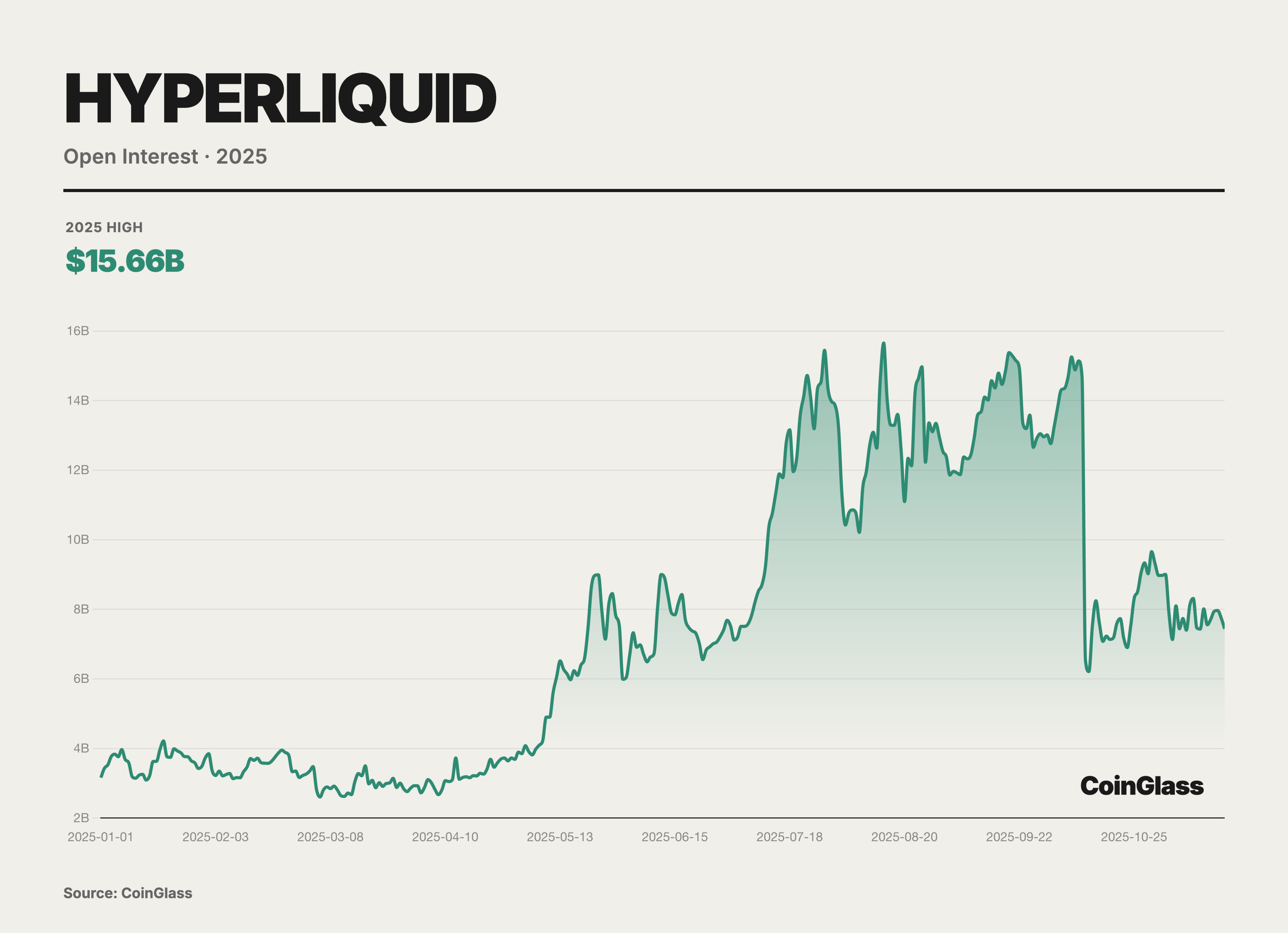
Hyperliquid not only attracted massive trading volume but also accumulated a huge open interest in perpetual contracts. Data from October 2025 showed that its perpetual contract open interest reached $15 billion, accounting for about 63% of the total open interest of major decentralized perpetual platforms. This metric indicates that a large amount of capital chose to remain long-term on Hyperliquid, reflecting traders' high trust in the platform's liquidity and stability.
Unlike traditional ETH L1 or general-purpose public chains, Hyperliquid built a custom Layer1 blockchain specifically for high-frequency derivatives trading. This chain employs a self-developed HyperBFT consensus mechanism, capable of supporting 200,000 orders per second, with transaction confirmation delays as low as 0.2 seconds. This performance even surpasses many centralized exchanges, making Hyperliquid the first exchange to achieve speeds and liquidity close to CEX on-chain. The platform adopts a fully on-chain order book (Central Limit Order Book) model, ensuring depth and quote quality, allowing professional traders to enjoy a matching experience comparable to traditional exchanges on-chain.
Although Hyperliquid dominated in the first half of 2025, the market landscape of PerpDEX transitioned from a single leader to multiple strong competitors with the strong entry of new participants in the second half. Entering the third and fourth quarters, Hyperliquid's market share showed a noticeable decline—from around 70-80% at mid-year to 30-40% by year-end. On-chain data indicated that in November, Hyperliquid's trading volume share had dropped to about 20%, while new stars like Lighter and Aster rapidly rose: Lighter accounted for about 27.7%, Aster for 19.3%, and another dark horse, EdgeX, reached 14.6%. This indicates that a market once dominated by Hyperliquid evolved into a competitive landscape with multiple strong players in just a few months. High trading incentives, differentiated product strategies, and capital support propelled the rise of these challengers, leading to an intensified competition in the entire PerpDEX field in the second half of 2025.
Prediction Markets
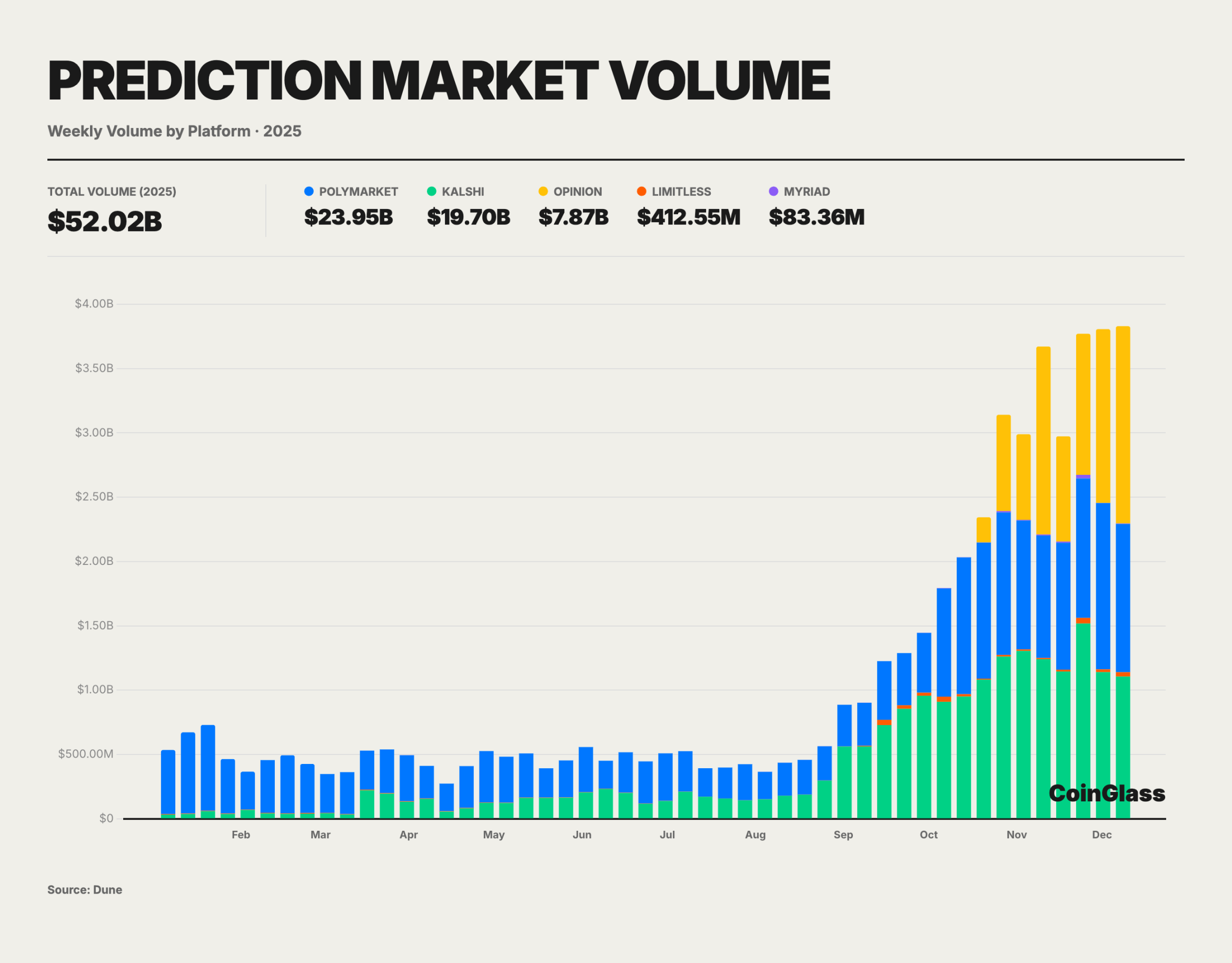
The crypto prediction market experienced explosive growth in 2025, with the overall trading volume accumulating to approximately $52 billion from January to November, significantly surpassing the peak levels during the 2024 U.S. presidential election.
As the largest prediction market platform by trading volume globally, Polymarket's cumulative trading volume in 2025 exceeded $23 billion. The platform's daily active users approached 60,000, nearly tripling since the beginning of the year; monthly active user peaks are estimated to have exceeded 450,000, indicating a significant increase in public participation. Currently, the total number of registered trading users on the Polymarket platform is about 1.35 million, reflecting the rapid expansion of its user base over the past year. The large user base and abundant liquidity have allowed several popular markets to accumulate contract trading volumes in the hundreds of millions, with deep liquidity markets capable of accommodating tens of millions of dollars in and out without experiencing severe slippage. In high liquidity, liquidatable, and clearly defined event scenarios, prediction market prices are often used as supplementary indicators. Reports indicate that during the 2024 U.S. presidential election in November, Polymarket's single-day trading volume once reached nearly $400 million, accurately predicting the election results, in contrast to traditional polls that showed deviations. This example highlights the information aggregation capability and pricing accuracy of decentralized prediction markets in significant events, laying the foundation for further mainstream adoption in 2025.
Web3 Wallets
Web3 wallets, as the first touchpoint connecting users with decentralized networks, underwent a fundamental leap in strategic importance in 2025. Wallets are no longer merely containers for private key storage or simple transfer tools; they have evolved into on-chain traffic entry points that integrate digital identity (DID), asset management, decentralized application (DApp) operating systems, and social graphs.

Looking back over the past five years, the form of Web3 wallets has undergone dramatic evolution. Early wallets required users to possess a high level of technical understanding, needing to manage mnemonic phrases, understand gas fee mechanisms, and manually configure networks. This high barrier led to a massive user drop-off rate, with data showing that over 50% of users abandoned the wallet setup stage due to the complexity of the process. The most significant industry characteristic this year is the large-scale implementation of account abstraction and the standardization of chain abstraction technologies. The integration of these two technologies has enabled Web3 wallets to first possess user experiences that can compete with Web2 financial applications. Complex private key management, obscure gas fee mechanisms, and fragmented multi-chain liquidity are being encapsulated by intelligent protocols in the background, reducing user friction to historical lows.
At the same time, the entry of institutional-level funds has forced upgrades in wallet security architecture, with the combination of multi-party computation (MPC) technology and trusted execution environments (TEE) becoming standard for leading wallets, fundamentally changing the fragile security model where "the private key is everything."
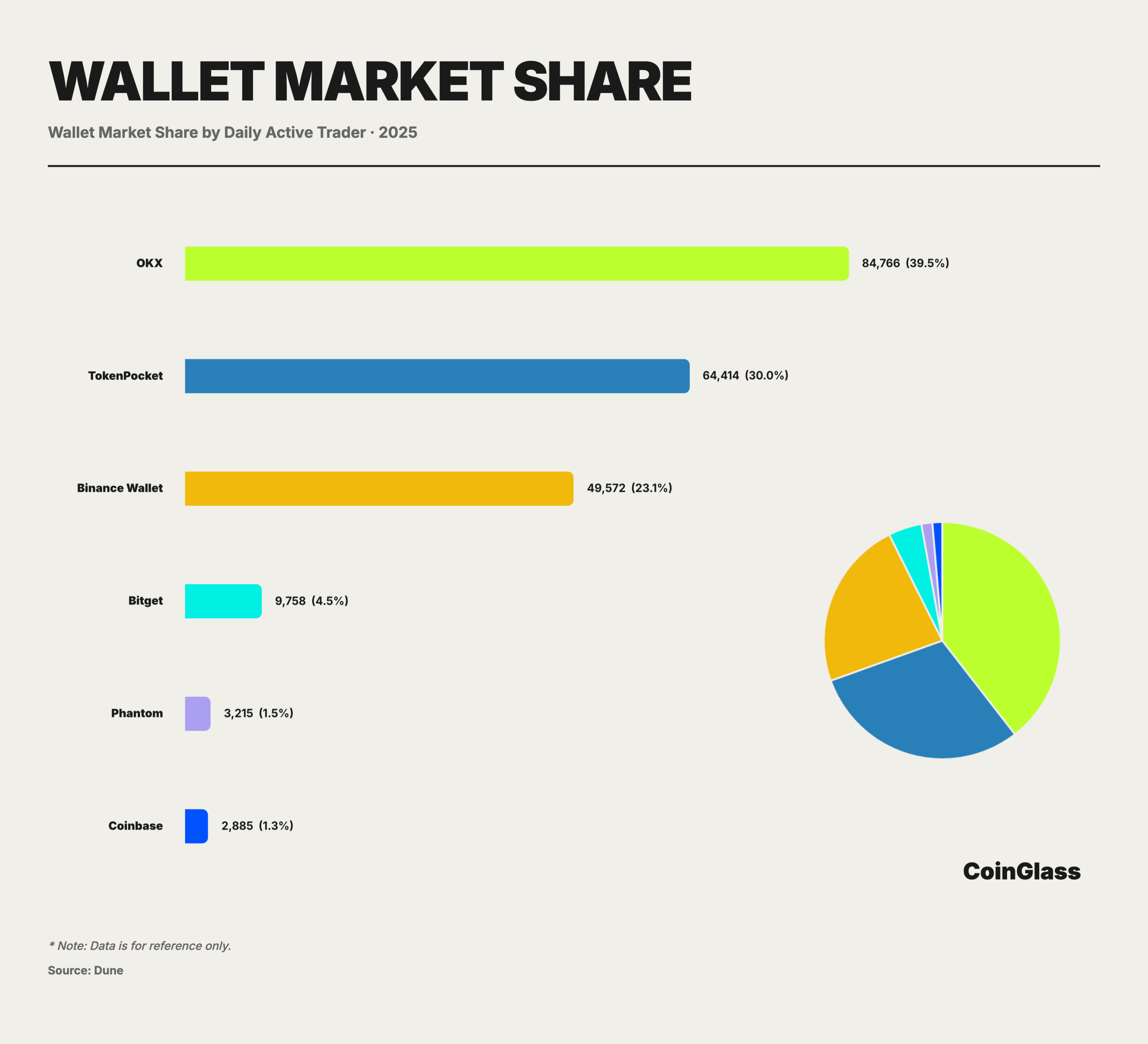
In the competitive market landscape of 2025, the OKX Web3 wallet, through a combination of technological innovation and a comprehensive ecosystem, has emerged as the industry leader in usability and functional integration. As a super aggregator for Web3 entry, the OKX wallet boasts over 5 million monthly active users, with its core design philosophy focused on encapsulating complex on-chain logic behind a minimalist interface. Through a unified dashboard, users can easily manage assets distributed across more than 100 public chains without needing to manually add contracts.
Moreover, the OKX Web3 wallet is one of the earliest products in the industry to deeply integrate DEX aggregators. While many other wallets still support single-chain swap functions, the OKX wallet has already achieved multi-chain trading aggregation within the wallet itself. Its built-in OKX DEX aggregator covers over 100 public chains, automatically finding the best trading paths for users through smart routing. After users initiate a swap request within the wallet, the aggregator simultaneously calls multiple DEX quotes and splits routes to ensure transactions are executed at optimal prices with minimal slippage.
In addition to long-standing industry-leading wallets like OKX Wallet, 2025 also saw the rise of many newcomers, such as Binance Wallet. The core of Binance Wallet's emergence in 2025 lies in the growth strategy of Binance Alpha: embedding early project discovery and trading directly into the wallet, allowing users to participate in early projects, airdrops, and TGEs through paths similar to centralized products. The official positioning of Alpha is closer to "a discovery and screening pool for pre-listing projects," enhancing transparency and participatory mechanisms in the process, and converting on-chain participation into more frequent trading behaviors and retention through task-based and equity-based mechanisms. This Alpha-driven wallet growth is reflected very directly in the data.
In 2025, Bitget Wallet focused on PayFi, bridging on-chain wealth management with real-world consumption, and advancing the Wallet Card. Gasfree's GetGas covers multi-chain gas payments and supports Google/Apple/email social logins. It natively integrates RWA like Ondo, allowing for the trading of tokenized U.S. stocks, while also providing QR code and card payment options, as well as stablecoin wealth management Plus, positioning itself as an Everyday finance app.
Conclusion
The main thread of the cryptocurrency derivatives market in 2025 is the re-pricing from high-leverage retail speculation to institutional capital, compliant infrastructure, and the parallel evolution of on-chain technology. Macro liquidity determines trends, with crypto amplifying volatility as a high Beta asset in the context of rate cut expectations and shifts in risk appetite, while geopolitical and policy factors provide triggers; throughout the year, the deleveraging phase, combined with external shocks in October and crowded leverage in Q3, caused the overall OI to retract over $70 billion from its peak in just two days, resulting in a peak liquidation scale of over $10 billion.
Under the annual trading volume of approximately $85.7 trillion on the CEX side, OI, depth, and custody became highly concentrated among the top players, enhancing price discovery and execution efficiency while also amplifying compliance, operational, and technical events into systemic risks; in the context of inventory decline and thinning order books, this concentration also magnified the marginal upward thrust during price increases and the liquidity vacuum during declines. Extreme liquidations exposed the fragility of the margin—liquidation—insurance fund—ADL chain: when insurance funds are under pressure and cross-platform transfers congested, the non-transparent execution of ADL and deviations from market prices in liquidation can dismantle hedging legs, causing neutral combinations to passively turn into directional risks, necessitating a re-evaluation of stress tests around clearing mechanisms and capital accessibility. Institutionalization is more concentrated in on-exchange derivatives and DAT: CME's introduction of compliant innovations like spot-quoted futures promotes the normalization of basis trading, connecting ETF spot demand with futures hedging into replicable arbitrage chains; DAT, driven by accounting and financing tools, forms balance sheet-type allocations / financing flywheels, with buying pressure becoming more "locked in," but the risk focus shifts from coin prices to financing structures, corporate governance, and regulatory shocks. The pricing power in the options market is also shifting, with the merger and integration of compliant exchanges and the rise of ETF options concentrating BTC volatility flows towards traditional financial channels. On the DeFi side, PerpDEX approaches CEX experiences and transitions into multi-strong competition, while the account/chain abstraction of prediction markets and wallets pushes discovery, trading, and distribution to the application layer.
In summary, the current derivatives market presents distinct structural opportunities and asymmetric risks: opportunities mainly exist in the low-risk basis arbitrage space emerging from the integration of compliant spot and derivatives tools (such as ETF options) and the functional replacement of traditional centralized liquidity by high-performance on-chain infrastructure (PerpDEX); while risks are highly concentrated in the potential dual-kill of equity and coin prices due to reversals in DAT sector financing logic, as well as systemic liquidation hazards arising from liquidity mismatches in the highly concentrated CEX clearing system. Looking ahead to 2026, as global regulatory frameworks accelerate convergence and the liquidity environment potentially turns, the core competitiveness of the market will focus on whether trading infrastructure can maintain clearing resilience within extremely crowded leverage chains and whether capital can find the most efficient flow paths between compliance and decentralization.
Latest News
ChainCatcher
Feb 11, 2026 11:04:30
ChainCatcher
Feb 11, 2026 11:00:01
ChainCatcher
Feb 11, 2026 10:54:46
ChainCatcher
Feb 11, 2026 10:40:54
ChainCatcher
Feb 11, 2026 10:36:52