
Elon Musk and other Silicon Valley tycoons collectively support Jensen Huang: he should not be fired before the investigation is over, and his fate should be decided by a shareholder vote
Elon Musk and several business leaders publicly urged the NVIDIA board not to dismiss Jensen Huang before the investigation concludes and requested that the decision be left to shareholders. A personal moral scandal is evolving into a market event that impacts corporate governance, shareholder rights, and the direction of AI transactions.
On the evening of November 11 local time, The New York Times revealed Jensen Huang's second extramarital affair—a romantic relationship with subordinate Kimberly Powell. Subsequently, The Wall Street Journal reported that the NVIDIA board has established an investigation committee led by independent directors and involving external lawyers, and is preparing to dismiss Jensen Huang. Some directors prefer Chief Financial Officer Colette Kress to serve as interim CEO, while the company has commissioned an external headhunting agency to initiate the search for a new CEO.
In the face of potential leadership changes, several tech giants and venture capital executives called for the NVIDIA board to exercise restraint via social media platforms.
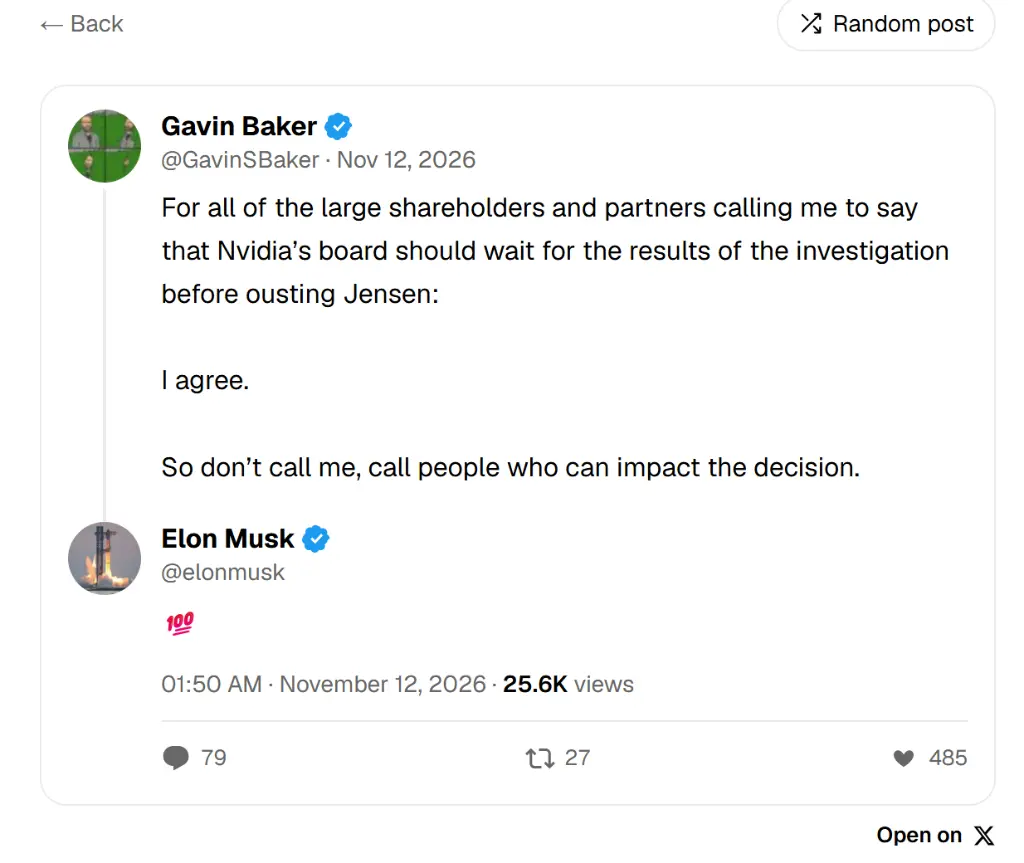
Gavin Baker, managing partner and chief investment officer of Atreides Management, proposed a "vote by shareholders after the investigation concludes" plan, to which Musk responded, "Exactly." Tim Sweeney, founder and CEO of Epic Games, shouted "Save Jensen Huang"; Vinod Khosla, co-founder of Sun Microsystems and venture capitalist, supported investor Ron Conway's call for "patience until the investigation concludes."
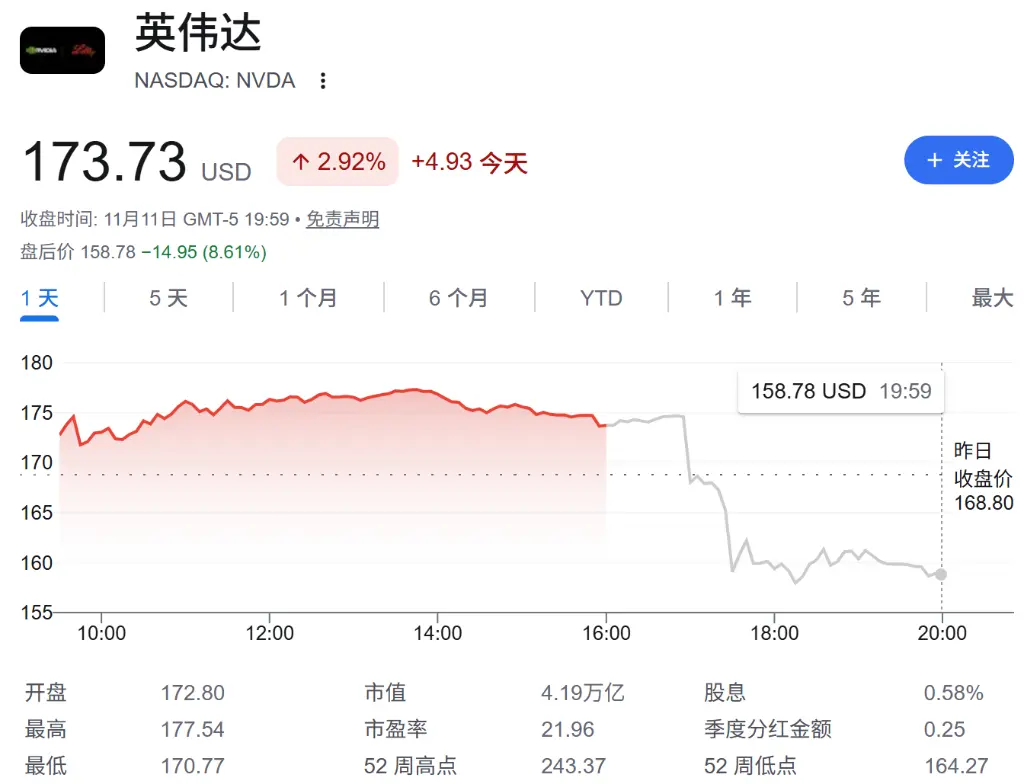
The sudden leadership turmoil has sparked strong concerns among investors, directly impacting the capital markets. NVIDIA's stock price fell sharply by 8% after hours.
"Save Jensen Huang"! Industry Leaders Speak Out
In response to the board's potential unilateral actions, business leaders questioned whether such actions align with shareholder interests. Gavin Baker stated that the NVIDIA board should wait for the investigation results and hold a shareholder vote after the investigation is completed. He pointed out that it is difficult to argue that dismissing Jensen Huang is in the best interest of shareholders given the 8% drop in after-hours stock price.
This position quickly gained support from heavyweight figures in the tech industry. Musk expressed his agreement in a reply on social media platform X.
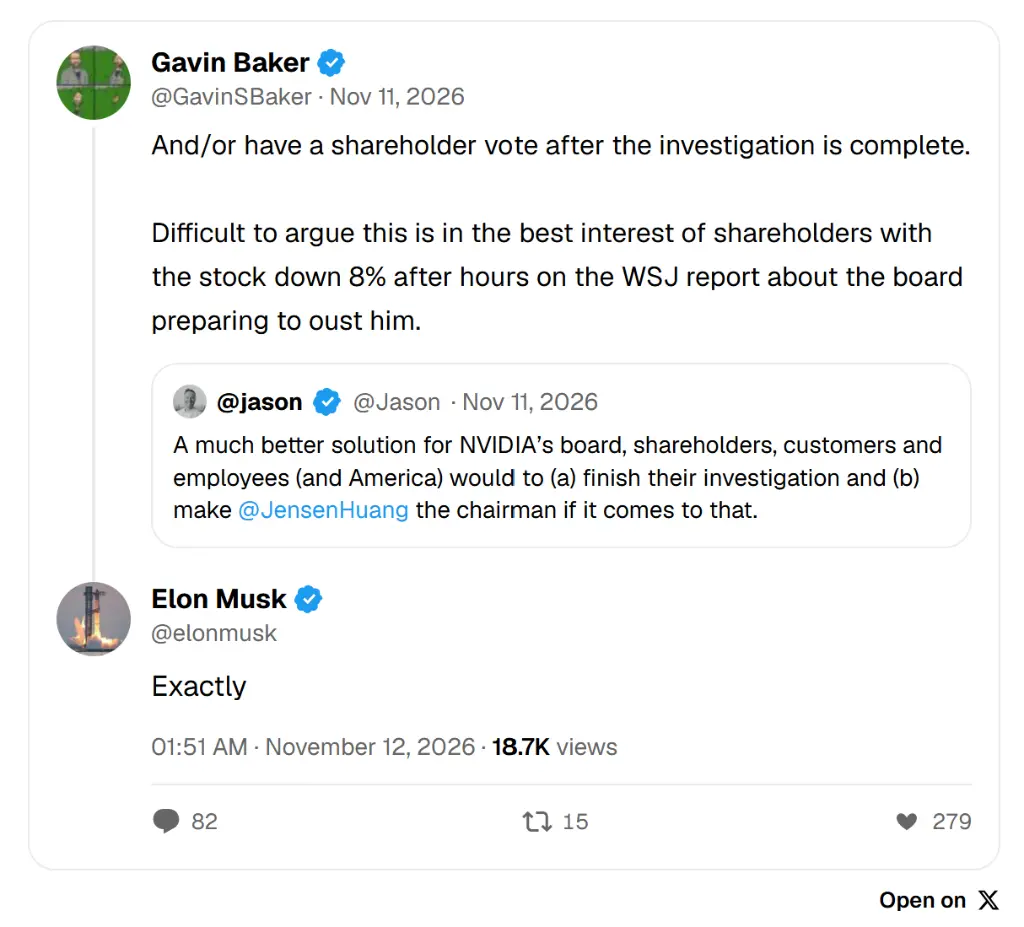
Jason Calacanis, founder of LAUNCH, also emphasized that a better solution is to complete the investigation, and that NVIDIA shareholders should decide Jensen Huang's fate after the investigation, rather than the media or netizens. He revealed that he holds a long position in NVIDIA and has just increased his stake, while calling for the board to buy back shares on a large scale at the current price.
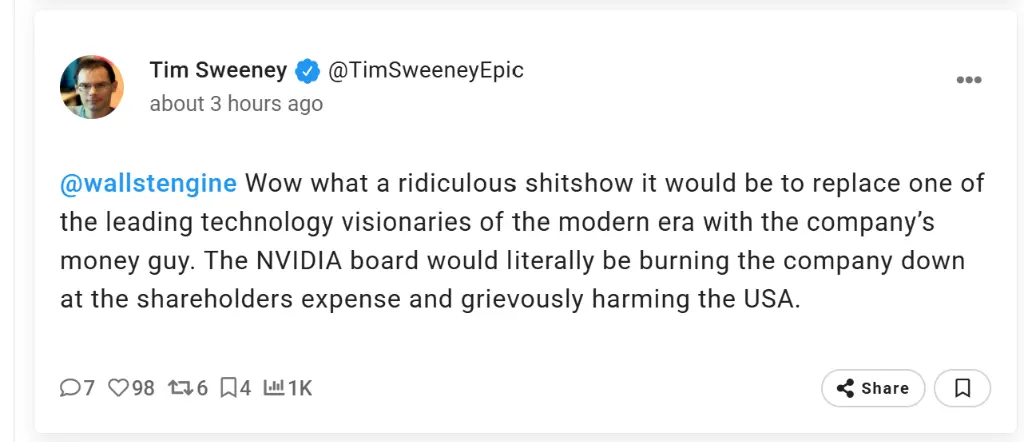
Tim Sweeney, founder and CEO of Epic Games, wrote on X:
"Save Jensen Huang. If the NVIDIA board does this, it will be as foolish as Apple firing Steve Jobs, and it will be a serious harm to America. From the era of gaming graphics cards to CUDA and then to AI supercomputers, this guy is indeed a visionary driving the future of technology."
In another post, he pointed to the alternative plan, stating that replacing the company's "money manager" with this era's leading technological visionary is absurd, and that the board's actions would amount to burning the company at the expense of shareholders.
Vinod Khosla's statement was simply "Agree with Ron!" He supported investor Ron Conway's earlier remarks before The Wall Street Journal report: "While the storm is still ongoing (I think it should be taken seriously), let's pause for a moment and remember Jensen Huang's contributions to our industry with his determination and vision, which are the foundation of our work today." Ron Conway also stated that Jensen Huang's demeanor and dignity in his statements have shown respect for his family and the entire industry:
"Now we should patiently wait for the board and relevant government departments to conclude their investigation."
Former Coinbase CTO Balaji Srinivasan's analogy was more straightforward:
"No. Bill Clinton did not resign. Jensen Huang should not resign either. The NVIDIA board should not dismiss him, especially while the situation is still hot. Tough it out, ignore those reporters."
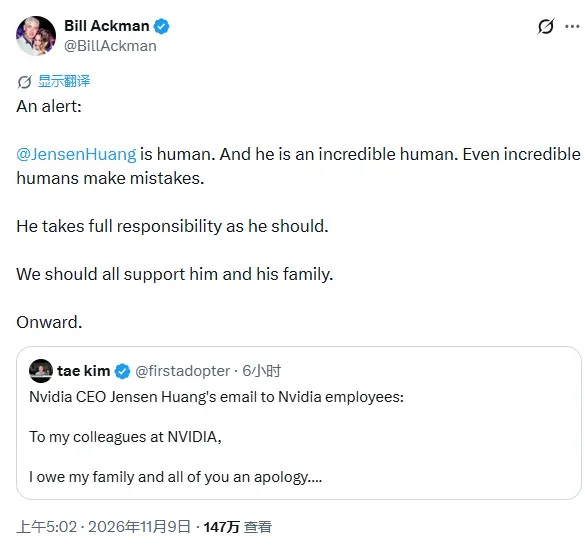
Hedge fund manager Bill Ackman previously wrote on X: "Jensen Huang is human, and he is an amazing person. Amazing people also make mistakes. He has taken responsibility, and everyone should support him and his family." He later added, "I like this guy; he has done a lot of good for the world. I hope this is just a simple affair."
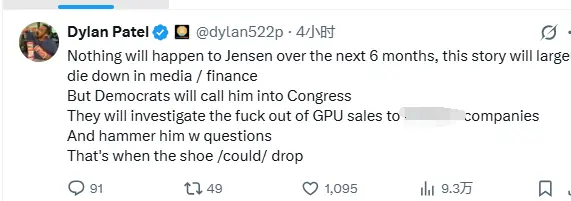
Dylan Patel, founder and CEO of semiconductor research firm SemiAnalysis, stated on X: "For the next six months, nothing will happen to Jensen Huang; this story will basically calm down in the media/financial world. But Democrats will call him to Congress, and they will thoroughly investigate the GPU sales situation of related companies, then hit him with a barrage of questions. That will be the moment the shoe drops."
The 6-Vote Dilemma: Can the Board Represent Shareholders?
What truly determines Jensen Huang's fate is the board's vote count, not the volume on X.
The NVIDIA board currently has 11 members; aside from founder Jensen Huang, the other 10 are independent directors. According to Article 32 of the company's internal regulations revised in March 2024, any executive can be dismissed at any time by a majority of the serving directors, with or without cause. With 11 members, a majority is 6 votes. Ordinary resolutions require a majority of attending directors, while dismissing executives is calculated based on the total number of serving directors, making the threshold a bit stricter. Jensen Huang's dissenting vote would not matter; 6 votes from the other 10 independent directors would suffice.
Each share of the company's stock carries one vote, with no super voting rights. The issue is that Jensen Huang benefits from holding 3.58% of the shares, while the other ten directors collectively hold about 0.31%. In other words, if it comes to a board vote to decide Jensen Huang's fate, his future will be determined by board members who do not adequately represent shareholder interests.
Concerns from the capital side are more closely related to holdings. According to market discussions, Wall Street is worried that Jensen Huang might resign, "many fund managers will reduce their holdings in NVIDIA in the coming weeks." In contrast, retail investors are more focused on precedents—"Bezos had an affair, Bill Gates had an affair, Musk had an affair," but none affected the companies.