
The Democratic Party's big victory, global stock markets "collapsed first and then rebounded," and gold and silver surged. What is the market trading?
Author: Xu Chao
The Democratic Party achieved a historic sweep in the U.S. midterm elections, not only regaining control of both the House and Senate but also unexpectedly flipping traditional Republican strongholds in Texas, South Carolina, and Kansas. This result reshaped market expectations regarding the U.S. fiscal path, AI regulatory outlook, and interest rate trends, leading to a sharp repricing of global asset prices.
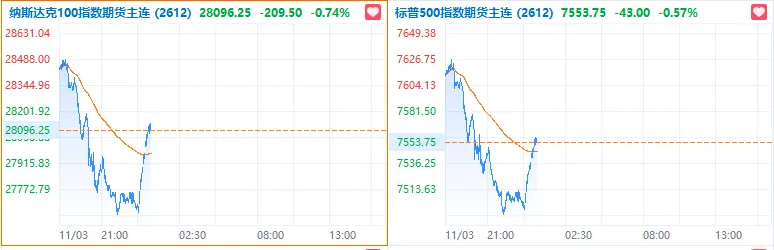
The global market experienced a typical "bad news is good news" rally. Nasdaq 100 futures fell more than 2%, S&P 500 futures dropped over 1%, and the VIX fear index futures broke through the 20 mark; subsequently, the market reversed, with U.S. stock futures gradually narrowing their losses, the Korea Composite Stock Price Index turning from a 4% drop to a rise, gold climbing back above $4,000, silver strengthening simultaneously, and U.S. Treasuries rising across the board.
The core logic behind the reversal lies in Trump's veto power. With the Democratic Party controlling both chambers of Congress, it means that their fiscal expansion and tax cut agenda will be obstructed, federal borrowing pressure will decrease, which is favorable for U.S. Treasuries; however, Trump still holds the presidential veto power, and the market quickly realized that the Democratic Party's legislative push is also limited, effectively creating a policy stalemate, which alleviated panic. As Stifel's Chief Washington Policy Strategist Brian Gardner pointed out in a previous research report: "The market's instinctive reaction reversed, because investors will realize that regardless of the scenario, a policy stalemate is the most likely outcome."
The unexpected degree exceeded expectations, and the market's first reaction was to sell off
Before the election, the prediction platform Kalshi had priced the probability of the Democratic Party regaining the House at about 99%, and the Senate probability was also close to 100%, with the Democratic sweep contract price rising to 77%. Goldman Sachs clearly stated in its election day morning report that the House results had been priced in by the market, while the Senate outcome was the main source of surprise.
However, the unexpected aspect of the final result was not the House but the extent of the Senate flip and the comprehensive breakthroughs in state-level elections.
The Democratic Party won in districts previously seen as Republican strongholds in Texas, South Carolina, Kansas, and Iowa. Goldman Sachs political economist Alec Phillips had previously warned that in states with a strong Republican tendency, Republican candidates historically perform about 3 percentage points better than polls suggest, but the actual results showed that this "poll buffer" did not materialize this time.
The market's first reaction was to sell off risk assets. S&P 500 futures fell about 0.9%, Nasdaq 100 futures dropped 2%, the Bloomberg Dollar Spot Index fell 0.4%, the Japanese yen rose 0.5% against the dollar, and the Swiss franc led G10 currencies with a 0.7% increase. Asian stock markets fell across the board, with the Nikkei 225 index at one point dropping over 4%, and the Korea Composite Stock Price Index's decline expanding to 4%.
The logic of veto power fermented, and the selling pressure was quickly digested
As the market digested the actual implications of the divided government, initial panic gradually receded. The core point is: the Democratic Party controlling Congress can obstruct Trump's legislative agenda, but it also cannot actively implement its own policies—Trump's veto power constitutes a two-way check.
Invesco Asset Management's global market strategist Tomo Kinoshita commented to Bloomberg that the AI regulatory concerns triggered by the Democratic sweep "seem to be somewhat of an overreaction. Even if the next Congress passes tighter AI regulatory bills, President Trump can still exercise his veto power."
J.P. Morgan Asset Management's Chief Market Strategist for the Asia-Pacific region, Tai Hui, also pointed out that Trump still holds key policy tools such as trade and tariffs, foreign policy, and the current regulatory framework, and the impact of a divided government on his actual governance ability is limited. Monex Group's Chief Strategist Jesper Koll bluntly stated: "This is essentially a strong presidential system that relies on executive orders. Congress may change, but Trump's governance style will not change."
This logical judgment drove the Korea Composite Stock Price Index from a decline to an increase, while the Nikkei 225 index and the Taiwan Weighted Index also significantly narrowed their losses, and U.S. stock futures gradually reduced their declines.
U.S. Treasuries strengthened, and fiscal tightening expectations were repriced
A divided government is directly favorable for U.S. Treasuries. The market logic is clear: the Democratic Party controlling Congress will compress Trump's legislative space for expanding the deficit, reducing federal borrowing pressure, which is a clear positive signal for the current approximately $40 trillion U.S. Treasury market.
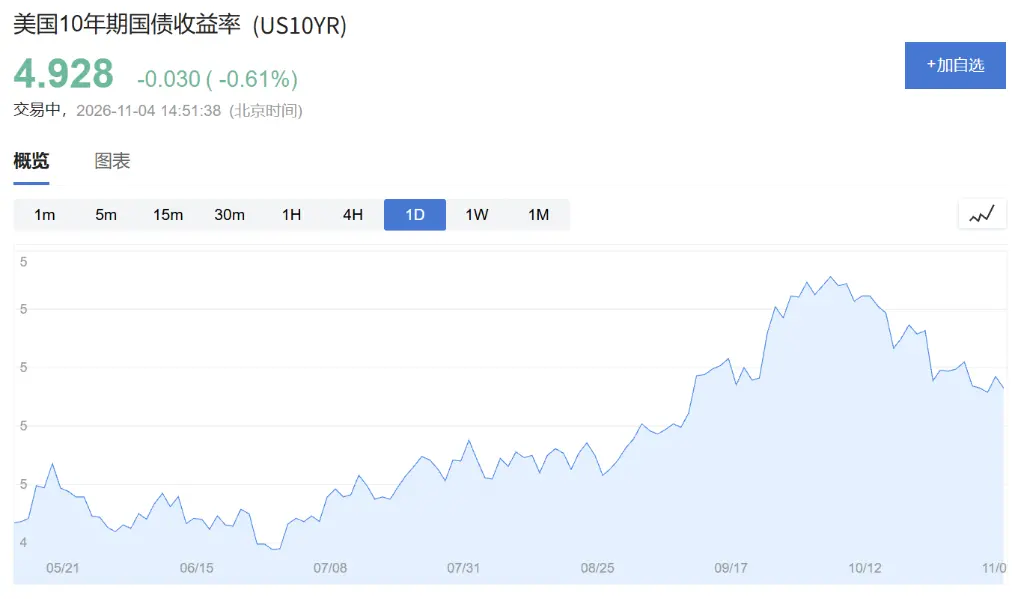
The U.S. Treasury yield curve fell across the board. The five-year Treasury yield dropped by 9 basis points to 4.68%, and the ten-year yield fell by 7 basis points to 4.89%, before both narrowed somewhat.
Wellington Management portfolio manager Brij Khurana told Bloomberg: "A divided government means that the high levels of fiscal spending seen in recent years will be constrained. Historically, a divided government structure has generally been favorable for U.S. Treasuries." Andrew Ticehurst, a senior interest rate strategist at Nomura Securities in Sydney, also noted that the blue wave scenario "is generally considered bearish for the dollar and bullish for U.S. Treasuries, and the market movements in the Asian session were consistent with this judgment."
However, Mizuho Bank strategist Evelyne Gomez-Liechti previously warned that one should not overly chase the narrative that "stalemate equals fiscal tightening"—Trump is adept at negotiating compromises, and the possibility of increased defense spending and diluted healthcare cuts coexists, meaning the actual fiscal trajectory may change little.
AI and tech stocks: Regulatory shadows loom, but overreaction suspicions remain
The technology and AI sectors were the most pressured areas in this election shock. The Democratic sweep raised market concerns about stricter approvals for data center construction and the advancement of AI regulatory legislation, compounded by ongoing disputes over AI infrastructure spending returns in the previous weeks, with the Nasdaq experiencing the largest declines among major indices.
Asian tech stocks were significantly affected. South Korea's Samsung Electronics and SK Hynix each fell about 1%, and Longbow Asset Management CEO Jake Dollarhide told Reuters that the Democratic sweep "could put pressure on the tech sector and create regulatory constraints in AI-related fields, potentially slowing the wild growth rates we take for granted in our daily lives."
Saxo's Chief Investment Strategist Charu Chanana also pointed out that Nasdaq futures fell even deeper, "reflecting market concerns that the political power shift will bring stricter regulatory scrutiny on AI and large tech companies, while current investors are already questioning high valuations and rising AI spending."
However, several strategists questioned the degree of panic. Jesper Koll explicitly stated that the negative momentum of AI "is unrelated to whether the Republican Party retains a majority," and criticisms and concerns about AI "have far exceeded the political level." State Street Global Advisors Chief Investment Strategist Michael Arone bluntly stated to Reuters: "I believe the real risk facing the market is not the blue wave itself, but investors' overreaction to the blue wave."
Gold strengthened, and clean energy surged against the trend
While the stock market and tech sectors faced pressure, gold and clean energy sectors exhibited a completely different trend.
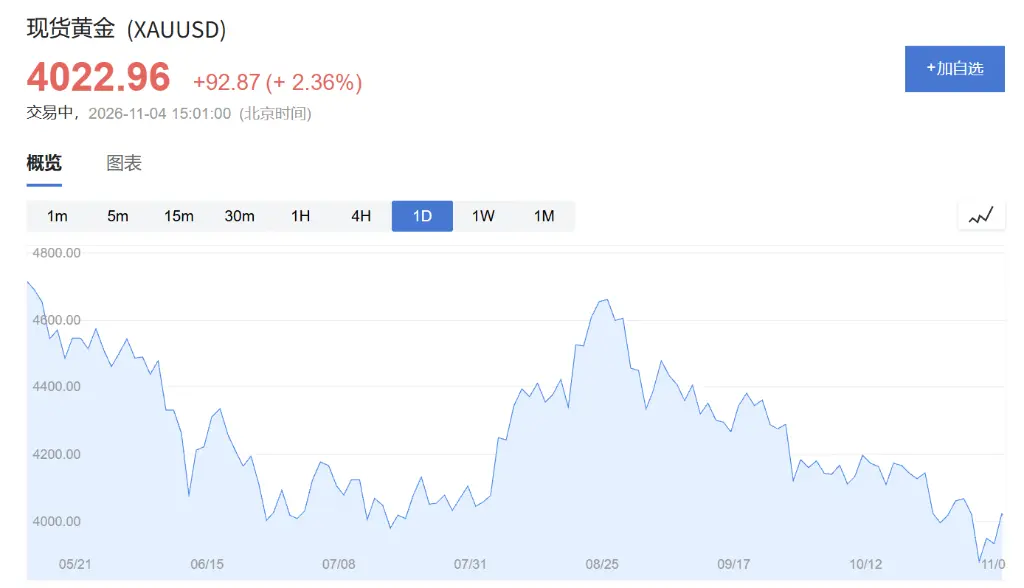
Gold prices rose over 2%, climbing back above the $4,000 mark. The weakening dollar and declining U.S. Treasury yields provided dual support for gold prices, as the market simultaneously bet that a divided government would compress Trump's fiscal expansion space, thereby alleviating inflation expectations and fiscal deficit risks.
The clean energy sector became the biggest structural beneficiary of this election rally.
The market bets that the Democratic Party controlling Congress will prevent or partially reverse Trump's series of measures against clean energy projects. South Korea's Hanwha Solutions rose over 22% at one point, while HD Hyundai Energy Solutions and OCI Holdings each rose over 12%. In the U.S. stock market, according to Blue Ocean Alternative Trading System, Enphase Energy and SolarEdge Technologies each rose about 12%, while First Solar and Sunrun rose 11% and 8.7%, respectively.
Whether the market can clear depends on subsequent variables
Behind this "first collapse then rally" trend is the market's rational return after quickly completing the repricing of the political landscape. The core question raised by Goldman Sachs in its election day morning report—whether the election can become a "clearing event and drive a broader risk reconstruction in the stock market"—has received a partially affirmative answer in the short term.
Edward Jones Senior Strategist Angelo Kourkafas told MarketWatch that historically, election-driven market volatility lasts a limited time, and the direction of the AI theme and geopolitical dynamics are the core variables driving the market towards the end of the year.
Natixis Chief U.S. Economist Christopher Hodge also pointed out that the direct economic impact of the election results "is actually not significant," and it is more worth paying attention to the policy operational space that Trump may seek to "change the narrative" after the midterm elections.
Key observations for the market going forward include: the impact of the U.S. Treasury's quarterly bond issuance plan on the yield curve, changes in the actual pace of AI data center construction at the state level, and whether the Trump administration can maintain its core policy agenda through executive means under a divided government.