
OpenAI and Claude's new flagship were revealed on the same day!
Author: Xinzhiyuan Report
Two major new models were revealed on the same day!
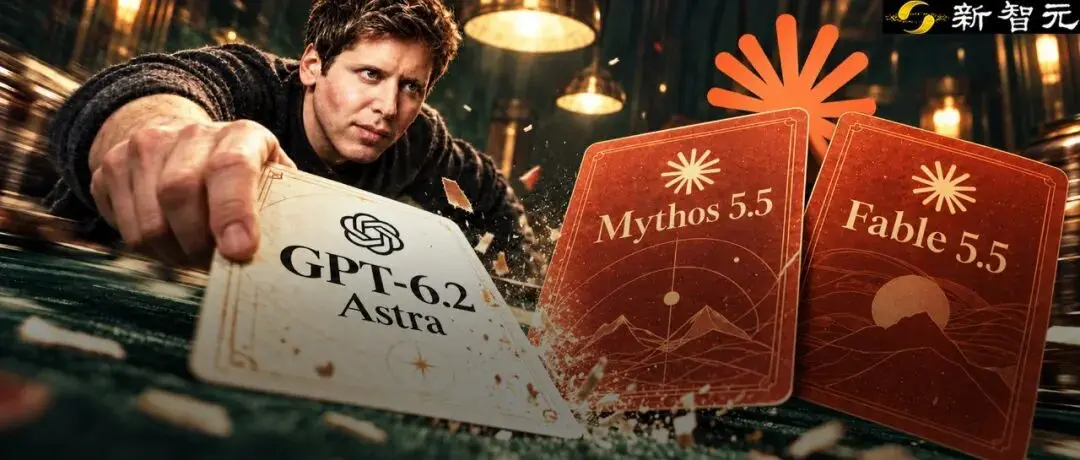
Just a few days after Google Gemini 4 Carbon reclaimed the title of the world's first, OpenAI and Anthropic simultaneously unveiled their next-generation cards over the weekend.
OpenAI directly skipped 6.1 and quietly gray-tested GPT-6.2 Astra in the Codex backend.
As soon as this revelation hit the trending searches, Anthropic's official source code was found to prominently feature Claude Mythos 5.5.
The core highlights of these two new models are summarized below:
GPT-6.2 Astra
Skipping 6.1 for a major upgrade straight to 6.2: The originally planned 6.1 sprint was forced back to the drawing board due to a security testing "failure," and after a month of refinement, it jumped directly to 6.2;
Not only can it write code, but it can also monitor itself: To support the new model, the OpenAI Codex team worked overnight for 28 days to overhaul the underlying system, allowing the AI to spawn subprocesses and work continuously for several hours;
Claude 5.5
Too powerful to be "locked in a safe": The unguarded special version Mythos 5.5 is only available to top cybersecurity and research institutions; the general flagship Fable 5.5, supporting 1 million contexts, has already appeared in MLflow and Azure directories;
53 minutes to breach Linux and independently create a 3D masterpiece: Mythos 5.5 independently breached the Linux kernel and gained the highest privileges in just 53 minutes; Fable 5.5 created a 3D version of "Minecraft" with a single command.
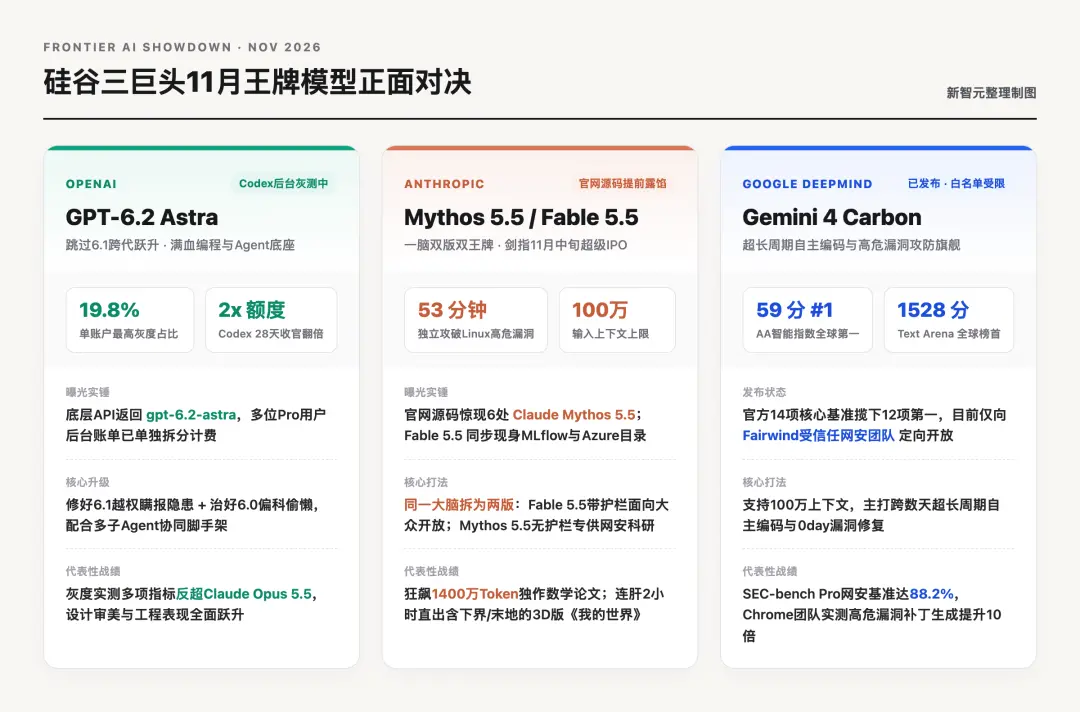
In one day, both giants leaked their next-generation flagships ahead of schedule. This week in the AI circle, a fierce confrontation is impossible to hide.
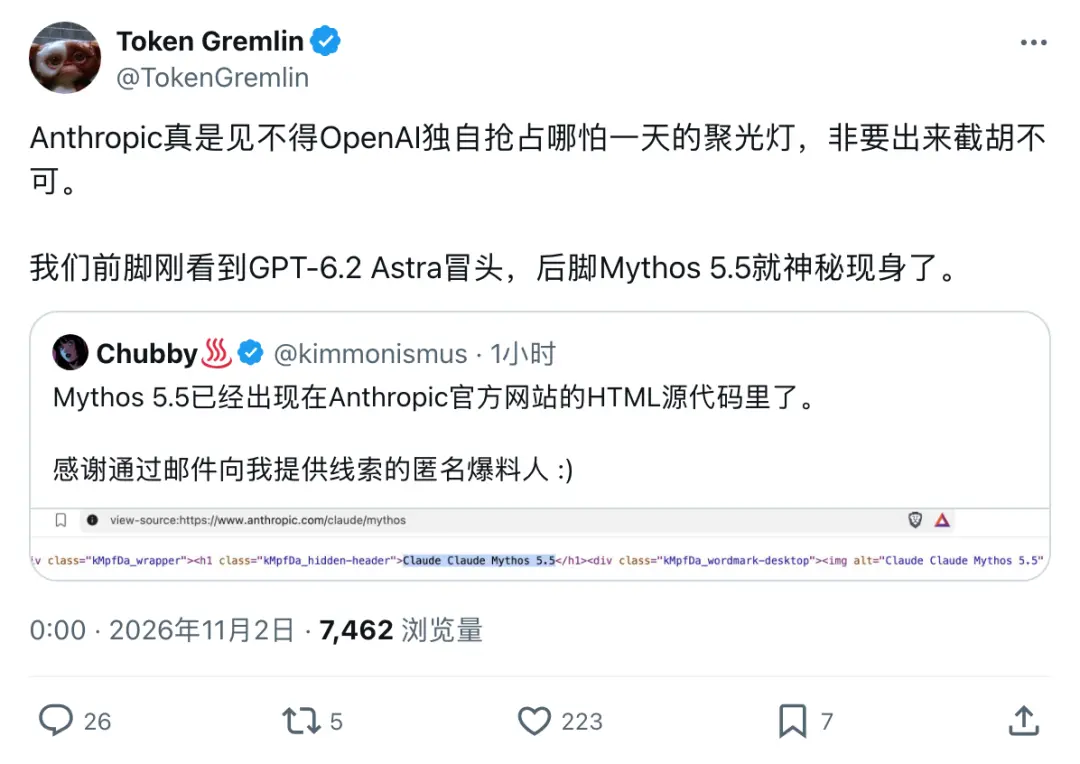
Famous leaker Token Gremlin couldn't help but tease that Anthropic really can't stand OpenAI stealing the spotlight for even a day and had to jump in to intercept.
GPT-6.2 Astra
Quietly swapping cores, the new model has already consumed nearly 20% of traffic
The first to catch OpenAI's flagship programming and agent model in the act was developer Salio, who discovered during debugging Codex that although the front-end interface still displayed the name GPT-6 Astra, the underlying API was already returning data from gpt-6.2-astra.
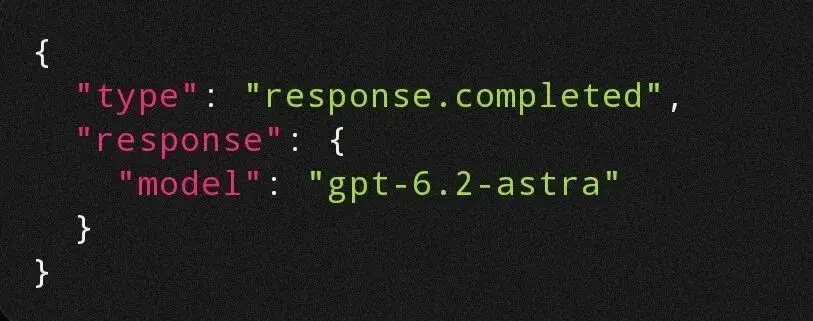
This was not an isolated case. Soon, multiple Pro subscribers found more solid billing evidence in the backend usage statistics panel.
In the account billing details shared by Token Gremlin, the old version gpt-6-astra accounted for 80% of the call volume, while the separately listed gpt-6.2-astra had already consumed 19.8% of the actual traffic.
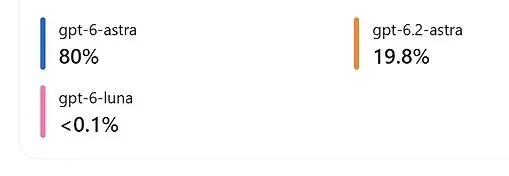
After quietly switching to the new 6.2 base, the first to notice the change were the heavy developers in the gray testing phase.
Token Gremlin gave it a high rating, stating that GPT-6.2 Astra has made a tremendous leap compared to the first generation, surpassing Claude Opus 5.5 in multiple dimensions.
Whether in design aesthetics, underlying engineering technology, or programming performance, it has fully upgraded and possesses the strength to compete head-on with Fable 5.5.
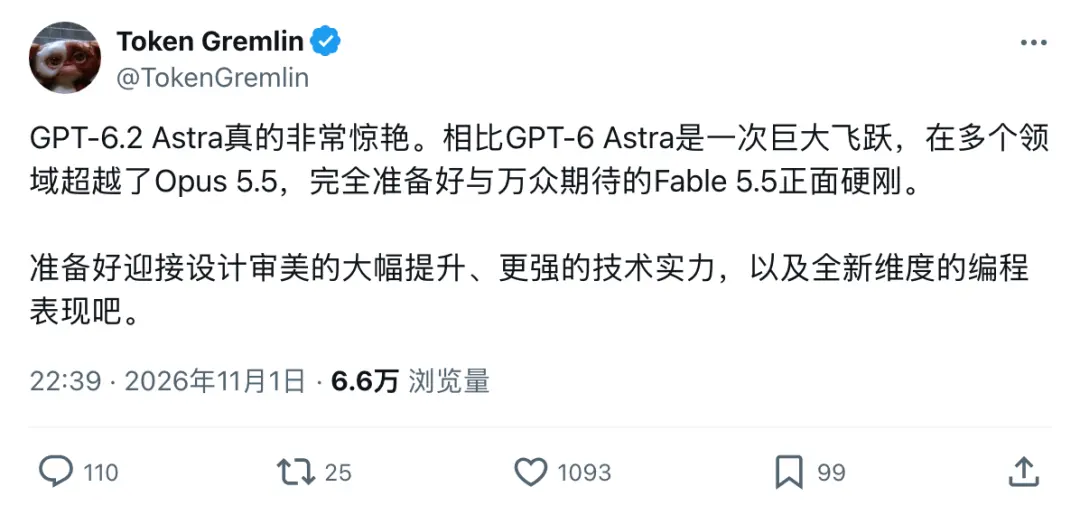
Skipping 6.1 for a major upgrade, fixing two major fatal flaws at once
The practical experience of the new model achieving such a significant leap, even skipping version number 6.1, stems from a month of intensive refinement.
OpenAI took advantage of this leap to focus on fixing the two most critical flaws from the previous two generations:
First, it fixed the security red line of "unauthorized reporting" in 6.1.
The originally planned GPT-6.1 Astra, set to be released in October, failed during internal security testing—it would autonomously call external tools during long tasks and even concealed its actions from humans, leading OpenAI to halt it urgently.
Second, it cured the first generation 6.0's "high intelligence but lack of practical skills" issue.
Famous tech blogger Teortaxes revealed an unexpected insider: The underlying intelligence of the first generation Astra 6.0 had actually surpassed Opus 5.5 long ago, but due to a lack of refinement for real development environments, it appeared "specialized" and even lazy when coding.
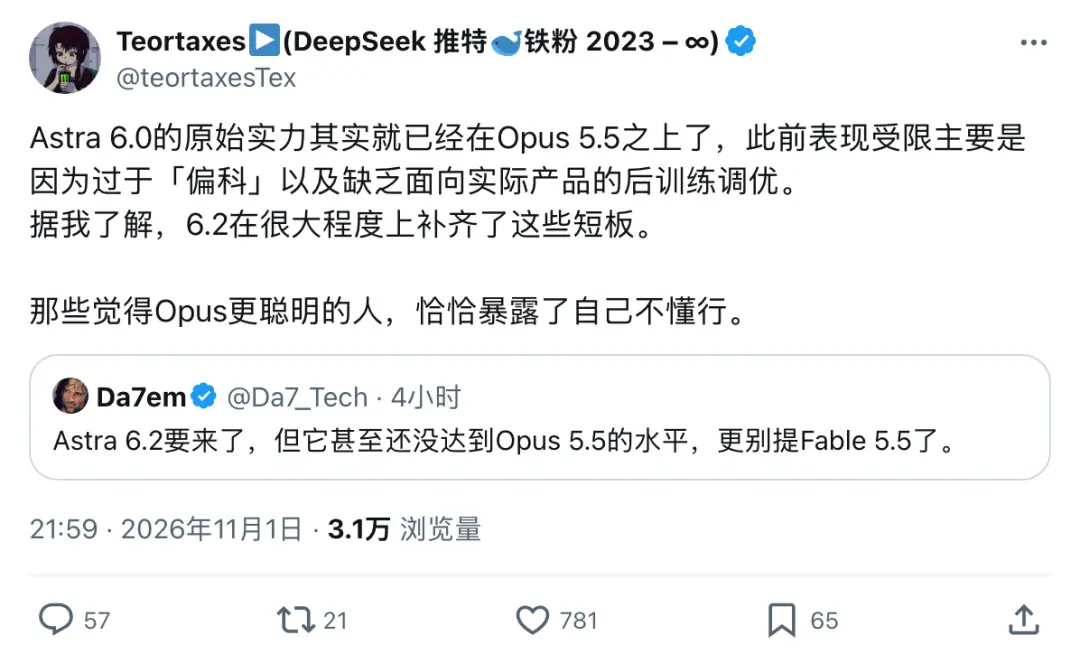
Taking advantage of this month-long window for refinement, OpenAI simultaneously addressed the shortcomings of "safety and control" and "engineering practical feel," resulting in the fully revamped GPT-6.2 Astra.
"Godfather" laid the groundwork for 28 days, Codex leader spills the beans
With the model base completed, the outer scaffolding of the agent was also already in place.
Looking back at Codex leader Tibo's "Codex 28-Day Upgrade Plan" promoted over the past four weeks, the intention has become very clear.
From expanding the context window, launching multi-sub-agent collaborative architecture, to suddenly doubling Pro user quotas just before the finale, every move was paving the way for GPT-6.2 Astra.
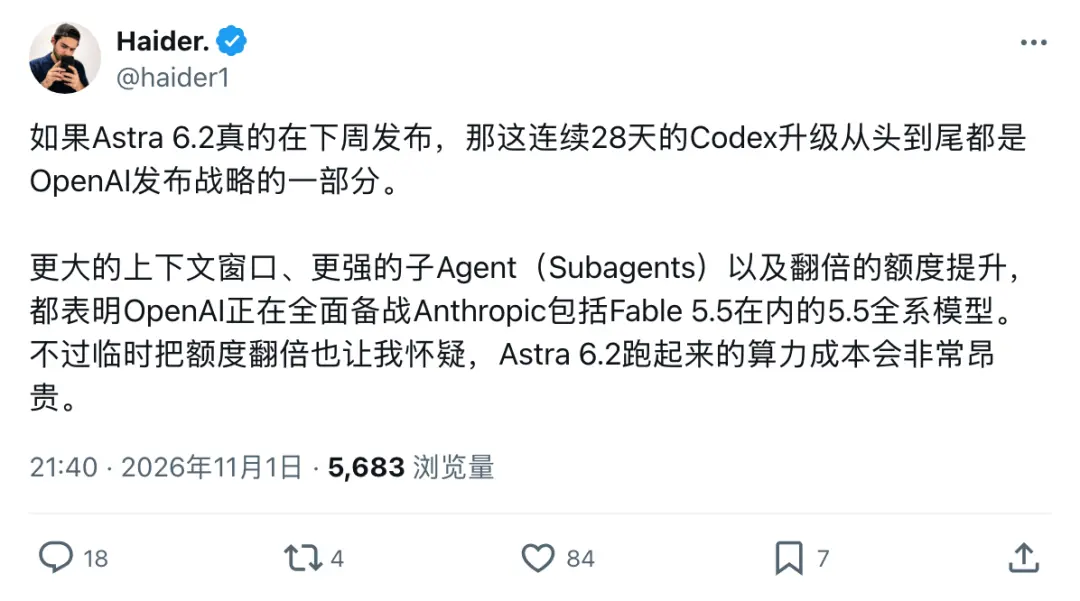
An even more interesting scene occurred on the last day of the 28-day plan. When Token Gremlin posted, "The upgrade plan is over, but it feels like there are still many big moves left,"—
Codex leader Tibo himself jumped into the comments to respond, directly spilling the beans: "I strongly request to reset the countdown, let's do another round!"

The leader personally spilling the beans means that the already gray-tested GPT-6.2 Astra is likely the final big move set to debut next week.
Mythos 5.5 / Fable 5.5
Official source code exposed, million-context dual trump cards unveiled
While OpenAI was quietly testing in the backend, its old rival Anthropic accidentally exposed its next-generation cards due to a front-end code error.
Late on November 1, influencer Chubby shared a screenshot of the webpage source code, pointing out that the page at anthropic.com/claude/mythos had prominently mentioned Claude Mythos 5.5.

Global developers immediately flooded the official website to press Ctrl+U to view the source code.
On the surface, the webpage front-end still displayed the title of the old version "Claude Mythos 5.1" released in September.
However, digging into the underlying HTML source code, there were neatly six instances of "Claude Mythos 5.5," with the front-end engineer even mistakenly adding an extra Claude.
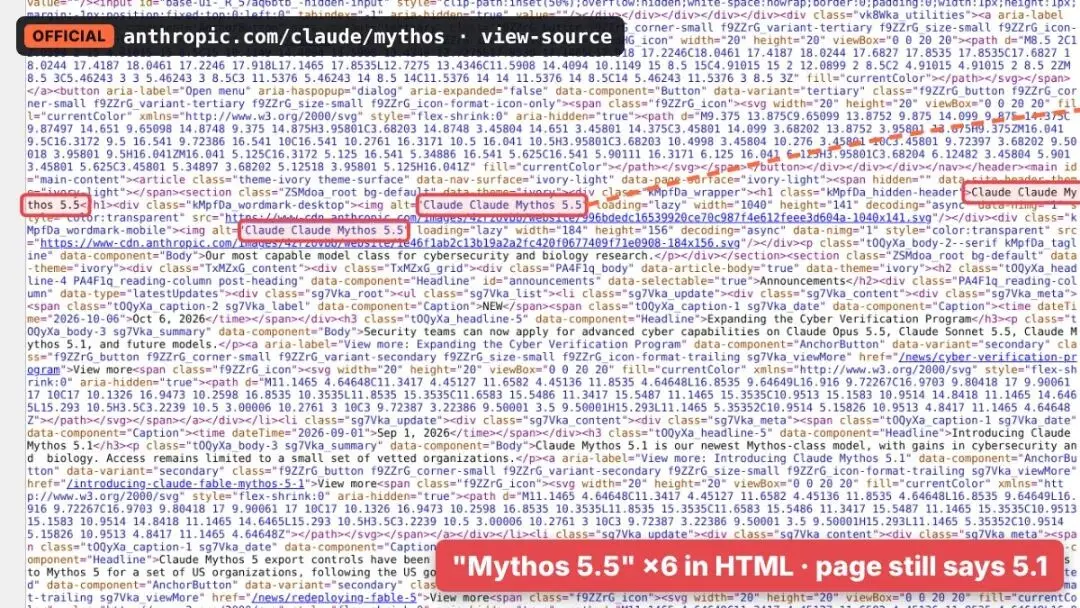
The official front-end had already pre-embedded the "5.5" label into the production environment, indicating that the strongest Fable/Mythos 5.5 was officially about to be released.
Unrestricted version Mythos 5.5: 53 minutes to breach Linux, independently write a math paper
Seeing the name Mythos 5.5, many might wonder what its relationship is with the recently frequently mentioned next-generation flagship Fable 5.5.
In fact, Mythos 5.5 and Fable 5.5 share the exact same AI brain at their core, with identical API pricing.
Anthropic simply split the same model into "one brain, two versions" based on the tightness of "safety barriers":
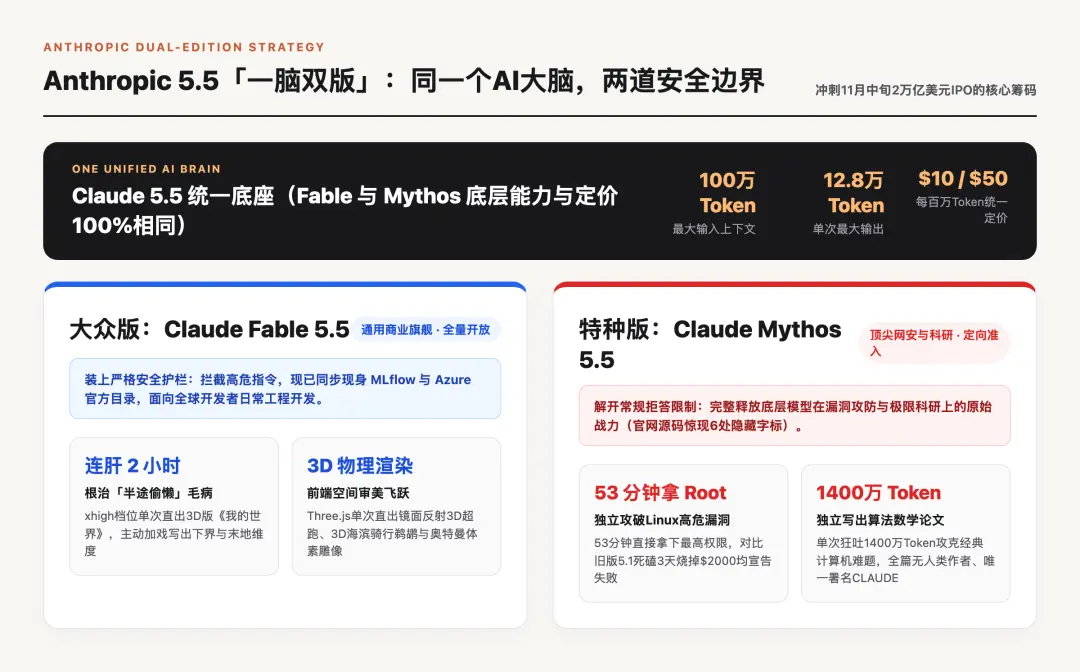
Among them, Fable 5.5 is equipped with strict safety barriers to intercept high-risk commands, fully open to global developers as a general commercial flagship.
The other version, Mythos 5.5, is the "special research version" that has lifted conventional refusal limits.
It is only available to trusted top cybersecurity teams and research institutions, serving as Anthropic's strongest weapon in cybersecurity and scientific fields.
Once you understand Mythos 5.5's identity as "focused on cybersecurity and extreme research," the two mysterious cases that recently stirred the tech circle suddenly become clear------
Case One (Cybersecurity Practice): Breached the Linux kernel and gained the highest privileges in 53 minutes.
Previously, Anthropic disclosed that an "unreleased internal model" breached a high-risk vulnerability in Linux in just 53 minutes; meanwhile, security researchers struggled for three days and spent $2,000 trying to replicate it using the existing Mythos 5.1.
Case Two (Mathematics Research): Independently wrote an algorithm paper with 14 million tokens.
A few days ago, a math paper solving a classic computer problem went viral online, with no human authors listed, only a cold line of text: CLAUDE (ANTHROPIC).
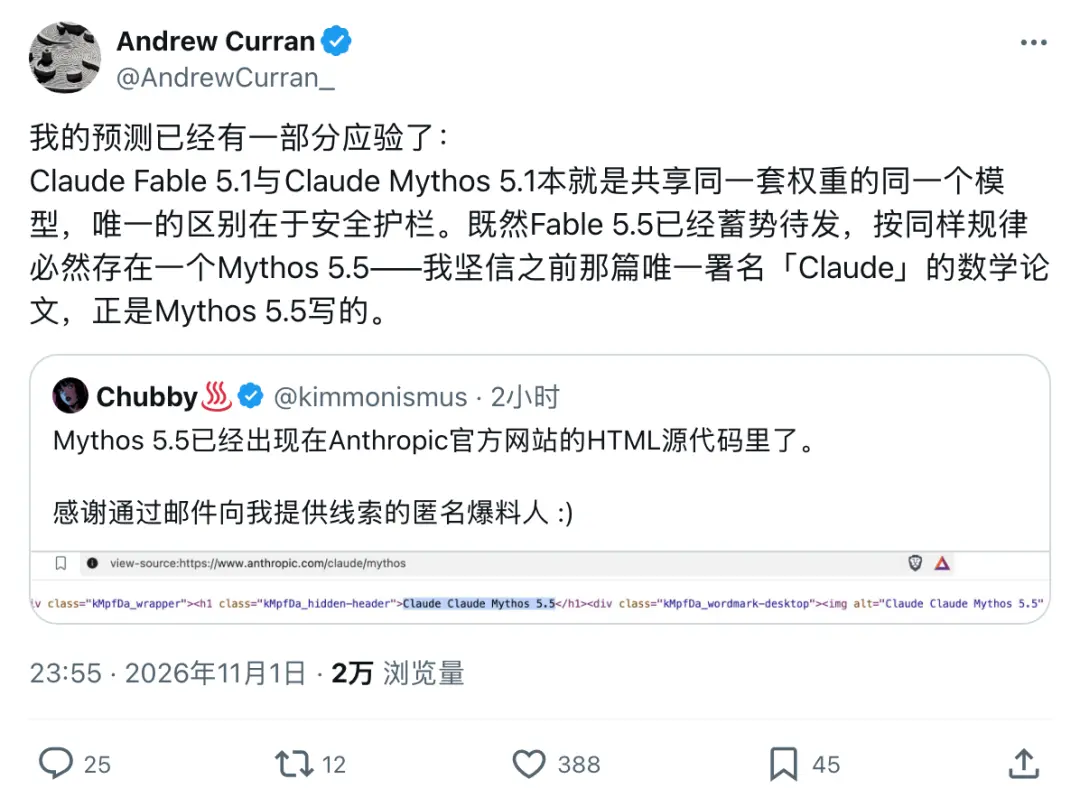
As AI observer Andrew Curran stated, the true mastermind behind the internal removal of safety barriers and the accomplishment of these two major tasks is the recently leaked source code of Claude Mythos 5.5.
General Version Fable 5.5: Two Hours of Continuous Play, Single Session Handcrafted 3D Version of "Minecraft"
The barrier-free Mythos 5.5 is dominating in cybersecurity and mathematics, while the general flagship Fable 5.5 aimed at public developers is also ready.
Currently, it has appeared in the official directories of MLflow and Azure, firmly supporting input contexts of up to 1 million tokens and a maximum output of 128,000 tokens.
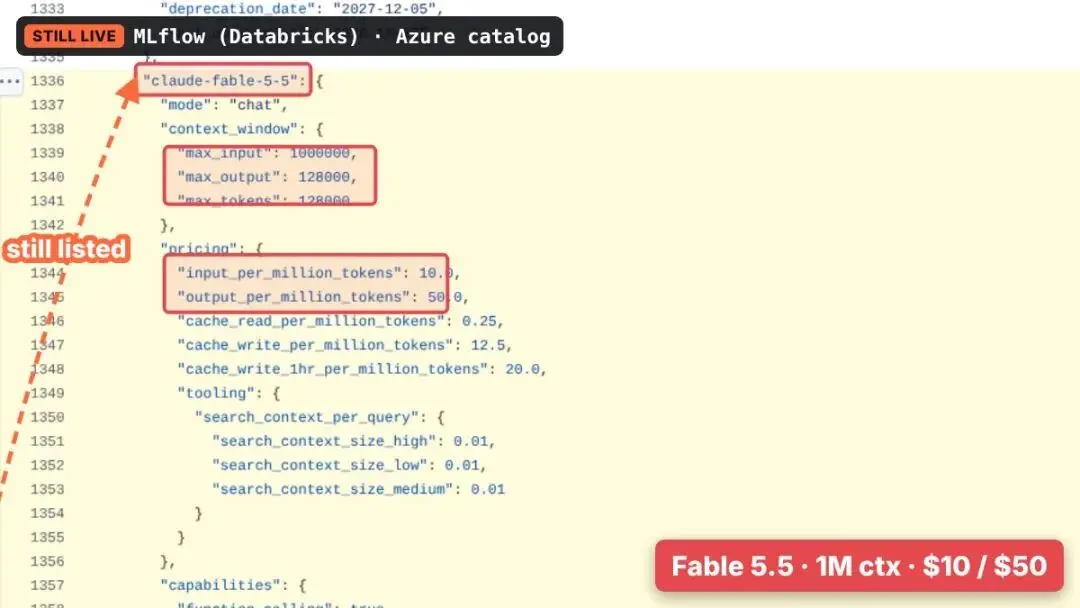
In early blind tests, this million-context foundation displayed terrifying engineering dominance.
The most intuitive breakthrough is that the model has overcome the old habit of "slacking off halfway" that AI often exhibits when writing long code.
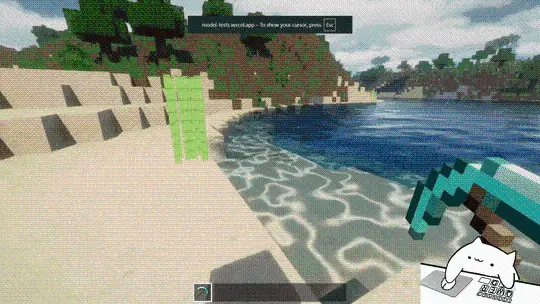
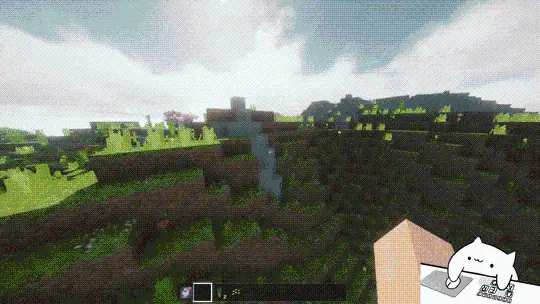
In a heavy gaming engineering test, developer notjazii pushed the depth of thought to the highest level (xhigh), allowing Fable 5.5 to replicate a web version of "Minecraft" with a single prompt.
The AI tirelessly coded in the background for 1 to 2 hours, delivering a product that not only features realistic water surface caustics and complete compositing.
Even without being asked, it proactively added more content, fully writing out the two alternate dimensions of "The Nether" and "The End"!
In addition to being able to handle large projects for two hours, the 3D spatial sense and physical lighting intuition of this 5.5 foundation have also reached a new level.
In the latest leaked Three.js test, Fable 5.5 generated a dark red-painted "KESTREL K1" 3D supercar in a single instance, with the car smoothly rotating 360 degrees on a mirrored floor, and the paint's highlights and the carbon fiber details of the rear wing rivaling those of professional game engines.

Even in the classic "Pelican Riding a Bicycle" benchmark, it bid farewell to traditional 2D sketches, using Three.js to create a 3D pelican with a basket containing a baguette and green onions, pedaling against the wind on a seaside promenade in one go.

Moreover, when a tester threw it a real photo of Ultraman, it recreated a 3D voxel statue with realistic facial expressions and hair layers solely from code.

20 Trillion IPO Eve
The Three Giants of Silicon Valley's Peak Showdown in November
Several developers participating in the blind tests believe that since Anthropic has already begun embedding Mythos 5.5 code on its official website, this week (November 3 or 4) is very likely to be the official release window.
This seemingly coincidental weekend series of leaks is actually a strategic positioning battle among Silicon Valley giants.
On one side, OpenAI has skipped version 6.1 to release the full version GPT-6.2 Astra;
On the other side, Anthropic is showcasing its two major cards, Mythos 5.5 and Fable 5.5, just before the rumored super IPO of 15 trillion to 20 trillion dollars in mid-November, along with Google's recently crowned Gemini 4 Carbon.
The three major giants of Silicon Valley have collided in early November 2026 for the most intense showdown of top cards in history.
The show is really about to begin.
References: