
AI "Perfect Storm" Script: The bond market "sounds the horn," financial reports "add insult to injury," and the election "the final blow"?
The expansion of AI in the United States is entering a more stringent phase: capital is no longer solely paying for growth narratives, as the bond market, financial reports, and political risks converge, investors are beginning to demand proof of return on AI investments.
Lenders and investors are becoming more selective and are demanding stricter terms. Even bonds from large tech-related issuers like SpaceX and Meta are trading at significant discounts, while AI cloud companies such as CoreWeave, Nebius, and Nscale have recently been effectively shut out of the bond market.
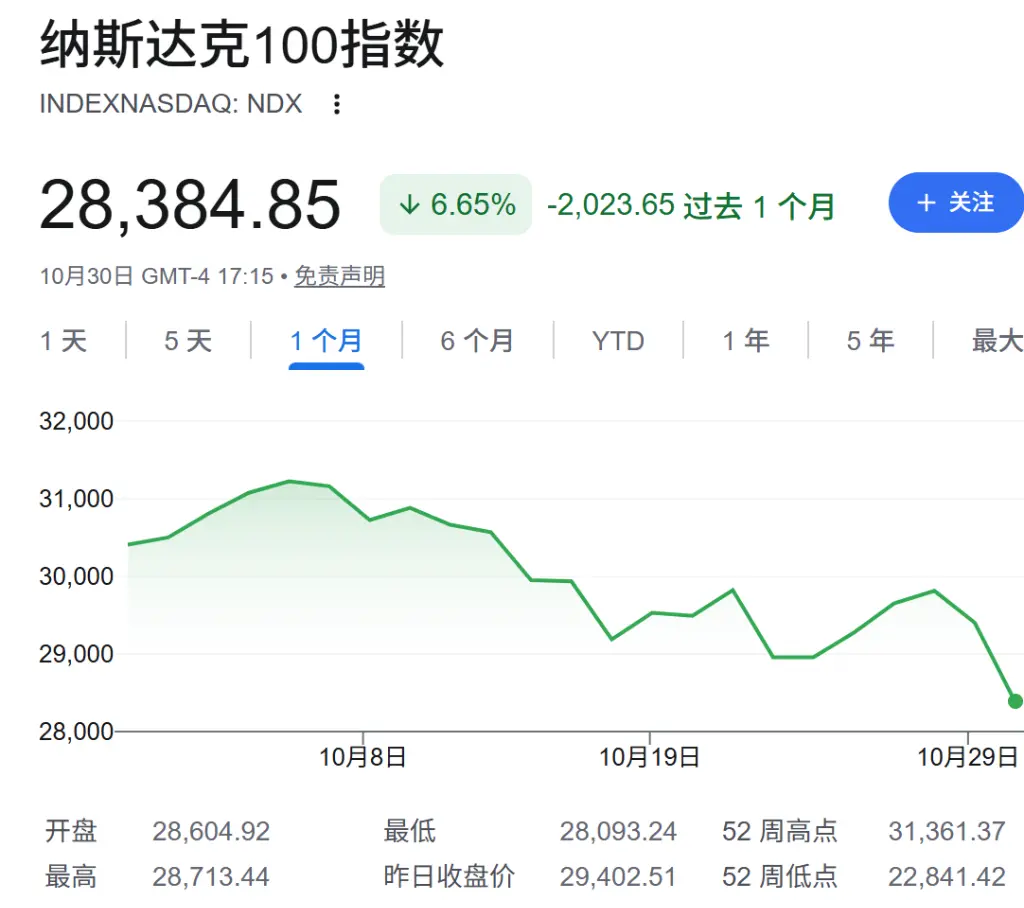
The earnings season has not alleviated concerns; instead, it has amplified market worries about AI capital expenditures and free cash flow. The Nasdaq 100 index fell 6.7% in October, with a market value evaporating by $2.7 trillion. Alphabet's stock plummeted 13% in a single day after its earnings report, marking the worst single-day performance in the company's history.
Political risks are also heating up. As the U.S. midterm elections approach, the controversies surrounding electricity prices, environmental issues, and regulations triggered by data center construction are entering market pricing. If polls and market forecasts show a prospect of the Democratic Party regaining control of Congress, the AI industry may face more intense investigations, hearings, and regulatory agendas.
The Bond Market Changes: AI Financing Enters a Buyer's Market
In the past few years, companies behind the AI boom in the U.S. easily financed hundreds of billions of dollars. Now, Wall Street is raising the bar.
Investors are concerned that large data center projects may be delayed due to grassroots political backlash, and they worry that the profits of hyperscale cloud providers and AI startups like Anthropic and OpenAI may not materialize as quickly as expected. Meanwhile, the surge in stock and bond financing supply has made investors anxious about excessive risk exposure to AI themes.
This shift is already reflected in market prices. The issuance of AI-related bonds has widened discounts, and some issuers have seen their financing windows narrow. Pimco's Chief Investment Officer Dan Ivascyn stated that lenders are increasingly demanding that companies prove their investments can translate into sufficient income, with "the bar getting higher," and "the weakest links will be the first to feel the pressure."
Even though funds are still available, the terms are more expensive. SpaceX announced this week that it completed a $40 billion financing to purchase Nvidia's latest chips, which is considered the largest financing in the AI chip sector. However, the record lasted only a few hours, as Broadcom subsequently finalized a $63 billion deal to lease chips to Anthropic. Nevertheless, according to The Wall Street Journal, Broadcom's CEO Hock Tan had to personally intervene in negotiations at the final stage to ease banks' concerns.
New Cloud Companies Under Pressure: High-Yield Bond Window Nearly Closed
The pressure is first concentrated on so-called neocloud companies. These companies own or lease data centers, deploy AI servers, and sell computing power to large tech companies, trading firms, and AI startups. They borrow large sums and are particularly sensitive to changes in interest rates and financing conditions.
According to Bank of America data, the issuance scale of AI-related bonds in the U.S. corporate bond market is projected to reach $394 billion by 2025, having already reached $655 billion by mid-October this year. Analysts expect that the new AI-related debt issuance next year will approach $1 trillion.
However, the market's absorption capacity is being tested. CoreWeave's bonds, issued earlier this year with a 9.75% coupon, now have secondary market yields exceeding 15%. This indicates a significant rise in borrowing costs in a short time. Bankers have recently warned that the new issuance market for high-yield bonds from neocloud companies is essentially closed, as yields above 15% are too costly for borrowers.
Nebius is a typical case. The company has sold about $2.7 billion in stock to Nvidia and other investors since 2024 and issued billions in convertible bonds to support AI expansion. However, according to The Wall Street Journal citing informed sources, Nebius considered an initial issuance of high-yield bonds but later decided not to proceed. CEO Arkady Volozh stated last week at a conference in Berlin that some sources of capital are "temporarily closed," and the company is raising funds through customer prepayments and other tools.
The equity market is also not easy. Lambda lowered its target valuation from $14.5 billion to $13 billion in its final round of financing before its IPO. Nscale, which was originally considering a November listing, is now leaning towards postponing it to December. The company is also negotiating with Nvidia and other investors to provide financing support for Anthropic's $45 billion data center in West Virginia, but potential supporters are demanding stricter terms after the market shift.
Giants Also Encounter Concentration Constraints
The credit quality of large hyperscale cloud providers is far superior to that of neocloud companies, but the problem lies in the scale of financing.
Meta, Amazon, Alphabet, and Microsoft have high credit ratings and the ability to continue increasing debt. However, many companies have issued large amounts of high-grade debt this year and indicated that they will continue to finance in the future, which has raised concerns among traditional buyers such as investment firms, insurance companies, and pension funds about excessive concentration in a single industry and theme.
Ivascyn stated that the market faces a real issue: how much can investors still buy in one name or one theme?
This pressure may explain why some companies are turning to equity financing. Meta announced plans to raise up to $97.5 billion through a series of stock issuances. Its securities filings mentioned that recent and future financings from companies like Alphabet, SpaceX, Anthropic, and OpenAI could pose deep challenges to capital markets.
Ben Connard, Chief Investment Officer at Carnegie Investment Counsel, stated, "Everyone is financing construction plans before liquidity runs dry." He noted that ultimately there may not be enough funds to support the entire AI expansion, and financing could become a key bottleneck slowing down construction.
Earnings Reports Add Insult to Injury: Cash Flow Becomes a New Market Test
If the bond market serves as a warning, the earnings season has prompted the market to reassess the return cycle of AI investments.
The cloud businesses of major AI spenders are still growing, but investors are more concerned about the erosion of free cash flow due to data center construction costs. Anthony Saglimbene, Chief Market Strategist at Ameriprise, stated that the market is becoming more selective, as not every hyperscale cloud provider will emerge as a winner; the key lies in how much companies spend, how much return they get, and how deep their moats are.
Alphabet has become the most obvious pressure point. The company's earnings report showed disappointing sales in its core search business, and it recorded negative free cash flow for the second consecutive quarter, a situation that has never occurred since its IPO. Search accounted for nearly 56% of Alphabet's revenue last year, so if AI search growth comes with lower monetization capabilities, it will directly impact its core business model. The stock plummeted 13% on Thursday, with the company's market value evaporating by about $500 billion.
Amazon's report also failed to reassure the market. Due to rising capital expenditures and the slowest growth in its e-commerce business in three years, Amazon's negative free cash flow significantly fell short of analyst expectations, with the stock price dropping a cumulative 5.6% on Thursday and Friday.
Meta's pressure comes from capital expenditure expectations. The company's earnings report on October 21 showed a significant increase in its full-year capital expenditure plan, leading to a 12% drop in its stock price. Its credit risk indicators rose to record highs. S&P Global Ratings downgraded Meta's rating outlook from stable to negative on Friday evening, stating it is unclear when Meta's spending will generate revenue exceeding cost growth.
The divergence in cash flow is becoming a valuation dividing line. Among the four hyperscale cloud providers, Amazon, Meta, and Alphabet all reported free cash flow deficits for the quarter. Amazon's negative free cash flow approached $35 billion, compared to a positive $430 million a year ago. Microsoft is the exception, recording $18.6 billion in positive free cash flow, but its stock still fell 1.6% on Friday.
The Software Sector Also Dragged into AI Pricing Reevaluation
AI anxiety is not limited to giants and infrastructure companies. Software stocks are also feeling the impact.
In this earnings season, 90% of S&P 500 software companies exceeded profit expectations, but only 70% exceeded revenue expectations, down from the previous quarter. The market is concerned that AI products from companies like Anthropic and OpenAI may weaken the pricing power and profit margins of traditional software companies.
ServiceNow's stock plummeted 31% on Thursday, marking a record largest drop after it released disappointing quarterly sales guidance. Fortinet lowered its service sales expectations, triggering a sell-off in cybersecurity stocks. Twilio's stock fell 18% on Friday, as its outlook indicated that growth may slow significantly.
Ben Connard stated that the market is "completely uneasy" about which software companies can survive in the AI world.
Midterm Elections Approaching: Political Risks Enter Financing Models
The third layer of pressure comes from Washington.
As Meta prepares for an approximately $98 billion stock issuance, it mentioned trade disputes, regulatory challenges, and "shifts in public sentiment" in its filings. The company warned that new taxes or regulations could further increase capital expenditures and operating costs. Similar risk disclosures have also appeared in the filings of companies like Anthropic.
The Trump administration has so far maintained a relatively lenient regulatory stance on AI, emphasizing voluntary safety measures, company-led testing, and third-party audits, while promoting the rebranding of AI as "Super Intelligence." Trump has also hosted nearly twenty AI executives at the White House, including Anthropic CEO Dario Amodei, OpenAI President Greg Brockman, and Nvidia CEO Jensen Huang, facilitating a non-binding safety commitment.
However, public backlash is expanding. A poll released this month by Washington Post-ABC News-Ipsos showed that about two-thirds of Americans oppose the construction of new data centers, 57% of adults believe AI is bad for society, and about 67% do not approve of Trump's handling of AI issues. Data centers are seen as one of the key factors driving up electricity prices and have raised concerns about environmental and labor impacts.
If the Democratic Party regains control of both houses of Congress after the midterm elections, the AI industry may face stronger regulations. Bloomberg reported that Hakeem Jeffries is considering whether to establish a dedicated AI committee, which could investigate and subpoena relevant companies, focusing on the spread of AI-driven cyberattacks and the impact of data center construction on electricity prices.
The scope of policy proposals is also expanding. Some Democrats support establishing a federal regulatory framework for cutting-edge AI models, preemptively excluding certain state-level rules. Bipartisan senators are also negotiating an AI safety framework. Bernie Sanders has proposed a nationwide pause on data center construction, while Ted Lieu has suggested implementing shutdown mechanisms in models to address catastrophic harm.
Investors' Main Line: Shifting from "Build Fast" to "Earn Well"
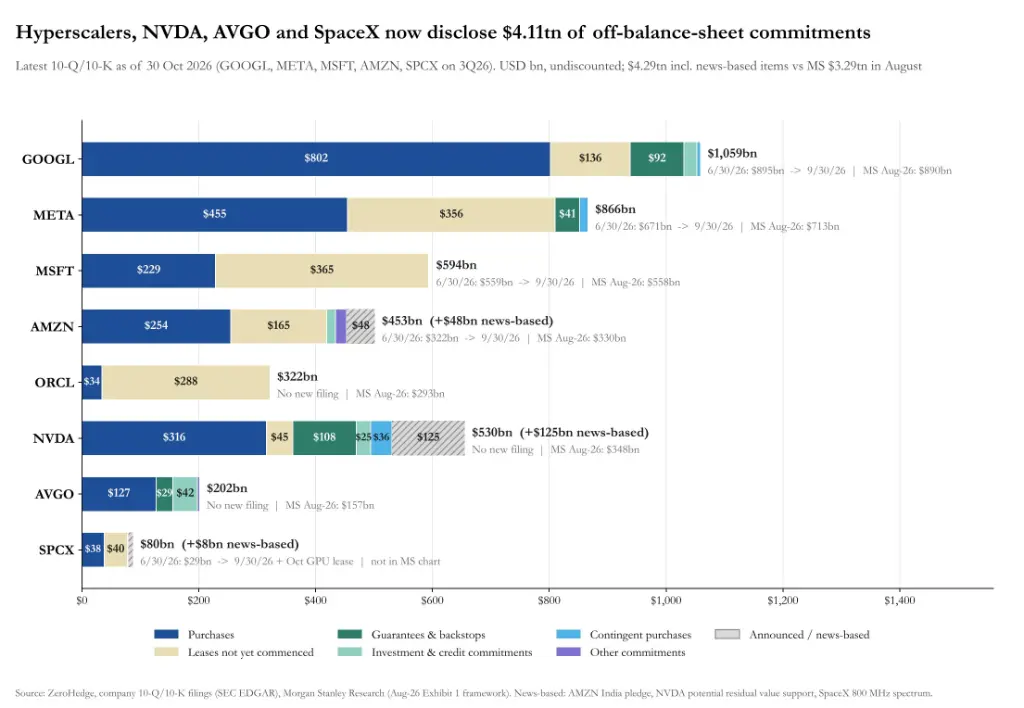
AI demand remains strong, and capital expenditures are still advancing. Meta's future spending commitments have risen to $825 billion, and Alphabet's future spending obligations exceed $1 trillion. Microsoft stated that although its capital expenditures in the first quarter of the fiscal year fell short of expectations due to bottlenecks, spending in the second half of this fiscal year will be higher.
The issue is that the market is no longer only rewarding the scale of spending.
Zacks Investment Management Chief Market Strategist Brian Mulberry stated that investors are voting with their money, redefining "quality." Fifth Third Wealth Advisors Chief Investment Officer Chris Osmond mentioned that the market is beginning to reward companies that can convert spending into revenue and actual investment returns, while punishing those that have yet to prove this but continue to increase spending.
This means that AI trading has entered the "proof stage." The bond market demands higher yields and stronger protection clauses, the stock market requires clearer cash flow paths, and the political system may demand stricter regulations. For investors, the AI theme has not disappeared, but the screening criteria have changed: financing ability, free cash flow, capital expenditure discipline, and regulatory exposure are replacing the pure growth narrative.
Risk Warning and Disclaimer
The market carries risks, and investment should be cautious. This article does not constitute personal investment advice and does not take into account the specific investment goals, financial situation, or needs of individual users. Users should consider whether any opinions, views, or conclusions in this article are suitable for their specific circumstances. Investing based on this is at one's own risk.