
"Sell-offs" lead to "more sell-offs"! Goldman Sachs predicts "another wave of large-scale sell-offs in the US stock market in the coming week."
A new round of intense selling in the U.S. stock market is spreading, with Goldman Sachs warning that the market may fall into a vicious cycle of "selling triggering more selling," with large-scale sell-offs still waiting to be released in the coming week.
On November 21, according to Bloomberg, Goldman Sachs traders released a report on Friday stating that the firm's "fear index" has risen to 9 out of a maximum of 10, with selling pressure from systematic investors spreading widely. According to Goldman Sachs' model, even if the market remains stable, trend-following funds may still sell hundreds of billions of dollars in stocks in the coming week; if the market continues to decline, the scale of selling will significantly expand.
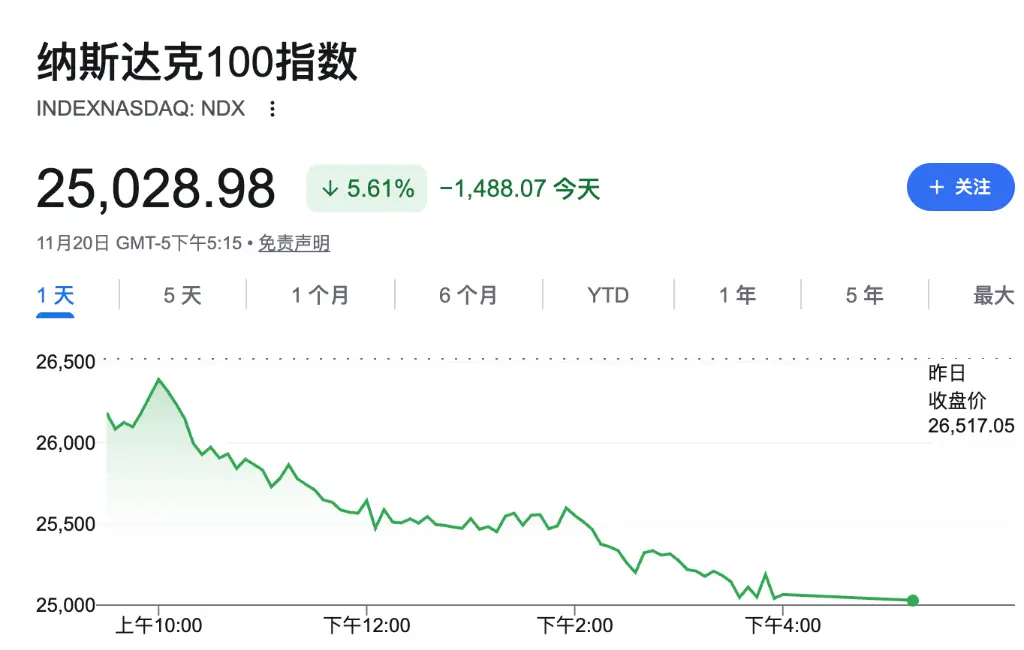
This round of declines has heavily impacted technology stocks. The Nasdaq 100 index plummeted 5.6% in a single day on Friday, marking the largest weekly decline since March 2020; the Philadelphia Semiconductor Index fell 11%, and Nvidia has dropped nearly 50% since its peak on October 6. Meanwhile, the sell-off has begun to affect stocks favored by retail investors and cryptocurrency-related assets, with market pressure spreading from institutional holdings to a broader range of risk assets.
What further worries the market is that the highly anticipated Anthropic IPO failed to become a catalyst for boosting risk appetite, while concerns about the return on investment in AI infrastructure continue to suppress technology stock valuations. Under multiple pressures, the market has yet to show clear signs of stabilization.
Systematic Selling Still Has Room to Release, Potential to Sell $80.6 Billion in the Coming Week
Goldman Sachs estimates that trend-following strategies represented by Commodity Trading Advisors (CTAs) have sold $57 billion in stocks over the past month, with their net position in U.S. stocks turning into a net short position of $19 billion.
However, institutional deleveraging may be far from over. Goldman Sachs' model predicts that in the coming week, if the market remains flat, CTAs may still sell $65.8 billion in stocks; if the market continues to decline, the potential selling scale could reach $80.6 billion; even if the stock market rebounds, it could trigger $28.6 billion in selling.
These strategies mechanically adjust positions based on market price trends and volatility, and a market decline will further trigger deleveraging, forming a negative feedback loop of "selling more as prices fall." Goldman Sachs' calculations suggest that trend-following funds may continue to be a significant source of selling pressure in the short term, even during a stock market rebound.
IPO Expectations Fall Short, AI Return Concerns Intensify Market Sell-off
The market previously hoped that the Anthropic IPO would become a turning point for funds to return to risk assets, but this expectation ultimately fell short. Goldman Sachs traders pointed out that many investors originally hoped this large tech IPO could boost market sentiment and drive funds back into risk assets by year-end, but its impact on the overall market was limited. Goldman Sachs traders described this outcome as "a bitter pill to swallow."
Meanwhile, investor skepticism about whether massive capital expenditures in AI can deliver returns continues to rise. The market is beginning to reassess whether investments in AI chips, computing power, and infrastructure can generate sufficient returns to support the current valuations of technology stocks. Nvidia fell 14% in a single day on Friday, with a decline of nearly 50% since its peak in October, becoming a major drag on this round of technology stock adjustments. 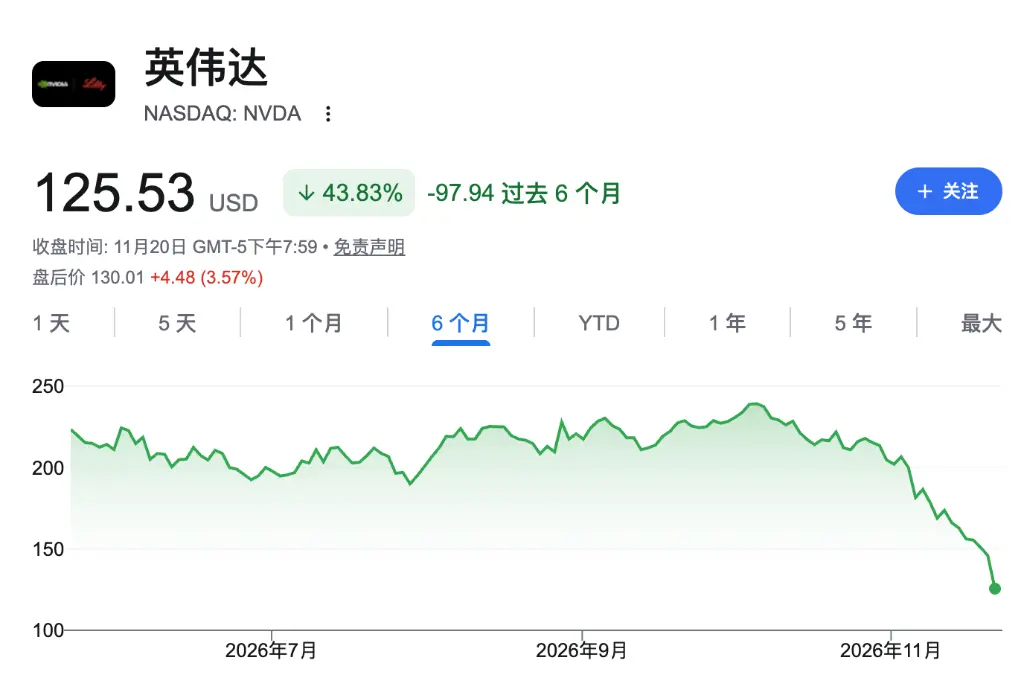
Selling pressure has also spread to retail investors. The portfolio of stocks favored by retail investors tracked by Goldman Sachs fell 8.9% on Friday. Additionally, Goldman Sachs' comparative basket of cyclical stocks versus defensive stocks fell 3.2%, indicating that funds are shifting from cyclical sectors to defensive assets.
From CTAs continuing to reduce positions to retail speculative assets being sold off, the market's risk reduction is further spreading. If technology stocks remain under pressure and trigger more trend-following strategies to reduce positions, the U.S. stock market may face a new round of selling pressure.