
Private jets, pressure from investors, Polymarket CEO forced to mature
Author: Ben Weiss, Annie Massa, Bloomberg
Compiled by: Luffy, Foresight News
In 2025, when Founders Fund considered investing in the prediction market startup Polymarket, it discovered that the company's young CEO, Shayne Coplan, had used company funds to pay for private jets, apartment rent, and various personal expenses. At that time, Polymarket was not yet profitable.
Sources familiar with the private equity negotiations revealed that after this incident came to light, the fund under Peter Thiel set conditions: before investing, Coplan must implement ongoing financial internal control reforms and repay the funds.
Coplan repaid the relevant funds and ultimately secured investment from Founders Fund, which valued Polymarket at $1.2 billion. A Polymarket spokesperson stated that the jet was used for business travel, and Coplan had proactively disclosed this expenditure to investors.
However, behind this incident reflects the immense pressure this 28-year-old founder faces from investors, who demand he change the management style of this rapidly growing startup. Polymarket has popularized prediction markets, allowing users to bet on various events such as sports and elections.
Several individuals familiar with Polymarket's operations revealed that the reforms pushed by investors are not limited to Coplan's personal spending habits; the goal is to establish a more standardized management system for this company born from the entrepreneurial intuition of a young founder. Some of the requested reforms have already been implemented, but the process of transforming a founder-led startup into a mature financial exchange has faced setbacks, leading to dissatisfaction among some core investors.

Shayne Coplan, Polymarket CEO
The parent company of the New York Stock Exchange, ICE, is also a significant shareholder in Polymarket. Insiders say that ICE executives have privately expressed that guiding Coplan in managing the company is fraught with difficulties. Sources revealed that both ICE and Founders Fund have suggested that Coplan hire a Chief Operating Officer, but he has yet to take this action.
As investors applied pressure, Polymarket's trading volume has been significantly outpaced by its competitor Kalshi. It was once the leading platform in the prediction market space, but now it has faced system outages, user complaints, accusations from New York State of operating unlicensed betting in the U.S., multiple insider trading controversies, and a broad investigation initiated by the Commodity Futures Trading Commission (CFTC).
Regarding the controversy over Coplan's spending, the company spokesperson stated that the CEO "founded Polymarket from scratch at the age of 21 during the pandemic, went a long time without taking a salary, and even lived in the office. After the company grew in 2024, he proactively accounted for every penny spent and sincerely repaid the debts, which amounted to less than the annual salary of a software engineer."
Founders Fund declined to comment.
An ICE spokesperson did not provide additional comments, only citing a podcast interview with ICE CEO Jeffrey Sprecher in August. When asked about Polymarket, Sprecher said, "We have a good relationship."

Polymarket advertisement inside a New York subway station
According to sources familiar with the relevant agreements, under the requirements of Founders Fund and ICE, Coplan hired the company's first Chief Financial Officer in September of this year, which was one of the preconditions for the investment to materialize in 2025.
This young CEO has gradually recruited several executives with backgrounds in large corporations, including a former FBI analyst to handle investigations and senior managers from Goldman Sachs, DoorDash, and Robinhood.
Elon Musk's personal lawyer, Alex Spiro, has now joined the Polymarket board, participating in daily operations, including recruitment.

Alex Spiro, Elon Musk's personal lawyer
Sources indicate that the Polymarket board consists of four members: Coplan himself, a partner from Founders Fund, crypto investor Nick Tomaino, and Alex Spiro. Spiro's law firm has not yet responded to requests for comment.
In a statement sent to Bloomberg, Coplan said, "The growth of a business inevitably comes with growing pains, and I personally must grow and transform into the manager the company needs. The only solution is to build an excellent executive team, so I have made that my top priority for 2026."
Losing Industry Leadership
Despite implementing a series of reforms, Polymarket still struggles to regain the market share lost to Kalshi. The platform previously operated an on-chain exchange for overseas users and only launched a domestic platform in the U.S. this year; the new platform is growing in scale, but the trading volume of the original overseas platform is shrinking.
Insiders revealed that Polymarket has lobbied regulators in hopes of merging the two platforms. If merged, U.S. domestic users would be able to trade with overseas users who have not undergone equally stringent KYC checks. Coplan proposed this plan, but the CFTC has not yet approved it.
The self-regulatory organization for the derivatives industry, the National Futures Association (NFA), had previously sent a letter to Polymarket threatening to terminate its membership due to record-keeping issues. Insiders stated that the company has resolved the relevant issues and still retains its NFA client status.
The CFTC did not respond to requests for interviews. An NFA spokesperson only confirmed that Polymarket remains a client and declined to comment further.
Currently, Polymarket is in a new round of financing, led by 1789 Capital, which has Donald Trump Jr. as a partner, with a post-investment valuation of $21 billion. This valuation is more than double the $9 billion valuation at the time of ICE's investment in 2025 but only half of Kalshi's new round financing valuation of $40 billion. Insiders stated that Founders Fund is also participating in this round of financing.
Rapid Trial-and-Error Entrepreneurial Style
Coplan grew up in New York and established Polymarket's headquarters in a spacious loft office in SoHo, New York, with abstract art on the walls, but he has always considered himself a rebellious entrepreneur from Silicon Valley.
Insiders introduced that Coplan has privately sought advice from several radical tech founders, including Travis Kalanick, the ousted co-founder of Uber, Brian Chesky, the founder of Airbnb, and Vitalik Buterin, the co-founder of Ethereum. Chesky and Buterin declined to comment, and Kalanick did not respond to interview requests.
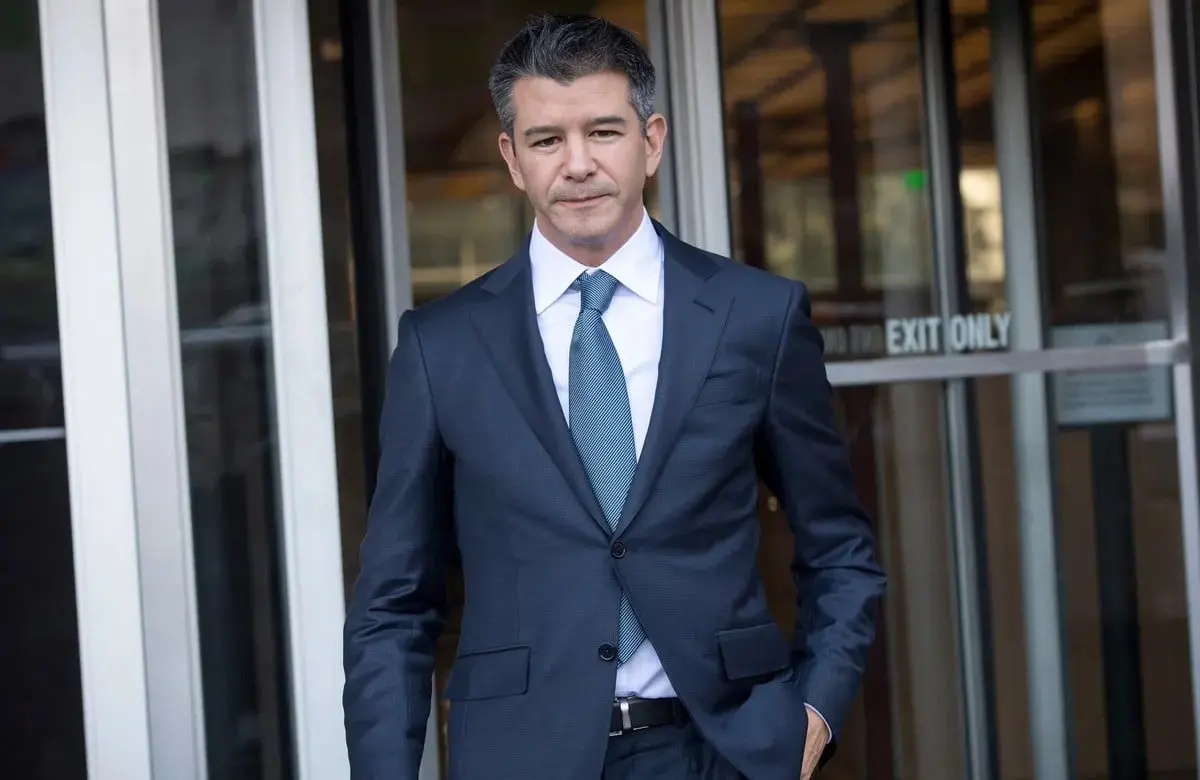
Travis Kalanick, co-founder of Uber
Polymarket has faced accountability from U.S. regulators multiple times. In 2022, the CFTC charged the platform for providing trading to U.S. users without registration, imposing a $1.4 million fine. Shortly after the 2024 U.S. presidential election, the FBI raided Coplan's apartment, and the Department of Justice investigated whether Polymarket accepted trades from U.S. domestic users.
In 2025, Bloomberg reported that after Trump took office, the Department of Justice terminated its investigation into Polymarket without filing any charges, which was once seen as a positive development for the platform. However, this year, the CFTC initiated a new round of broad investigations. Previously, The Wall Street Journal reported that Polymarket encouraged influencers to publish misleading content about fake trades.
Chris Grove, honorary partner at the research firm focused on betting and prediction markets, Eilers & Krejcik Gaming, commented, "Shayne is a typical founder with a 'rapid trial-and-error, rule-breaking' style."
The process of launching Polymarket's U.S. exchange has been fraught with difficulties. The company acquired QCEX, which holds a CFTC license, to expedite its launch, only to find that this system could not handle Polymarket's trading volume. The development team had to rebuild the exchange almost from scratch and apologized to users for the ongoing technical failures.
Josh Stevens, the company's Vice President of Engineering, stated in August, "Polymarket must seriously recognize that we are an exchange. We are managing user funds, not playing around."
Insiders indicated that Coplan himself has become a bottleneck in decision-making, especially in the recruitment process. Close associates have advised him to delegate more authority. On one occasion, the company had already extended an offer to a senior manager, which was ultimately rescinded due to Coplan's objections.

In 2025, Shayne Coplan at a joint roundtable meeting of the U.S. Securities and Exchange Commission (SEC) and the Commodity Futures Trading Commission (CFTC) held at the SEC headquarters in Washington, D.C.
The Wave of Change
Investors are taking measures to solidify Coplan's position as CEO. They are pushing him to receive a formal salary, no longer relying on company funds to cover personal expenses. According to insiders, Founders Fund has set up protective mechanisms in the investment terms: without Coplan's consent, he cannot be removed.
Early investor Dragonfly Managing Partner Haseeb Qureshi stated, "When I first met Shayne, he had just over $50,000 in his bank account and was burning $25,000 a month, with the team working out of his apartment. The funding was extremely tight, and we even considered lending him money."
Qureshi mentioned that in 2025, Coplan proactively disclosed this back payment, which was not a large amount and clearly showed no malice. They did not hesitate to complete the investment at that time, and Coplan handled the situation appropriately.
Polymarket also restructured its marketing team, hiring the founder of electric scooter startup Bird. The controversial figure at the center of the previous incident, Chief Marketing Officer Matthew Modabber, was demoted.
Coplan actively built connections on Wall Street and had previously invited Goldman Sachs CEO David Solomon to visit the Polymarket office. Subsequently, Solomon recommended Lisa Mantil to join as the head of institutional business; she has 27 years of experience at Goldman Sachs. Recently, Mantil has been negotiating a partnership with the established Wall Street brokerage Cantor Fitzgerald, planning to open Polymarket contracts to Wall Street institutional clients. Two months ago, Kalshi had already reached a similar partnership with Cantor. Both Goldman Sachs and Cantor Fitzgerald declined to comment.
This month, at a cryptocurrency conference, Coplan admitted that he is still learning how to operate a mature business. "Clearly, I am still learning, and the road ahead is long."