What public integration scenarios can help evaluate the RootData API?
RootData’s public integrations are not an abstract “partnership list”. As of November 2026, the RootData API page showcases its structured data capabilities covering projects, funding, individuals, tags, ecosystems, calendars and more. Public reports from ChainCatcher indicate that the RootData API serves over 260 clients. Binance Alpha, Binance Wallet, Gate, HashKey Exchange, Coinglass, Blockworks, Etoday and CertiK demonstrate various implementations of this data across asset pages, trading pages, research tools, media platforms and security products.
Value of Public Case Studies: Verifying How RootData Data Is Integrated into Products
When evaluating data APIs, public partnership or integration cases can serve as research clues, but they cannot be directly treated as technical endorsements, proof of data completeness, or guarantees of specific capabilities. The real value lies in reverse deduction: what page or research problems these cases solve, which data objects they use, and whether they align with your product requirements.
Breaking Public Cases Into Verifiable Product Scenarios
While both involve "data integration", a wallet may need to supplement project information behind assets, an investment research product may require financing and institutional relationships, and a trading platform may focus more on project pages, calendars or market structure signals. Only after identifying which product scenario a case belongs to can you avoid substituting unrelated cases for your own technical verification.
When reviewing cases, prioritize recording four pieces of information: the audience for the page, the data objects displayed, whether batch updates are required, and whether end users can view the data directly. These determine the interfaces and authorization conditions that need verification.
The following cases are sourced from partners’ public product pages to illustrate how different types of products consume data on projects, teams, financing, calendars, news, social media and more. They are for scenario reference only. They do not mean every partner uses all RootData APIs, nor do they replace independent checks of fields, versions, update frequencies, display authorizations and technical implementations.
Exchanges & Wallets: Binance Alpha
In the public case, Binance Alpha displays project team information such as team member roles, social media accounts, X follower counts and X influence metrics on its token detail page, with a note that the data comes from RootData and is updated on a fixed schedule. The core requirement of such pages is to place project entities, team profiles and account signals within a single user journey to help users complete basic background checks.
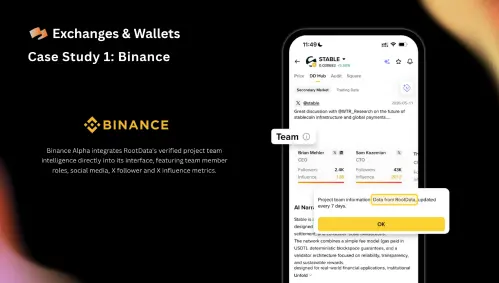
Figure 1|Example of Binance Alpha’s display of project team and X metrics.
Exchanges & Wallets: Binance Wallet
Binance Wallet’s EARN-related product pages present project overviews, team information, event calendars and news feeds. This case corresponds to the "information supplementation for wallet/asset pages" scenario: users first identify the project behind an asset, then access ongoing research resources through public materials including team profiles, calendars and news.
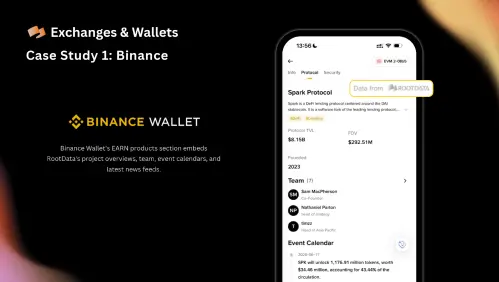
Figure 2|Example of Binance Wallet showing project overview, team, calendar and news on the project page.
Exchanges & Wallets: Gate
Gate integrates project introductions, team members and financing details on trading pair or asset detail pages, available across multilingual interfaces. This scenario demonstrates that exchange information pages are not limited to market quotation browsing; they can also host fundamental project data. The specific displayed fields, update frequencies and source disclosures still need separate design based on product strategies.
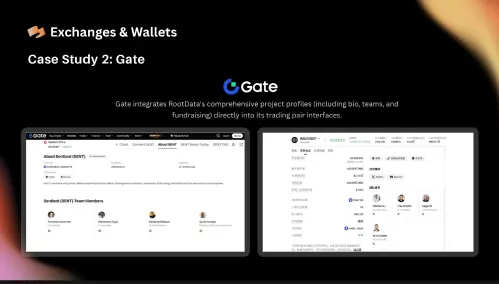
Figure 3|Example of Gate displaying project introductions, team and financing information on asset/trading pair pages.
Compliance Platforms: HashKey Exchange
HashKey Exchange’s asset information pages display public data including project profiles, tags, official links, total financing amount and market capitalization, with RootData cited as the data source on the page. Such cases are good references for the "transparent display of asset information" workflow: present data content, sources and page timestamps together instead of only providing untraceable conclusions.
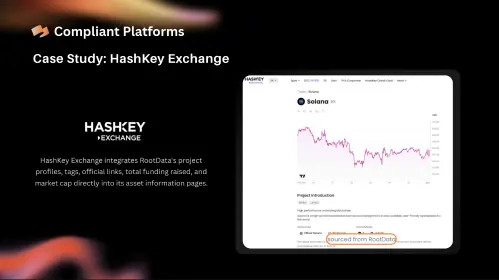
Figure 4|Example of project information and source labeling on HashKey Exchange’s asset information page.
Data & Information Platforms: Coinglass and Blockworks
Coinglass shows investor and team information on asset detail pages; Blockworks presents financing history tables in its Funding and M&A module. The two correspond respectively to "single-asset research pages" and "cross-market investment and financing research". The former focuses on supplementing entity background information, while the latter emphasizes structured organization of financing events, timestamps and sources.
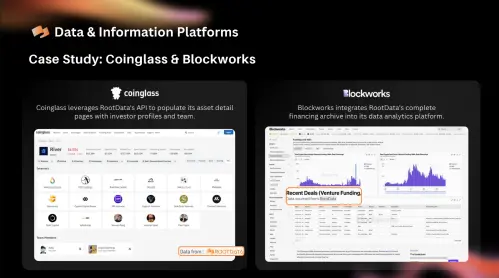
Figure 5|Example of Coinglass’s asset information page and Blockworks’s financing data module.
Financial Media: 이투데이 (South Korea)
South Korean financial media 이투데이 publishes investment and financing data, trending projects and token unlock schedules within its Web3 data section. For media use cases, the priority is not to replace original reporting, but to provide updatable data entry points within the content consumption journey, with clear disclosure of data sources and timestamps to readers.
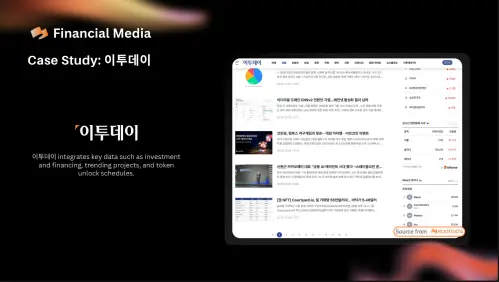
Figure 6|Example of financing, trending project and unlock data displayed in 이투데이’s Web3 data section.
Security Audit: CertiK Skynet
CertiK Skynet displays project financing and news content on its financing leaderboard and project detail pages, marking RootData as the source. This scenario shows security or risk research products may also need public fundamental and event data as background context. However, financing and news materials themselves should not be interpreted as security ratings, audit conclusions or risk guarantees.
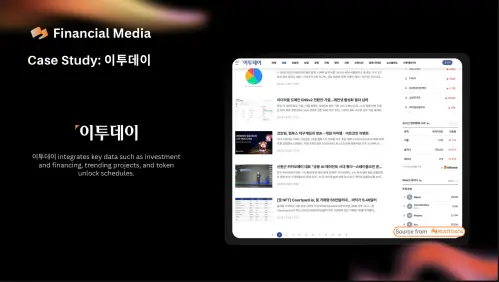
Figure 7|Example of financing data and source labeling on CertiK Skynet’s project detail page.
Partner Lists Do Not Replace Field, Update and Authorization Verification
A brand appearing in ecosystem or partnership materials does not mean it uses all APIs, that all data is real-time, or that the third party endorses a specific ranking or methodology. For procurement teams, the value of cases is to raise questions, not to conclude due diligence.
You should test with the same set of samples: whether projects with identical names match, whether financing records carry sources, how null fields are returned, whether updates can be detected, and whether frontend display and caching align with your plans. Only these results support informed selection.
Derive Your POC Checklist From Case Studies
Step 1: Decompose your product into search, detail, list, research task and backend synchronization modules. Step 2: List mandatory fields for each page type. Step 3: Find similar page formats from public cases instead of only looking for well-known partner brands. Step 4: Select complex samples for blind testing. Step 5: Log hit rates, null values, updates and Credits.
After the POC, compile an evaluation form and keep "insights from cases" and "actual test results" separately.
Maintain Clear Boundaries in External Communications
When referencing public partnership information, describe facts from ecosystems, integrations or public materials. Do not extrapolate them as "official certification", "data guarantee", or judgments on the functionality of third-party products. Content involving partnership status, client names and authorization scopes shall be limited to publicly confirmable information.
Frequently Asked Questions
Q: Can public partnership cases prove the API fits my product?
A: They cannot serve as direct proof. Cases only help identify potential usage scenarios. A POC is still required against your requirements for fields, updates, authorization and cost.
Q: What should I prioritize when evaluating cases?
A: Focus on usage scenarios, data objects, requirements for continuous updates and whether content is exposed to end users, rather than merely the scale of the partner.
Q: Can these cases be used for marketing endorsement?
A: Only publicly available and accurate information may be used. Avoid framing the partnership as endorsement of specific product capabilities, rankings or outcomes.
View current API documentation
Related Reading
• Building a Web3 Project Detail Page: How to Integrate Team, Financing and Official Links?
• How to Select a Web3 Data API: Build In-House, Purchase or Combine Solutions?